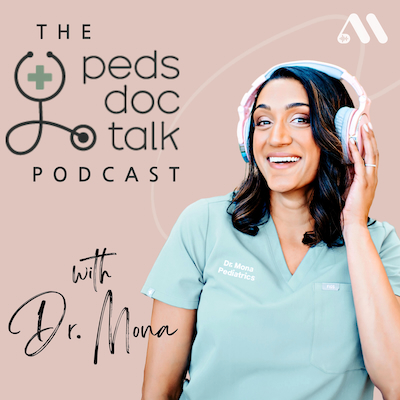

A podcast for parents regarding the health and wellness of their children.
On this episode of “A Mother’s Message,” I welcome Lori, who was diagnosed with autism as an adult. We discuss what prompted her to get evaluated for autism, what the diagnosis meant for her, how it helped her to have this diagnosis, and a message to all regarding autism.
As a reminder, this is the perspective of only one autistic adult. It’s important that in honoring neurodiversity, we remember to open up our minds and conversations about neurodiversity and that includes interacting with various neurodiverse adults and children.
00;00;08;06 – 00;00;29;16
Dr. Mona
Welcome to this episode in honor of autism acceptance. I had released four episodes today. I wanted to gain a perspective about autism from many different people. So on this episode, I am welcoming Lori. Lori is an adult who was diagnosed with autism later in life, and we’re going to be discussing her experience with the diagnosis and what it’s meant for her life.
00;00;29;17 – 00;00;31;12
Dr. Mona
Thank you so much for joining me today, Lori.
00;00;31;14 – 00;00;34;09
Lori
Thank you so much for having me. I’m so excited to be here.
00;00;34;12 – 00;00;52;01
Dr. Mona
I’m really glad that we’re connecting, because I had asked on my Instagram if anyone would be willing to come on. I take care of a lot of autistic children, but I have never really talked to an autistic adult. And that is something that was really lacking in my education and acceptance of autism. So I’m really glad that you were able to come on.
00;00;52;08 – 00;00;54;13
Dr. Mona
So I really appreciate you taking the time today.
00;00;54;18 – 00;01;12;26
Lori
Yeah. I’m I’m so happy to be here. I do want to make sure that I say that, you know, I don’t speak for all autistic people, autistic involved. And, you know, the autism community is a super vibrant community. And I was diagnosed, three and a half years ago. So it’s all sort of new to me, too.
00;01;12;26 – 00;01;20;22
Lori
But I’m also really enthusiastic about it, and I’m excited to talk about it because it is who I am. And so yeah, I’m just excited to get to share that.
00;01;20;28 – 00;01;41;26
Dr. Mona
And that’s a great point, because, you know, part of this is that we can’t get the perspective of every single autistic adult, right. So I really appreciate you saying that because I even talked about that on my YouTube video. Like we’re everyone is different. Every neuro atypical neurotypical person is different. So this is just a perspective of one person.
00;01;41;26 – 00;01;44;02
Dr. Mona
And I so appreciate you clarifying that.
00;01;44;04 – 00;01;44;21
Lori
Yeah.
00;01;44;24 – 00;01;52;02
Dr. Mona
So what prompted you to get evaluated and ultimately diagnosed. Right. So you obviously said about three and a half years ago.
00;01;52;04 – 00;02;16;09
Lori
Yeah. So I was 29 when I kind of sought help for this. But previously I was diagnosed with depression and anxiety. When I was 18. I would say I struggled with myself for most of my life, to be honest, and I always sort of felt like I was on the outside looking in. It was only when I was 29 that I started to really say, hold on, like, could I, could I have autism?
00;02;16;09 – 00;02;39;00
Lori
And honestly, I kind of thought that’s what it was. But it took me a while to kind of face it and then try to get some help with accepting it and understanding it. I am a high school teacher. I taught for nine years, and I was always very good with my students and I should clarify, I just had a baby in September, so I’m taking some time off.
00;02;39;00 – 00;03;03;02
Lori
So I’m not currently working. But when I worked as a teacher I did very well with my students. I love them. I think teenagers are hilarious. Teenagers really like honesty. And it turns out if you’re autistic, you’re super honest. So we got along really well. I struggled at work, though, with my coworkers, and because I was good with the teenagers and good with the job of actually teaching, I got more and more responsibilities.
00;03;03;09 – 00;03;26;20
Lori
So every year I have to do some other leadership role or, you know, volunteer to teach adults something I was working on. And it was all awesome and great until it wasn’t. And, it sort of all came crashing down on me. And when I went to therapy and I commented to my therapist, like, I can’t handle this anymore, she said, it’s like I spent my whole life creating these coping skills for myself.
00;03;26;20 – 00;03;46;25
Lori
And it’s something called masking. It’s pretty common in the autism community, and it’s particularly prevalent amongst autistic women. You know, women are not diagnosed with autism at nearly the same rates as men. And the thinking is not that women don’t have autism, it’s just that women have been socialized to fit in to, you know, all we have, all those pressures.
00;03;46;25 – 00;04;12;03
Lori
And so my therapist said, you know, you had these great coping skills and they worked until they didn’t. And she said, that’s sort of what happens with women with autism is that they hit a point as an adult where it’s like, you hit a wall. And I couldn’t I couldn’t do it anymore. And so, you know, where it really was a problem with my coworkers was I’m really enthusiastic and I really am like task driven.
00;04;12;03 – 00;04;29;10
Lori
And I like to get things done. I’m really focused on, you know, cutting to the chase and how can we complete a task. And the problem is, I’m not as worried about hurting feelings or it didn’t even occur to me that I was hurting feelings when I was saying, well, this is the best way to do something because it worked for me.
00;04;29;14 – 00;04;32;01
Lori
So I thought everyone else you know, would work for them too.
00;04;32;02 – 00;04;48;15
Dr. Mona
And, you know, I mean, this is great information because, when you get diagnosed later in life, the big question I think a lot of people would have is when you look back, not just the, you know, two and a half years ago, but when you look back into your childhood, like, have you talked to your parents about things in your childhood, can you go back that far?
00;04;48;15 – 00;04;52;21
Dr. Mona
What what would be some things? Yeah. So is there anything that maybe came up from those conversations?
00;04;52;27 – 00;05;12;17
Lori
Oh my gosh. So my therapist said that I grew up with a therapist and that therapist was my mom, so my mom didn’t know I was autistic, but she, has always sort of been my personal accommodation. She would send me into the world and say, go make friends. I would go to the, you know, park or something, and I would be like, mom, I don’t want to talk to me.
00;05;12;18 – 00;05;29;16
Lori
She’d like, that’s fine, I’ll talk to you. So my whole life, my mom has sort of been that person for me, that she would push me outside my comfort zone, but also would be there for me when it didn’t work out. And she didn’t know what she was dealing with. She didn’t know I had autism. But when I was a baby, had a lot of sensory issues.
00;05;29;16 – 00;05;49;00
Lori
So she would take me to the grocery store and I would start screaming like fluorescent lighting didn’t work for me. I had a lot of stomach issues. I was colicky when I was in elementary school. This is really sad, but I’ll share this. I remember writing in my diary a list of things to change about myself that maybe if I change then people would like me, which is so sad.
00;05;49;02 – 00;06;02;16
Lori
Oh, I’m so sorry. No, no, I mean, it’s, you know, now, I mean, I’m 32 now. And I look back and I think on that kid as a teacher, you know, I want to go help that kid. I’m sure you feel that way as a doctor. You’re like, oh, you don’t have to feel that way, you know?
00;06;02;18 – 00;06;05;00
Dr. Mona
Well, yeah. No. Continue. I’m so sorry.
00;06;05;04 – 00;06;19;16
Lori
No, I you know, I can go on on. But, Yeah. So there are a lot of moments like that in my life and in college, you know, I was in a sorority in college, and I think about, like, what? I do that. Now, if I could go back and I wouldn’t and, you know, people were nice and I had a good enough time.
00;06;19;16 – 00;06;39;00
Lori
But like, I sometimes mourn the life. Like, what would it have been like if I had known that I was different and I had accepted it earlier? Like, what of my passions, what I have Chase that maybe weren’t the norm, you know? And so I get a little sad about that sometimes. But I can say that being diagnosed is like the biggest relief of my life.
00;06;39;06 – 00;07;01;10
Lori
It was such a relief. It just made me think like, yeah, you are different. You’re not off base. Like, I really was different. And it’s okay, you know, like I, I feel like I embraced it more because at first I embraced it because I was like, well, I’m never going to be quote unquote normal. So in a way, that kind of list with something off your shoulders because I can’t control it.
00;07;01;10 – 00;07;22;01
Lori
You know, I, I’m not like everyone else now. I look at it as a gift and like, you know, embracing who you really are is really a freeing thing that I wish I could go back in time and share it with myself as a kid, but but yeah, to answer your question in a very long winded way, I definitely can go back in time and see how it impacted my entire life.
00;07;22;01 – 00;07;23;02
Lori
And I didn’t even realize it.
00;07;23;07 – 00;07;39;24
Dr. Mona
Well, I mean, it makes sense because it’s an identity, right? I mean, now any time we can identify with our identity, however we define identity, right? Whether that’s, having, you know, being autistic, whether that’s, your ethnicity, your religion. I mean, these are all part of the things that make us who we are. And I can see that.
00;07;39;24 – 00;07;55;09
Dr. Mona
I can see that if you have that sort of in a way, I know we have to use the word diagnoses, but it just makes it seem, hey, I, I am who I am, and this is I love who I am, right? And it’s almost as if the world can say now. And I see the world now with as we start to promote neurodiversity, right, and acceptance of autism.
00;07;55;09 – 00;08;00;06
Dr. Mona
It’s saying, hey, I have autism and it makes me who I am and I’m excited to be different.
00;08;00;09 – 00;08;05;10
Lori
Yeah, yeah, it’s almost like meeting my birth parents for the first time or something, you know?
00;08;05;10 – 00;08;06;23
Dr. Mona
Oh, that’s a great way to put it.
00;08;06;23 – 00;08;26;04
Lori
Yeah, yeah. We were like, oh, this is where I come from. This makes sense. So I got very lucky along the way where when I met my therapist at 29, she had two adult autistic sons, and that just happened to work out. Like, I didn’t know that when I saw her out, I just kind of found somebody that my insurance took, you know, and it.
00;08;26;04 – 00;08;42;09
Lori
But I got very, very lucky. And she, I remember crying to her and I said, I think something’s wrong with me. I don’t know what it is. And by the way, at that point I had thought it was autism, but I was afraid to kind of say it out loud because I knew that it wasn’t very commonly diagnosed in women.
00;08;42;09 – 00;08;58;12
Lori
So I was like, could I be I don’t know, but I said to her, I’m afraid that I’m a narcissist and God bless her, because she kind of laughed. But in a way that was like so friendly and welcoming of that me. And she was like, honey, if you were a narcissist, you wouldn’t be worried that you’re a narcissist.
00;08;58;14 – 00;09;16;11
Lori
You wouldn’t know. And I bring that up because a lot of times people think people of autism, you know, don’t have feelings, don’t understand other people don’t have empathy. And it’s almost like for me, I have too much. And I was worried all the time about once I realized I was hurting people’s feelings. I felt terrible all the time, and I was overly worried about hurting people’s feelings.
00;09;16;11 – 00;09;31;25
Lori
And I was like, could I be a narcissist because I can’t see outside myself? You know, that’s what it kind of felt like. And it turns out, no, I’m not a narcissist, I’m just autistic. So it’s like I look at the world differently. But it was such an eye opening moment and I look back and kind of laugh at myself, you know, nicely.
00;09;32;01 – 00;09;40;09
Lori
But I think, like Todd, I was really off when I said, are you a narcissist? But like, you know, I don’t know. I it’s just it’s so freeing to see it differently now.
00;09;40;12 – 00;09;47;24
Dr. Mona
And did it help in terms of at work once you had that diagnosis or with relationships with friends or your partner or anyone in your personal life?
00;09;47;26 – 00;10;05;11
Lori
Yeah. So at the time I was engaged. So, you know, one of the there are a lot of stereotypes about people with autism, and autism isn’t a linear spectrum. You know, we talked about it as a spectrum, and we think of it as like the terms that are used autistic adults don’t really like. And I’ll say I don’t really like it either.
00;10;05;11 – 00;10;25;18
Lori
And that’s a high and low functioning, it pitches people against each other. And the answer is the spectrum is not linear. You know, people have strengths and weaknesses and all different sorts of things. And so there’s it’s not easy to you can’t label people in that way. But you know, when I said to my husband, who’s he’s now my husband, that I was engaged at the time, I said, do you still want to marry me?
00;10;25;18 – 00;10;38;29
Lori
And I feel so sad about now, but and God. But then he was like, yeah. Like you’re still you like, I mean, you’re autistic, okay. But like, you were autistic yesterday too. We just didn’t know what to call it. And it’s not.
00;10;38;29 – 00;10;46;04
Dr. Mona
Right. I love you for you, regardless of what that is, I love you. Yeah, and exactly that’s exactly it. It was like, oh, that’s so sweet.
00;10;46;06 – 00;11;06;27
Lori
Yeah, he’s so lovely. He was like, yeah, you’re a little quirky, but you were quirky yesterday too. That’s fine. So I say that though, because there’s a lot of stereotypes of autistic people, you know, not having relationships and it’s just not true. And, you know, I do have close I would say my circle is small in terms of my close friends, but I do have close friends from high school and college and, you know, work.
00;11;06;27 – 00;11;22;23
Lori
And I think for those relationships and for my family, it just was a way to understand me more, you know, like the people who love me, love me before. But it was like for some of them, like one of my high school friends was like, oh, yeah, okay. A couple things make more sense to me now, but like whatever, you know.
00;11;22;28 – 00;11;28;12
Dr. Mona
At the time when you got diagnosed, you know, anyone in your personal life that, that was autistic?
00;11;28;15 – 00;11;46;22
Lori
I mean, I’ve worked with plenty of autistic kids, you know, as a teacher, but I know, I don’t know any adult adult with autism. But, you know, what’s funny is, since it’s happened. Sorry. Let me go back to your question about work. And then I’ll say that work got worse before it got better. It got worse because my coworkers, too, are wonderful people.
00;11;46;22 – 00;12;07;05
Lori
And, you know, it ultimately ended well. I think they were just a little confused because we were having conflicts. And like, I was coming across as bossy and, you know, cold and unfeeling. And then when I said, I have autism, I think it’s just a lot to like, you know, wrap your head around where it’s like, I think that maybe they had seen me one way, and then the autism diagnosis forced them to look at me a little differently.
00;12;07;05 – 00;12;33;20
Lori
And so when I was diagnosed, I was really suffering with burnout. And that’s a big thing. And with autism, it can just be so hard. You know, I, I am an introvert, but also autistic. And that means that talking to people is exhausting sometimes. And teaching is a really social job. Anyway. So once I realized I was autistic, I gave myself permission to stop, masking, as much, if that makes sense.
00;12;33;20 – 00;12;49;13
Lori
So I kind of talk to my coworkers. I think it seemed like maybe I was being mean, when really I was like, I just need to take some time to myself. Like, once I realized I just kind of stopped some of the niceties, even though I shared that I had this diagnosis, I think it was kind of hard because I was always like a small talk, like, how are you?
00;12;49;13 – 00;13;04;07
Lori
You tell me about your weekend, and I just needed to step back from that for a little while. And then once I sort of gained my energy back, so to speak, the next school year, I was very like, okay, I’m not to sick. Here’s what I need. I need you to tell me if I’m hurting your feelings. And I promise you this on purpose.
00;13;04;08 – 00;13;19;11
Lori
You know I need x, y, and Z in meetings to be my best. And once I put some accommodations in place for myself. And once we kind of set some boundaries for. Here’s what I need and here’s what I can do for you, it got a lot better. So I stepped back from my leadership positions. I said, you know what?
00;13;19;11 – 00;13;31;21
Lori
I’m not good at this. Like, I’ll help in the background, but like, I shouldn’t I should not be the one leading the meetings. And that was my own personal choice. So once I read some boundaries, things got a lot better with coworkers.
00;13;31;23 – 00;13;51;25
Dr. Mona
That’s great to hear. And it brings up that same thing that we’re talking about, about neurodiversity and not trying to conform ourselves to fit, quote unquote, what’s normal. Right? Because what society has deemed as normal when that’s not really who is to say what’s normal? You know, there’s the terminology like neurotypical or neurotypical, like neuro. You know, it’s it’s it’s hard.
00;13;51;25 – 00;14;10;08
Dr. Mona
I mean, you know, people ask often about the diagnosis of autism. Why are we seeing so much autism now compared to years past? I think I explained to them that there may be a higher incidence, and I talk about it on the other episode with the developmental behavioral pediatrician, everyone, but also the fact that we when we look at our peers from when we were children, you mentioned the word quirky, right?
00;14;10;09 – 00;14;29;05
Dr. Mona
Your your husband. I’m pretty sure there were children in my class that probably had traits of autism, but at that age, like 25 years ago, there wasn’t as much interest in diagnosis and understanding as much as we know now. So maybe a lot of people went under the radar and didn’t get diagnosed until later in life. So like kind of what you’re saying, right?
00;14;29;05 – 00;14;30;26
Dr. Mona
So I think we’re forgetting that.
00;14;30;28 – 00;14;48;15
Lori
Absolutely. And you know, what’s funny now is it took me a while to kind of be open with my diagnosis. You know, I didn’t tell my extended family for a few years. You know, I people that I was close with. And I told my coworkers I felt like it was important for me to fix those relationships because they were kind of ongoing.
00;14;48;15 – 00;15;05;23
Lori
And I had a principal who was very supportive. And I recognize I have some privilege working in education, where it’s easier for me to be open about a diagnosis. You know, not every workspaces is friendly for that. So I have to acknowledge that as well. But it took me a little while and I’ve recently, I think, told I’d like shouted it from the rooftops.
00;15;05;23 – 00;15;34;23
Lori
And part of what happened is, you know, I have a daughter. And so I thought to myself, well, what if she’s autistic? Do I want her to know that her mom is proud of who she is and has told everyone and is living authentically? And so that’s sort of why I kind of shifted gears. And when I did that, I told my students for a long time I didn’t tell students, and I’m kind of, you know, it’s crazy because I was a I will always be an advocate for my neurodivergent students, for my students ADHD, my students autism, whatever.
00;15;34;23 – 00;15;54;12
Lori
But I was, like, afraid to tell them that I was also neurodivergent. And I finally told them. And the best part about it is they were the most accepting understand, like cheerleaders of anyone that I told these teenagers. Like, they’re like, oh, good for you. Like, that was literally their attitude. And that was it. You know, it was like, not a big deal.
00;15;54;12 – 00;16;11;02
Lori
And I love that because I think things are changing. You know, I had a student who was also neurodivergent who said to me, you know, you really inspired me. Like a lot of my teachers would kind of get down on me because of my ADHD qualities. And, you know, I would share with her my own struggles. And she was like, this is great.
00;16;11;02 – 00;16;22;06
Lori
I love hearing this. And so I’m really hopeful that things are changing and we’re realizing that autism is not as rare as we thought it was. You know, people are different. So yeah, I mean, it makes me just so hopeful.
00;16;22;11 – 00;16;38;17
Dr. Mona
I, you know, when I see parents who have their child and the child gets a diagnosis of autism and the parent themselves are not autistic, right? Those parents do go through a lot of emotions. And I think a lot of those emotions. You know, I was talking to a lot of my families in my office, about it.
00;16;38;17 – 00;16;55;06
Dr. Mona
And I think a lot of those emotions come from the fact that, again, society has not really told them much about autism and they have a lot of fear about. Well, someone told me this. I see this, they don’t see positive stories of neurodivergent people. Right. So it’s it’s really hard. They think of like, well, what am I going to do?
00;16;55;06 – 00;17;18;11
Dr. Mona
I feel so isolated and I it’s really it’s really important for us to hear what you’re saying and that the fact that it is just a different and when with children especially, you know, with the early intervention and services that we get, the outcomes can be very, very great for that child. So I it’s not it’s really important to remember that it’s really hard for a lot of my families when I see them in the office when they, you know, they get that diagnosis.
00;17;18;14 – 00;17;41;09
Lori
Yeah. You know, I, I do want to acknowledge that there’s a little bit of a tension between parents of children or I should say parents of autistic children and autistic adults. And so I think with a parent, when they get an autism diagnosis, they’re often mourning the life that they thought that their child would have. And I think about that because I’m a parent, you know, like, well, what if my daughter is autistic?
00;17;41;12 – 00;18;01;17
Lori
So I really feel that in my gut, like and and so I think autistic adults look at that and kind of bristle against that because they say, well, we’re doing fine. And the reality is, is that some of those early interventions autistic adults aren’t fans of and, you know, I’m a teacher, so I really see kind of both sides to it.
00;18;01;17 – 00;18;21;13
Lori
I think my biggest hope for parents with children who are autistic or autistic children is to do obviously do what feels right to them in their family. But to consider that some of these kind of differences, it’s about, I think, reframing these differences, these behaviors, you know, we often look at behaviors and say, well, they’re they deviate from the norm.
00;18;21;13 – 00;18;50;13
Lori
So let’s try to get them to the norm as close as possible so our child can be as successful as possible. And I think, you know, it’s dependent upon the behavior obviously. But I think when we look at autism, you know, acceptance or autism awareness, what we’re looking for is to broaden our view of what is appropriate, acceptable behavior, you know, and so that’s my hope, is that, sure, autistic people have needs and do need different levels of support.
00;18;50;13 – 00;19;08;18
Lori
And so I don’t want to diminish that because, you know, maybe I need more or less support in certain areas in another person. So, you know, everyone’s kind of everyone’s journey with autism is different. But again, if we can broaden what is deemed acceptable, I think that’s ultimately what we’re all kind of looking for here.
00;19;08;20 – 00;19;28;16
Dr. Mona
Absolutely. And, you know, to bring along those lines of the fact that you mentioned in terms of autistic adults and autistic children and the parents of them, like how there is a rift sometimes, like for example, April is Autism Awareness Month, but we talk about autism acceptance. And like I said, I take care of autistic children, but I have not really spoken to so many autistic adults, and I’m so grateful for the last few weeks that I’ve been able to do this.
00;19;28;16 – 00;19;44;11
Dr. Mona
But I didn’t know about this month and how triggering and upsetting it is for a large amount of the autistic adult community. Do you have a little background? I mean, I know you’re not speaking for everyone, so I know that’s not a fair to say, but do you have a little background as to just briefly why that is?
00;19;44;13 – 00;20;00;10
Lori
Sure. So I’m going to just share an anecdote about myself and then kind of give a brief thought about, you know, kind of what the community thinks, I think. But for me, I thought before, if I could cure my autism and I don’t even know what that would look like, but I don’t know, wake up one day and I’ll be autistic.
00;20;00;10 – 00;20;17;13
Lori
Like what? I want that. And the answer is no, because it literally is who I am. It took a while for me to get here, but it is who I am and I would think my friends and family would agree. So when you think of it that way, when you look at a month that’s like autism, you know, acceptance, like that’s the bare minimum.
00;20;17;13 – 00;20;27;19
Lori
Like you’re going to accept that I exist like it. Just, you know, the connotation of that is like a very low bar. Autism awareness is a nicer way of looking at it. I’m sorry. I’m flipping out around.
00;20;27;20 – 00;20;31;12
Dr. Mona
Yeah. Yes, exactly. I was like, wait a minute. Yeah, yeah, yeah. No, that makes sense.
00;20;31;14 – 00;20;51;06
Lori
That my self awareness is a low bar. It’s like, well, you know, I exist. Acceptance is a higher bar. But I would argue still a pretty low bar where like you know, you’ll tolerate me is sort of what it also implies. So, you know, it is it is mentally triggering. And I and you have an organization like Autism Speaks, which is a very controversial organization.
00;20;51;22 – 00;21;14;17
Lori
And so you have people that wear t shirts that say, you know, autism awareness and they have a puzzle piece on them that is very triggering, because when you think of a puzzle piece, it’s implying a deficit. It’s implying something that needs to be solved or fixed. It also can be pretty infantilizing. Autistic children grow up to be autistic adults, and I think that is really a missing, voice.
00;21;14;18 – 00;21;34;16
Lori
So I do definitely appreciate you having me on, but it isn’t. It’s a missing voice in this conversation so often. You know, autism awareness is driven by people who truly love their family members of autism. But I think it’s just sort of a deficit. It’s looking at it as a deficit. And so that can be very triggering because it’s who I am.
00;21;34;16 – 00;21;37;27
Lori
And so it’s like we do have a problem with me, you know.
00;21;38;00 – 00;21;55;18
Dr. Mona
Oh, this is really important. I really appreciate you because like I said, even having these conversations as a pediatrician, because I don’t think I hope a lot of medical professionals and pediatricians are listening to this because I talked about on my, you know, it’s just Instagram stories about the identity first, person first language. And I got so many corrections.
00;21;55;18 – 00;22;12;18
Dr. Mona
Right. Because in training we talk about how, oh no, you’re supposed to say person with autism. And I said actually, actually, I learned in the last few weeks and I was right there with everyone I had, I struggled with that because that’s what I was told for quite some time. But then I, you know, talk to you. I talk to other adults.
00;22;12;18 – 00;22;38;00
Dr. Mona
And I realized I was like, wow, I, I’m going to change this. And it’s still I mess up, right? Still, I say, person with autism and I don’t intend to. But I had a few conversations with some people were like, oh my gosh, I had no idea. And I’m like, well, we’re learning, you know? And I guess, you know, it’s something that I’m happy to learn because I think it’s important that we, can do that for, you know, acceptance and wanting to truly, like you said, accepting more, our neurodiverse community.
00;22;38;07 – 00;23;00;29
Lori
Yeah. And honestly, I’ve slipped up a few times, too, like, I’m a teacher and an education that’s always people first. Language. And, you know, it’s. And it’s tricky because, you know, obviously the autism community is not a monolith. People have different opinions. And so there there are autistic people who disagree, but in general, I would say the community, you know, prefers to say autistic adult or autistic person.
00;23;00;29 – 00;23;13;16
Lori
And it’s because you you can not divorce, autism from who we are. I mean, it impacts every single part of me. It’s literally my brain. So it’s just it’s just a little different.
00;23;13;18 – 00;23;29;04
Dr. Mona
Right. And like the the argument on the other side from the traditional sense. Right. And I get it, I get why it’s so confusing is that. Oh but you say person with autism because that doesn’t define them. And I get the why we’re saying it the other way. Because we’re we’re owning this like, I mean, this is our identity.
00;23;29;04 – 00;23;30;08
Dr. Mona
Like this is part of us.
00;23;30;12 – 00;23;41;10
Lori
When you say a person with autism, it’s almost like you’re trying to, like, prove to yourself that we’re people, like, like, you know, or people we don’t need to be reminded. It really is serving the person who’s saying it.
00;23;41;13 – 00;24;01;08
Dr. Mona
No, that makes sense. I really appreciate that. And now I wanted to talk about, other misconceptions. You had mentioned about like, empathy, right? That people feel like sometimes that’s a misconception. Just briefly, what would you say off the top of your head or other misconceptions that, you feel like you encounter with your coworkers or just in society about, adults with autism?
00;24;01;08 – 00;24;08;25
Dr. Mona
Or, hey, I did it. Oh my gosh. Oh my gosh. No, don’t worry, I just took a joke. Okay, this is a case in point everyone. So I with with artistic adults.
00;24;09;01 – 00;24;31;03
Lori
And you know, one of the cool things about being autistic is, is that in general, we’re really like, we’re pretty chill about people who are honest about making mistakes. Like, we really like, we really like honesty. And, you know, you’re trying. And so I don’t it certainly doesn’t offend me. And I, I think I can say that, you know, making mistakes happens along the way when you’re trying to change how you look at something and as long as you’re trying, it’s cool.
00;24;31;06 – 00;24;52;24
Lori
So it’s tricky. I think speaking as a woman with autism, a really big misconception is that women aren’t autistic and in particular, a woman with a husband and a daughter and a job and friends. You know, I’ve had so many people say, well, you can’t be autistic. And it really is deeply upsetting because, okay, I’m not cheering every individual struggle with you today.
00;24;52;24 – 00;25;07;11
Lori
Like I’m not telling you how, you know, I change shirts five times. I didn’t like the way it felt or I had to eat something different or, you know, I just take my medication or I had to go to therapy. Like, I’m not sharing every struggle with you. And it doesn’t mean that I’m any less autistic, you know?
00;25;07;11 – 00;25;17;04
Lori
And honestly, I’ve had it with, doctors as well. You know, I’ve had it with my doctors where I say, oh, by the way, I’m autistic. And they’re like, what? How can that be? You know.
00;25;17;08 – 00;25;35;22
Dr. Mona
So people are dismissing your your I like your diagnosis. Wow. Oh yeah. That’s that’s exactly the problem. I mean, obviously thinking about it as an identity piece. I mean, that’s just like saying, oh no, you’re not who you think you are. It’s like, excuse me, I know who I am, right? That’s that’s hurtful. Wow. Yeah. Thank you. That’s good to know.
00;25;35;24 – 00;25;50;29
Lori
Yeah. It’s a big one and it’s you know, I’ve. Yeah, I’ve worked very hard to mask my entire life. And I still kind of turn it on in situations where I think I’m not going to be believed because it’s just easier to lie than it is to say no, like I’m autistic. I needed a different accommodations, you know?
00;25;51;03 – 00;26;11;10
Dr. Mona
Yeah. So this is so great. I really appreciate you talking about this. What can we do this month and beyond, right. Because I, I agree with you. I don’t like regardless of autism awareness, any awareness month in general awareness day really rubs me the wrong way. I just I’ve never liked it. I and my son had a stroke and there’s an infant Stroke awareness day.
00;26;11;10 – 00;26;27;02
Dr. Mona
I’m like, what the heck is this? It just puts us in a minority, right? Like when you have an awareness day, that means you’re a minority. And going to be very frank, there is no White Man Awareness Day. No. Oh no, there’s not they’re not a minority, right? I mean, let’s be honest. Right. So it hurts a little bit in a way.
00;26;27;02 – 00;26;45;01
Dr. Mona
Right. Because you’re like, well, I like us and empowering this identity and this group of people for whatever day. But I agree with you in a way. It’s like, well, no, no, no. Like what can we do long term? So I know, again, you’re not speaking for everyone in autistic community, but what are some ways that neurotypical people can really make a change here?
00;26;45;01 – 00;26;49;13
Dr. Mona
Like what can we do, to really help promote diversity in this situation.
00;26;49;15 – 00;27;11;29
Lori
So I think there are kind of two pieces. One, in my opinion, would be to spend some time kind of reading about the autistic community. There’s an organization called the Autism Self Advocacy Network, Asan, and that’s a website that’s pretty easy to find. And it’s run by autistic adults, and it talks about autism and it talks about, there’s just tons of resources.
00;27;12;07 – 00;27;30;16
Lori
It’s a website that I actually spend a lot of time on. When I was first diagnosed, and it spoke to me the most, and it helped me understand myself. And it’s about self advocacy versus Autism Speaks. That is a lot less about self advocacy. And the Asan organization is actually run by autistic people so that that’s important to me.
00;27;30;16 – 00;28;00;14
Lori
The other thing that I would recommend, and this one I have a caveat to, but, on social media, there is a hashtag actually autistic. And that hashtag is autistic people speaking about their experiences. So the caveat I have is that is more of a place to read than to insert yourself into oftentime, as we see, on social media, that people, you know, sometimes well-meaning people will correct an autistic person about the people first language.
00;28;00;14 – 00;28;31;14
Lori
For example, like you say, that’s not the purpose. But especially this month, a lot of awesome people are sharing their experiences on that hashtag, on Twitter in particular. And then my other piece of advice or thought for a neurotypical person is if you find yourself around an individual that you find to be quote unquote, quirky or strange or different from you, if your first kind of reaction is to make fun of them, to crack a joke at their expense, consider first that that person might be neurodivergent.
00;28;31;22 – 00;28;49;21
Lori
I’ve been in meetings with students where I’ve seen, you know, other teachers get angry with a student is doodling in a meeting, and that’s their coping skill. That’s how they kind of get through whatever the day. And it doesn’t mean that they’re not listening. But maybe that’s seen as like a strange behavior like, oh, well, we don’t like doodling.
00;28;49;21 – 00;29;10;04
Lori
Like we want to teach them to not doodle. That’s just what they need to do to get through the day. And that there are adults that do that too. And doodling is just kind of a small example. But if somebody is doing something that you find strange, they might be neurodivergent. And so the way to really be an advocate is to kind of check yourself and say, okay, they’re different than me, but is that a bad thing?
00;29;10;04 – 00;29;30;13
Lori
Like, are they hurting me? Is this a problem? So to be an advocate is to consider that. And, you know, in education, there were times when I would see people wearing, you know, the puzzle piece autism awareness shirt, and then I would be annoying in a meeting and I would be really excited about something. And you know, I talk really quickly when I get excited and I’m very enthusiastic about my special interest.
00;29;30;18 – 00;29;40;29
Lori
And so, you know, if you’re rolling your eyes at my enthusiasm, but you’re wearing an autism awareness shirt, you know, well, consider that maybe these traits are just neurodivergent.
00;29;41;03 – 00;29;47;17
Dr. Mona
Well, the hypocrisy of it all just is very, very palpable. Well, I choose to.
00;29;47;17 – 00;30;00;17
Lori
Believe that that person didn’t know, but I think, you know, I think it’s autistic adults exist. Autistic children grow up into adults. And so I think that’s just like that’s my number one takeaway here. I think, oh.
00;30;00;17 – 00;30;23;14
Dr. Mona
Lori, this is so helpful. And you know, I know we spoke a lot before this episode and I can’t thank you enough. And I know that we’ve said this already a few times, and I know you cannot speak for every autistic adult, and I’m very clear about that. And I even speak about that on my YouTube video, that even though we talk about traits and characteristics, every child and every adult, every autistic child and every other student is so different.
00;30;23;14 – 00;30;42;03
Dr. Mona
And like all of us, like, I mean, you can’t put anyone in a box. You can’t say, well, you’re this and that. So it’s so important. But I it does help. And I and I really appreciate your perspective and, you know, talking with me and teaching me. Right. I learned so much from you this week, and it’s really helped me already with a lot of my autistic children in my office.
00;30;42;05 – 00;30;55;19
Lori
Thank you. I mean, I, I just think it’s so great that you’re doing this, and I think it’s great that you are willing to kind of re navigate, reevaluate your, views on this or what you thought you knew. And that’s such a valuable characteristic.
00;30;55;25 – 00;31;18;19
Dr. Mona
I really appreciate it. Everyone else, make sure you listen to the other episodes. Like I said, my hope is to build, different perspectives. Of course, I can’t get every single perspective, but I’m sure throughout the course of this podcast I’m going to have more and more adults on. Thank you for tuning in for this week’s episode. As always, please leave a review, share this episode with a friend, share it on your social media.
00;31;18;22 – 00;31;26;15
Dr. Mona
Make sure to follow me at PedsDocTalk on Instagram and subscribe to my YouTube channel, PedsDocTalk TV. We’ll talk to you soon.
Please note that our transcript may not exactly match the final audio, as minor edits or adjustments could be made during production.
Need help? We’ve got you covered.
All information presented on this blog, my Instagram, and my podcast is for educational purposes and should not be taken as personal medical advice. These platforms are to educate and should not replace the medical judgment of a licensed healthcare provider who is evaluating a patient.
It is the responsibility of the guardian to seek appropriate medical attention when they are concerned about their child.
All opinions are my own and do not reflect the opinions of my employer or hospitals I may be affiliated with.