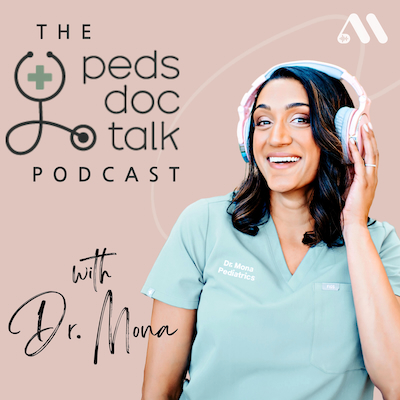

A podcast for parents regarding the health and wellness of their children.
What does it really mean to parent with data—and how do you do it without losing your mind?
Let’s unpack the power and pitfalls of data-driven parenting in a world full of misinformation and clickbait. If you’ve ever felt overwhelmed by studies, headlines, or trying to “do it right,” this episode will bring clarity, nuance, and a whole lot of reassurance.
Today, I’m joined by Emily Oster, an economist and NYT best-selling author, to discuss:
To connect with Emily Oster follow her on Instagram @profemilyoster and check out all her resources at parentdata.org
00:00 – Introduction to Emily Oster
02:49 – How Emily Got Started in Parenting Data
04:16 – The Promise and Limits of Data-Driven Parenting
07:02 – Sleep, Solids, and the Complexity of Parenting Choices
08:08 – Honesty About Data Limitations
09:02 – When the Data Doesn’t Exist
10:09 – Media Panic & Screen Time Headlines
11:27 – Building Data Literacy as a Parent
13:32 – The Rise of Pseudoscience & Misinformation
14:55 – How to Tell If a Study Is Legitimate
16:28 – Parasite Cleanses & Misused Studies
19:03 – Competing With Clickbait
22:27 – Vaccine Conversations & Honest Health Communication
24:25 – The Hope for a Nuanced Future
27:01 – How to Stay Informed Without Overwhelm
29:00 – Parenting as a Process of Figuring It Out
30:08 – What Really Feels Overwhelming
33:08 – Trusting Lived Experience Over Data Alone
34:12 – The Search for Certainty vs. Embracing the Mess
35:48 – You’re Not Going to Mess Up Your Kid
37:59 – Closing & Where to Find Emily
Our podcasts are also now on YouTube. If you prefer a video podcast with closed captioning, check us out there and subscribe to PedsDocTalk.
We love the sponsors that make this show possible! You can always find all the special deals and codes for all our current sponsors on the PedsDocTalk Podcast Sponsorships page of the website.
00;00;00;06 – 00;00;07;15
Emily Oster
I think sometimes when people ask the question, what does the data say? What they’re actually asking is like, what’s right?
00;00;07;18 – 00;00;08;04
Dr. Mona
Yes.
00;00;08;04 – 00;00;27;22
Emily Oster
Like and and you’re sort of answer back of like, well that’s not there isn’t a right. Like there isn’t. I mean there could be a right for you. There’s a but like there isn’t. I think people are sometimes sort of looking at this data question with the expectation that it will deliver some certainty, and that that’s what I want is to sort of know I did it right.
00;00;27;25 – 00;00;42;08
Emily Oster
And it’s hard to be like, well, we have a little, you know, here are some kind of things we could say from evidence about the world, but ultimately the choice is something you have to kind of think about what works for you, which is daunting, because how can you be sure if that’s right, you can’t be sure if that’s right.
00;00;42;11 – 00;00;44;10
Emily Oster
Yeah. Part of the magic.
00;00;44;12 – 00;01;07;28
Dr. Mona
Welcome to the PedsDocTalk podcast. I’m Doctor Mona, your trusted pediatrician, confidant and mom friend. And today’s episode is one. Every parent who’s ever gone down an internet rabbit hole needs to hear. If you’ve ever been caught in a spiral of conflicting parenting advice, scary headlines, or new studies that leave you wondering if you’re doing everything wrong, this episode is for you.
00;01;08;05 – 00;01;32;14
Dr. Mona
I’m joined by Emily Oster, economist, bestselling author of Expecting Better Crib Sheet, The Family Firm and the unexpected, and creator of The Parent Data. She’s all about cutting through the noise and helping parents make confident decisions using data and not drama. We’re diving into how to spot misinformation, what to do with conflicting research, and how to actually trust yourself in a world full of noise.
00;01;32;16 – 00;01;44;04
Dr. Mona
Whether it’s your first time tuning in or you’re a long time listener. This is one you don’t want to miss. Let’s get into it.
00;01;44;07 – 00;01;46;01
Dr. Mona
Thanks for joining me today.
00;01;46;03 – 00;01;49;02
Emily Oster
Thanks for having me. I’m so happy to be back. It’s so nice to see you.
00;01;49;04 – 00;01;56;00
Dr. Mona
I’m so happy to have you. And I think you have one more book now, right? Am I right? I did expecting better crib sheet and the family firm.
00;01;56;02 – 00;02;01;14
Emily Oster
And I now have a fourth book called The Unexpected, which is about navigating pregnancy after complications.
00;02;01;15 – 00;02;23;20
Dr. Mona
It’s like you write the books for me, meaning? Like you literally come out with them when I’m going through my phase in life. And that book obviously very much resonated. Having had complications, gestational diabetes and pregnancy for me, as well as postpartum complications. So really, thank you for bringing the data to Parenting Health. So that we can raise children without feeling hopefully too overwhelmed.
00;02;23;20 – 00;02;25;02
Dr. Mona
I really appreciate all that you do.
00;02;25;05 – 00;02;33;28
Emily Oster
Now, it’s really a it’s a privilege. And I also love following you. So I’m really excited to talk about these things because I think we care about a lot of the same stuff.
00;02;34;00 – 00;02;49;07
Dr. Mona
Yeah. And you know, for anyone who may not be familiar with who you are, which I do think a lot of my followers also follow you and my listeners on the show. Tell us a little bit more about yourself and how you got into this avenue of the parenting space and data driven parenting.
00;02;49;10 – 00;03;12;25
Emily Oster
Yeah. So I’m trained as an economist. I’m actually an economics professor at Brown. And I started writing about pregnancy and parenting, when I got pregnant with my daughter. My specialty within economics is health economics, statistical methods. And I kind of took those tools into to navigating a lot of the choices in my own, in my own pregnancy, and then in my in my own parenting.
00;03;12;25 – 00;03;30;09
Emily Oster
And the books and parenting talk all sort of came out of came out of that and out of a desire to use this set of professional skills that I have around data and, and evidence and understanding evidence to serve a broader population than just other economists.
00;03;30;15 – 00;03;54;09
Dr. Mona
Yeah. And I love that. It’s very nice to see your newsletter. I’m, I’m a member of your newsletter, and I love it. And it’s just nice for me as a pediatrician to see someone obviously really diving into the data and just really providing just information. And I think it’s so important. Right. And then for me applying, you know, we always are applying all that information that you’re very well versed clinically.
00;03;54;09 – 00;04;12;19
Dr. Mona
And so it’s that combo that I love learning from you and being like yeah this research came out. Let’s see what Emily has to say about the really nitty gritty of it. And then also obviously how it applies to medicine and, parenting and all of that. So a really, again, mutual admiration for you as well. So, I’m happy that you went into this avenue for sure.
00;04;12;25 – 00;04;15;29
Emily Oster
Yeah. Me too. I feel like very lucky that I get to do this.
00;04;16;04 – 00;04;39;17
Dr. Mona
And for you. I mean, obviously you’ve been doing this for quite some time, and you’ve evolved not only for from pregnancy, but then you did, obviously, postpartum and for the child, the family firm, obviously for older children, school aged children and then also, in pregnancy in terms of complications and, you know, the unexpected, like you said, what do you feel the benefits are for data driven parenting and also perhaps maybe the limitations as well?
00;04;39;20 – 00;05;01;01
Emily Oster
I think that this a sort of data driven parenting approach in when it works well for people, is a way to provide confidence. I think as parents, we are looking for ways to make decisions that we can then be confident about and that we can stick with and feel good about. And for me, that’s that’s the core.
00;05;01;02 – 00;05;20;07
Emily Oster
That’s what I’m trying to help people do. So I’m trying to tell them, you know, here’s a range of choices that you have, and here’s what the evidence says about this and says about that. And now you can kind of go forward to make your own, your own best decisions. You know, I think there are there are kind of two limitations which are probably important to say.
00;05;20;07 – 00;05;35;17
Emily Oster
So one is like, this isn’t how everyone wants to do this. You know, there are people who are like, I, I this doesn’t resonate with me. I don’t like I, I don’t I’m like either I’m not comfortable with data more. Just like, this isn’t like I don’t want to think about these like I’m not is worried as you are.
00;05;35;17 – 00;06;02;00
Emily Oster
I mean, I think there’s a sense in which I am serving often a population of people who are reasonably anxious. And there are definitely people who are like, look, I don’t I’m not that worried about this. To which I would say, like, that’s fantastic. Yeah. Teach me your ways. I also think there’s an inherent limitation for, for everyone here, which is, you know, data is not going to boss you in almost none of these situations.
00;06;02;03 – 00;06;32;11
Emily Oster
Are you going to read the data and be like, this tells me for sure that yes, yes. And that’s true. It’s a few things like that, but very few, especially in in kind of this early parenting space, is very few places where you’d be like, this is the only way. And so, so much of of using data in decisions is using it in decisions and combining the data with personal preference with values and priorities and saying, okay, this is the choice that’s right for me.
00;06;32;14 – 00;06;37;03
Emily Oster
As opposed to saying the data tells you you must you must do one thing or the other.
00;06;37;06 – 00;07;02;19
Dr. Mona
Yeah, and you’re right. I mean, thinking about that first year alone, right? I mean, obviously we can think about all the years, but, in terms of data on ways to feed, like so if you’re going to do breast, baby load weaning or, you know, starting with purees or whether you’re going to do sleep training, we know that there’s so many other factors like not I think the problem with data driven parenting for me, or those are the limitation for me, would be you said it perfectly that it is.
00;07;02;19 – 00;07;17;22
Dr. Mona
It is a guide. It is a part of your arsenal to say, hey, I like this. This is may not be for me, but if I like it, here’s what we know and here’s how I can apply it with my value system. And like I look at sleep training because there’s so many different studies that come out that are like, okay, here’s what we have.
00;07;17;22 – 00;07;33;08
Dr. Mona
And then people on the other spectrum can say, well, it’s not enough babies in the study. And then people on the other side, you know, there’s always going to be someone saying that it’s not good enough in terms of the data or like looking for holes in the data. And my thing as a pediatrician, I love data.
00;07;33;08 – 00;07;50;25
Dr. Mona
Evidence based medicine is, you know, what we what we do. But there are some times where we can say, I don’t have data on that. And I’m going to be quite honest, that we don’t have a lot of data on that. And that for you then as a consumer and as a parent is you got to decide what’s best for you knowing that there’s no data.
00;07;50;25 – 00;08;08;02
Dr. Mona
But let’s look at benefit and risk. And if there’s any risks to this intervention that we may, you know, recommend or something like that. Now let’s take a quick break to hear from our sponsors who support helps us keep bringing you this show.
00;08;08;05 – 00;08;25;22
Emily Oster
Yeah, I mean, I think so much of, the appropriate sort of communication and this is about being honest about, you know, when the data is good, when the data is not good, what are the limitations? You know, there’s nothing pretty much in the world where you could say, we have perfect data on this and how it would affect every single individual.
00;08;25;22 – 00;08;59;19
Emily Oster
I mean, you need a randomized trial with the entire population of, you know, the world forever. And even then people would be like, well, what about the future? You know, you did you include in your trials like, well, no, I didn’t. It was difficult, challenging IRB approval. So, I mean, I think there’s a there’s a real sense in which we, we have to give people the tools to understand what we do know, you know, what’s the range of things we could be concerned about or and why you do or do not think those are important and then let them, you know, in some ways that people use to think about, you know, how that
00;08;59;19 – 00;09;02;03
Emily Oster
fits with what they care about, what they value.
00;09;02;05 – 00;09;12;01
Dr. Mona
Yeah. And from all the work that you’ve done, do you feel like there’s certain areas of parenting where data simply doesn’t provide enough answers? And then you have to lean on those other factors, maybe more?
00;09;12;04 – 00;09;32;14
Emily Oster
I think as your kids get older, the, you know, the they kind of approach, there are problems where we just don’t have very much data. So one of the things people occasionally complain about is, well, you just keep saying there’s no data on this, again, that like, I, this is not my fault, you know? You know, there’s this.
00;09;32;17 – 00;10;08;09
Emily Oster
Sorry. I think that, you know, as our kids, as our kids get older, the things that they need, the questions we have are more or more heterogeneous, are more like, distinct to our individual kids. And that’s where there’s really no substitute for trying to understand your own individual kid. When we talk about babies and toddlers, there’s there’s more spaces where you’d say, well, we have some data about kind of what works on average or like what are the benefits and costs on average, babies or toddlers, the range of decisions people are making or something is a bit more, more clear.
00;10;08;12 – 00;10;09;05
Emily Oster
00;10;09;07 – 00;10;34;09
Dr. Mona
And I think you do that you do a lot of this and myself included, is that a lot of the times with a lot of data that comes out, media, mainstream media, maybe social media also maybe people who don’t understand. We’ll see the article or see the research study and make like a sensationalized headline. Right. The one that comes to mind most recently was about during the pandemic, about screen time and aggression.
00;10;34;12 – 00;10;50;21
Dr. Mona
I thought, yes. Yeah. You knew about that one, right. I had that, yeah. Like how, you know, children who were exposed to screen time had higher rates of aggression, but then it was also like, okay, this was in Canada, sorry, this is in Canada. This was during the pandemic. There were a lot of factors. And what were the children using it like?
00;10;50;21 – 00;11;10;22
Dr. Mona
What was the family dynamic like? Were they using it as a coping mechanism? Were they not teaching other coping skills? Not. Screen time leads to aggressive behavior by the age of three, which is what a lot of these sensationalized headlines will be. And it’s all for clickbait. And so what would you say to that parent who’s like, trying to navigate that world of wanting to learn about this stuff?
00;11;10;22 – 00;11;26;29
Dr. Mona
Maybe they’re that parent that doesn’t want to go so extreme into the data, but here’s a new study and how to take a news, you know, news article and how to take all of that information and basically not panic, but kind of learn also from what may have been said from that information.
00;11;27;02 – 00;11;47;26
Emily Oster
Yeah. I mean, for me, the, the main, a main problem with these panic headlines is that they arrive at a moment that you are not ready to hear, you’re not ready to hear them. You know, you’re just trying to scroll through and like, see, you know what? Like what you’re like, you know, I’m like, they have like, what am I running influencers doing?
00;11;47;26 – 00;12;13;00
Emily Oster
Like, what is ballerina farm? You know, I’m just trying to enjoy myself. I’m trying to like. And then there’s a, there’s a, you know, screen time. You’ve run your child, it’s like, yeah, hello. You know, and I, I do think that that recognizing that, that that is a piece of what’s so tough about this is that you’re not ready, I think is, also suggests an antidote, which is to say, okay, if this is, you know, there are some things, you know, are going to come up screening kids is a problem.
00;12;13;00 – 00;12;39;19
Emily Oster
You know, you’re going to be hearing about this. You just know. So find something that you, someone that you trust or a source that you trust and learn. Take a moment when you are ready to like, learn a little bit to read. You know, you have stuff I have to have, like somebody that you trust to read a little bit about this general context, not about an individual study, but like, what do we know from the literature how to think about the literature, how to think about the scope of new studies.
00;12;39;19 – 00;12;59;21
Emily Oster
We could do. I think if you do that, then when you see that in into your Head can come, not just did I ruin my kid, but also, well, let me understand a little bit better. Like I’ve heard of like a lot of other studies on screens and behavior. And I’ve also heard people say, hey, screens are not assigned randomly.
00;12;59;21 – 00;13;15;10
Emily Oster
You know, kids who are watching a lot of screens are different other ways. Let me see whether that might be going on in this day also. So just giving yourself up just a little bit of the kind of data literacy that gets you to be able to see those for for what they are, which is usually nothing.
00;13;15;12 – 00;13;32;15
Dr. Mona
Yeah. And I would I would love to talk about that data literacy. And in just a bit in terms of like how someone who’s not familiar with understanding or reading or interpreting data, like how they can approach that if they want it to be, you know, a little bit better. Obviously there is an art to it. There’s a, you know, understanding all the different statistics and terminology.
00;13;32;15 – 00;13;55;28
Dr. Mona
But for the general population. But one of the things I’m I’m always concerned about, but even more concerned about, and you see this also being on social media very heavily, is there’s so much misinformation right on social media and also now with pseudoscience getting a larger platform in the political space. Right? We’re seeing a lot of proponents of pseudoscience, you know, getting into higher up positions.
00;13;56;05 – 00;14;19;23
Dr. Mona
Not to say that we can’t learn from each other and maybe get some perspective from them, get perspective from other people. But I am afraid that there’s going to be a lot of quote unquote research coming out on this and that that may not be an adequate research study. So how would we know from a just kind of basic standpoint of what is considered a credible research study?
00;14;19;26 – 00;14;31;25
Dr. Mona
What should a parent look for if they see a research study shared by an influencer or shared by someone else and they’re like, that seems pretty drastic. What can they look for to kind of say, is this legitimate or is this not?
00;14;31;27 – 00;14;55;13
Emily Oster
Yeah, this is so hard because there’s a sort of simple answer, which is to say, look, there are some journals that are better than others. And I could tell you, you know, if somebody says like, this is a randomized trial that was published in the New England Journal of Medicine, like, does that guarantee it’s correct? No. Does it does it is that a real study that some serious people read and thought about and was carefully vetted by experts?
00;14;55;15 – 00;15;17;01
Emily Oster
Definitely, yes. You know, that’s and so there are a few things you could say, you know, is it what’s the kind of quality of the journal? But the reality is there’s a billion journals and they have a lot of random names, and it’s beyond even like, I consider myself a person who’s an expert in data. I couldn’t tell you whether, you know, chemists fear one is a better journal than, you know, something else.
00;15;17;08 – 00;15;18;04
Emily Oster
That’s not my.
00;15;18;04 – 00;15;22;16
Dr. Mona
Well, that’s why we need people like you. Exactly like. Like you like, hey, let’s let’s dive into the.
00;15;22;18 – 00;15;40;05
Emily Oster
Let’s dive in. Do you need to see that? See the data? So I think, you know, one piece is is just that’s it. It’s hard, to know whether a study is good. I think there are some core things people look for, like, was this, you know, was this randomized? How large is the study? What’s the how plausible does it seem?
00;15;40;05 – 00;15;58;28
Emily Oster
Is kind of a like took a little bit of a weird thing. But sometimes it be like, well that’s you know, people will be like people who swim for an additional hour a year, you know, live ten years longer. So, I mean, but does that seem like they could be right? You know, like, does this test the sniff test?
00;15;59;01 – 00;16;26;23
Emily Oster
But, you know, it’s I this is the thing I’m very worried about because it’s awfully difficult sometimes to separate out, you know, what’s a good study for? What’s not a good study with so little information and certainly I’m sure you get this. Two people will be like, I saw this study and yeah, my husband sent me this study, and now he says, you know, we have to get rid of our electromagnetic fields or whatever is the the new thing, whatever.
00;16;26;25 – 00;16;28;18
Emily Oster
Is today’s scare tactic?
00;16;28;18 – 00;16;48;21
Dr. Mona
No, I mean, the most recent one that comes to mind for me was when I was doing something about Parasite Cleanses. I did a, I did a content piece about parasite cleanses, and I found another real from someone who’s not medically trained at all, not even a, you know. No, no, the person has no credentials in understanding research or, a clinician in any way like seeing a patient.
00;16;48;24 – 00;17;08;03
Dr. Mona
And I was like, let me see. And, you know, part of my love for this platform that I have and I know you have is I also get to learn. Right. It takes me that time to say, let me go look at this study that this person screenshot and shared about parasites. And so then I looked at it and I saw that, you know, they screenshot a study and said, look, there’s there’s heavy metals and parasites.
00;17;08;03 – 00;17;30;09
Dr. Mona
And I said, okay. So then I looked up the study. I actually read the study. It was from 1999, and it just was done in rats. And it didn’t have any follow up studies. And even the people who created the study, you know, how we talk about like, limitations of the study and all of that when you when you release and publish a study, they even said that we need more follow up studies, that this doesn’t show that this is living inside our human.
00;17;30;09 – 00;17;48;26
Dr. Mona
It’s just that parasites hold toxins, which isn’t outlandish. But what is it doing to the human body? Nobody knows that. And so I commented on that because I don’t mind people sharing things. But if you don’t know how to read it and don’t know how to, like you said, interpret it with some common, common sense balance of like, does this make sense?
00;17;48;26 – 00;18;13;29
Dr. Mona
Is this seeming extreme or is it something that makes sense clinically? It’s you could end up being duped a lot. And I saw that and I called it out, and I spent that time to look at that study because I was curious. I’m like, okay, let’s see what this person has to say. And I would encourage people, if they are getting that finding that online, because I worry in the next few, you know, over the next 4 or 5 years, it’s going to be more so, right, with social media being so rampant.
00;18;13;29 – 00;18;25;09
Dr. Mona
And, you know, all this information out there and some of it’s misinformation to really just take that moment and, and think about it. And if you’re concerned, let’s get on Emily’s newsletter again on my newsletter.
00;18;25;09 – 00;18;30;23
Emily Oster
And yes, like ask don’t Care. It’s like ask before you ask.
00;18;30;25 – 00;19;03;14
Dr. Mona
And you know what I am afraid of, Emily, is, you know, I am so grateful to have this sort of clinical job and, you know, taking the data and applying it. I’m just so worried with the rise of pseudoscience being such a prominent thing, that’s like, hey, let’s just make up these claims that aren’t even in any evidence and even could potentially hold harm and shame other things is that I worry that the people like you and me, that have spent so much time looking at the data, looking at how it applies clinically, all of this is going to seem like, oh, that’s not the person that knows what they’re talking about.
00;19;03;14 – 00;19;23;14
Dr. Mona
This person is popular. This person has been on the Joe Rogan podcast, this person has done this. And here’s Doctor Mona and Emily just doing their own thing and not being outlandish. Like, how is that real? Like, I, I want us to keep this evidence base and understand that me and you both, who love evidence base, also understands the limitations.
00;19;23;14 – 00;19;25;10
Dr. Mona
But we can’t go the other extreme.
00;19;25;12 – 00;19;56;12
Emily Oster
Yeah, yeah. I mean, I think that there’s a really, in the landscape of social media, there’s a very strong sort of pull to clickbait. You know, there’s a reason that the headline, you know, parasites kill you, parasites give you that series that’s more interesting than, like, here’s a nuanced take on this study that is actually understandable. I mean, this is like and there’s so much pull in, that social media algorithms have so much pull towards the kind of clickbait panic headlines.
00;19;56;12 – 00;20;07;01
Emily Oster
And I think, you know, all one can do is try to like, hold on to, you know, actually, my goal is to tell you something that’s nuanced and that’s it. That’s that’s.
00;20;07;04 – 00;20;21;12
Dr. Mona
New. Yeah. I’ve always said this nuance isn’t sexy and it isn’t clickbaity. Right. Like it’s like what? No one wants to hear the balance. No one wants to hear that. You have to look at another person’s perspective or think about other factors that could impact why this wouldn’t be true. Why? Why would we do that?
00;20;21;13 – 00;20;39;22
Emily Oster
Because it’s like you like, I mean, I had an interesting one time, went through one of these studies with my with my undergraduates and, and, you know, it’s sort of like it was not that a good study then it had gotten, like, totally overwhelmed. And, you know, the New York Times had it had the panicky headline. And then everybody kind of and I asked my students, you know, whose fault is this?
00;20;39;28 – 00;20;55;07
Emily Oster
And one of them was like, well, I think it’s our fault. Because like, he was like, I think it’s my fault is what he said he was like, because I clicked on that. And then that’s why they publish that because I, I’m going to click on it. And that’s why the researchers wrote the study, because they knew it would get published.
00;20;55;07 – 00;21;02;16
Emily Oster
And that’s why, you know, he sort of like went down the road to and came up with the idea that, like it, well, it’s my fault, which I thought was very insightful.
00;21;02;19 – 00;21;20;20
Dr. Mona
Yeah, I agree and I and I know as a creative content you do this as well, but I’m always trying to be very mindful of that. And I could go to Clickbaity route like extreme Clickbaity. I mean, I see a lot of clinicians do that, online, meaning they’ve gone the extreme route of this is this is going to harm your child.
00;21;20;20 – 00;21;44;02
Dr. Mona
This is going to do this. And I’ve learned that if you use if people are using extreme words like guarantee harm, this is completely safe. This is completely dangerous like that. The completely it’s not all right. Like I even I’m even careful when I talk about vaccines. Right. Because I believe that vaccines, the benefits way outweigh the risk, right?
00;21;44;02 – 00;22;08;01
Dr. Mona
I know this, but they’re not. They’re a medication in a way. They’re an injected. They’re an injection. So could you have an allergic reaction. Sure. Fever does it a so when people say they’re completely without risk. And I think that’s part of the negative of improper health communication on our side. And then for the people who are into more pseudoscience, saying this is what you need to do, and we’re going to do a cold plunge, and then you’re going to do this and you need to get the dyes out of the food.
00;22;08;01 – 00;22;21;01
Dr. Mona
And we’re not going to think about any other factors. It’s like, let’s think about the whole system here and how how we can create less fear with all of this. You know, like, like you said, the headlines that come out with all of that.
00;22;21;04 – 00;22;27;05
Dr. Mona
Now let’s take a quick break to hear from our sponsors who support helps us keep bringing you this show.
00;22;27;07 – 00;22;58;03
Emily Oster
Oh, yeah. I, I wrote something recently about this sort of issue of communication. I really think this idea about sort of being honest about what the risks are is incredibly important for how we communicate, because I think if you tell people like, you know, nothing, like no adverse reactions have ever happened for any vaccines, right? You know, like, and you’re kind of a crazy person for even suggesting it, then you lose people because that’s not nice, even though they’re incredibly safe and effective.
00;22;58;03 – 00;23;16;12
Emily Oster
And I there’s a million reasons we should vaccinate our kids. Correct. Like it’s just a huge amount of evidence for that. That’s different from saying that no one’s ever had an allergic reaction. And if you tell people that’s an impossibility and then they learn, well, actually it’s not an impossibility and they’re not listening to you, you got to like, got to be honest.
00;23;16;13 – 00;23;18;21
Emily Oster
Like, we have to trust people and be honest with them.
00;23;18;23 – 00;23;41;08
Dr. Mona
Yeah. I mean, speaking about the vaccines, you know, the the, the completely repetitively debunked vaccine autism connection, right? I mean, this is already getting another platform and a resurgence again and again. And I’m like, ever since I’ve been in training, it’s been, a misinformation disinformation situation. And it’s exhausting as a pediatrician, especially for my neurodivergent, diverse community.
00;23;41;10 – 00;24;01;03
Dr. Mona
How it’s a very offensive thing. And I’ve spoken about that on other episodes, but, that is exactly you know, the problem is that there it’s happening on both sides. And I admit it, because even in the pandemic, I’m sure you saw this and you’ve experienced this, that even in the Pro-science community, people were angry at each other sometimes about like, well, that’s not how it is.
00;24;01;03 – 00;24;17;19
Dr. Mona
And you’re not thinking. And I’m like, who are we fighting against here like we all want? Especially in the Pro-science community. We all want to reduce the amount of deaths. We all want people to be safe. But also it’s a matter of looking like you said, at the balance and not getting fear mongering or extreme on either side.
00;24;17;19 – 00;24;25;19
Dr. Mona
In my dream in the next, you know, ten years is that nuance and balance can be sexy again. Where can we have that happen.
00;24;25;22 – 00;24;32;28
Emily Oster
Explaining how are we going to do it? You know, just like we need to dress differently, I think we need to be doing our roles. Dressed him. And I said, I.
00;24;32;28 – 00;24;40;24
Dr. Mona
Think I need to wear my fitness. I decided that I’m probably going to just start doing them in, like my fitness workout on because, like, you know, the leggings and like, so I look like.
00;24;40;26 – 00;24;43;11
Emily Oster
Like a little like sort of Jane Fonda.
00;24;43;15 – 00;24;56;13
Dr. Mona
Yeah. Because I think I have health communication. I have to look like I’m healthy because apparently that also is equated to help. Oh, okay, I started on that. But all these like, like all these pseudoscience ers, they look healthy. But I’m also very healthy. I just don’t dress.
00;24;56;13 – 00;24;56;22
Emily Oster
Like.
00;24;56;27 – 00;24;58;26
Dr. Mona
I’m healthy, if that makes sense.
00;24;58;28 – 00;25;02;28
Emily Oster
I wouldn’t be posting like my five k times. Yeah, I.
00;25;03;00 – 00;25;04;15
Dr. Mona
Just love it, right? I mean, you.
00;25;04;15 – 00;25;09;14
Emily Oster
Should listen to me. I ran a 20 minute five K. You should listen to me.
00;25;09;16 – 00;25;24;03
Dr. Mona
I’m going to start. Yeah, we’re gonna just start easing this in like, hey, I have health, I am healthy, here’s my kids eating amazing food and doing all this stuff. But we also are okay with the balance of sweets and red dye and all of this stuff, like. But we’re not doing it every day. And processed food is not our basis.
00;25;24;03 – 00;25;38;01
Dr. Mona
But again, this is like I look at it, I told my husband all the time, I’m like, I could do this. Like I have like these amazing leggings and I could just get on here and be like, hey everybody, let’s talk about balanced food. And like, it’s not, it’s I want.
00;25;38;01 – 00;25;38;27
Emily Oster
It, I want.
00;25;38;29 – 00;25;42;12
Dr. Mona
I want love a smoothie with spinach.
00;25;42;15 – 00;25;45;20
Emily Oster
Oh, I like to put on my matching workout set and make my.
00;25;45;20 – 00;26;07;01
Dr. Mona
Smoothie with and just be talking to you while I’m making a smoothie. Because, let’s be honest, no one has time to do that, okay? Kids are running in the house. It’s not. The lighting’s not good. I’m always impressed by these content creators. When they do that, I’m like, how do you have a pristinely quiet house with good lighting and like, just in your hair is perfectly done and then you’re wearing a perfectly fitted body suit.
00;26;07;02 – 00;26;09;12
Emily Oster
Whatever you’re wearing is not for me.
00;26;09;14 – 00;26;25;22
Dr. Mona
Not for me. I know, good for them if that’s what they want, but I just hope that they’re giving good information. That’s all I say. I’m like, if you’re happy and you look like that, fine, but do not give fearmongering, misinformation and it comes from everywhere. I mean, it comes from clinicians. You know, I always people used to say like, you got to watch your credentials.
00;26;25;22 – 00;27;01;27
Dr. Mona
But I have a little caveat to that, that even people with credentials like fellow videos, MDS, whatever, they have said some pretty outlandish things and get very fearmongering, which I’ve seen. They go that they lean the other way, so you gotta just, you know, have a little balance. And so what would you say to that parent, who, you know, with all the new research constantly coming out and the research that may even like headlines and all these clickbait headlines, how can they stay informed without feeling overwhelmed or paralyzed by data in general, or maybe even just conflicting data that they may hear?
00;27;01;29 – 00;27;22;28
Emily Oster
So I think a first thing I would say to people is very rarely does a new study come out, which completely changes everything that we have ever thought before. So I think some of this kind of thing that is that is panic inducing is like new study says. I would just tell people most of the time. New study says nothing of that.
00;27;22;28 – 00;27;43;19
Emily Oster
We didn’t know before. And so I think that the idea that you have to be constantly on top of the releases of all medical journals, that’s not true. You know, very occasionally, particularly in obstetrics, they’ll be like some giant trial that like, you know, it changes something about practice. But, you know, that’s a very rare that’s very rare.
00;27;43;21 – 00;28;03;00
Emily Oster
So you don’t have to be, like, obsessive about this all the time. And I think what that opens up is the possibility of telling people you should be looking for this information when it is decision relevant for you. Yeah. So when you are thinking, hey, like, I’d like to decide whether to sleep train or I’d like to decide, you know, what’s a good screen approach for my kids?
00;28;03;00 – 00;28;28;14
Emily Oster
You have a moment then when you can like go and look for some information, look at some people that you trust and, and, you know, maybe read a little bit of literature. It’s like a lot of options for how you can how you should learn about that. But I would really encourage people to try to learn about it deliberately, starting with places where they trust people rather than trying to learn about it in dribs and drabs when some new study comes out.
00;28;28;14 – 00;28;41;04
Emily Oster
Because almost always you will find, you know, that new study is just similar to some other studies that we’ve seen it in the past. And, you know, that’s it’s not something on which you should base some enormous change in your decision.
00;28;41;07 – 00;29;00;20
Dr. Mona
I love that, especially what you said about the looking at when needed. And I think that just goes with a lot of parenting stuff, like meaning in general, like, you know, whether it’s data or not, whether it’s like, I think I think we’ve lost as parents a lot of that figure it out mentality. Like, I, I not everything is always going to have an answer, especially thinking about parenting situations.
00;29;00;20 – 00;29;14;24
Dr. Mona
Right. You’re going to get into a moment with your kid that you’ve never heard about, no friend has ever talked about. You’re going to be like, whoa, okay. And you’re going to have to figure it out. And that’s, to me, the fun part of parenting, like having to be like, look at my husband, thank God. You know, I have I have this amazing partner.
00;29;14;24 – 00;29;18;04
Dr. Mona
I’d be like, what do you want to do right now? What should we do with this? You know, and.
00;29;18;09 – 00;29;19;21
Emily Oster
Like I have paired.
00;29;19;24 – 00;29;24;20
Dr. Mona
It’s fun. Like it’s. But no data is going to say what to do in that situation. You just have a value set that’s like.
00;29;24;21 – 00;29;25;06
Emily Oster
Totally.
00;29;25;10 – 00;29;48;22
Dr. Mona
I know I love my kid. I know I want him to get him to do this thing, but right now he’s being like this, so, well, what do you think we should do? Should we do a natural consequence, should we not? And that I think we, we lost a lot of sometimes because parents like you said, I think are overly overly anxious thinking they need to know it all, which you’re kind of taking it back to them, like just get the information when you need it, like, and if it’s pertinent to you and if you have questions about it.
00;29;48;24 – 00;30;07;28
Dr. Mona
Totally, I love that. How do you balance this and or do you have you ever felt overwhelmed? And I never I don’t think I’ve ever asked you this question. Like, obviously you are looking at all of this every day. You’re on social media answering people’s questions every, every day or often. I see you doing that. How do you or do you even feel overwhelmed at all with this information?
00;30;08;02 – 00;30;15;01
Dr. Mona
And if you don’t, what makes you feel more grounded in your in your decision making as a mother, in your decision making, in your own life? How does that help?
00;30;15;04 – 00;30;33;21
Emily Oster
So I don’t think I feel overwhelmed with information that much, and partly because I think I am so used to like like we have developed such a, a sort of pattern in my house. And I also have a very good partner for this where like if there’s something important, we’re going to go out and look for it. Right.
00;30;33;24 – 00;30;55;28
Emily Oster
And we’re going to go, you know, try to figure it out. And we’re not I’m not I am not that susceptible to panic headlines, partly because I read them all the time. And. Yeah, because like, that’s just my that’s my job. I would say there are parts of parenting I find very overwhelming. They’re more the parts where I feel like we I didn’t I didn’t know I was going to face this or I don’t think there is a good answer.
00;30;55;28 – 00;31;20;20
Emily Oster
I just need to understand my kid and try to figure out what’s right. So, you know, I have a 13 year old. Like obviously these questions around social media have come up. And I find those really hard to navigate because I’m genuinely unsure about the right approach. And I don’t really see an easy way to learn the answer.
00;31;20;26 – 00;31;46;07
Emily Oster
Like, I don’t think if I worked harder on that, I would get to a better answer. Correct. Like like I just I think this is a really hard question where I might get it right. We might not get it right. And that’s that is a very overwhelming idea, particularly because it feels important in a way that like some of these like younger kid things, it’s I think seem less seem more short term.
00;31;46;10 – 00;31;53;28
Dr. Mona
Right? Like meaning as you’re growing, as you’re raising this human that has their own identity, self-worth and all of that, you’re like, well, this really matters. Now, I know.
00;31;54;04 – 00;32;11;01
Emily Oster
I could really mess this up. Yeah. I was like some of these little kid things, like, like, I don’t feel like I, you know, it’s kind of like if they eventually they’re going to poop in the potty, like, you know, we’re going to kind of work it out. This is like, what if I do the wrong thing with social media and like, my kid has mental health issues or my kid like, and that’s that’s very overwhelming.
00;32;11;04 – 00;32;24;00
Dr. Mona
Yeah. And I, I’m thank you for sharing that. I think, for me right now, obviously I have younger children. At the time of this recording, a five year old and an 18 month old. And you’re right, I think in the younger years, and even when I talk to my families in my office, I see the teenage years.
00;32;24;00 – 00;32;51;04
Dr. Mona
And I think there is a foundational thing that if you again, look at what you look at, what your value system is and really minimize a lot of the external noise, like, you know, getting to your trusted people, like you said, like looking at the people in your community or whether it’s a pediatrician friend or online, if it’s someone reputable that you respect and seeing what they have to say about, you know, a major topic like you just said about, like, screen time and teenagers and how to create balance or boundaries, even on what that would be, what that would look like.
00;32;51;07 – 00;33;08;11
Dr. Mona
But it can be hard. I mean, it’s definitely an overwhelming thing, but what I always go back to is there’s just so many when I, whenever I feel like, oh, well, there’s not going to be data on this at all. Or a parent asking me, well, what does the data say? And I, I’m quite honest. I’m like, it’s just so much more the numbers sometimes like it really.
00;33;08;14 – 00;33;27;26
Dr. Mona
How can we quantify or, you know, think about a child’s emotional development or their emotional intelligence, like a lot of that is not something we can ever see in a data. And again, it’s it’s hard and overwhelming. But I think sometimes looking at it as a, as a puzzle in a way, like, I know I it sounds, but I really love figuring things out.
00;33;27;26 – 00;33;48;26
Dr. Mona
Like it’s actually something I really enjoy. And so being a parent has been enjoyable for me because when we don’t know a situation, it’s like, well, we’re going to figure this out. And if we don’t, we’re going to call our resources whether that’s a therapist, whether that’s a specialist. Right. And so that can really help. So that, you know, my that’s how I don’t get overwhelmed by any of this, is that I’m like, I have a strong sense of identity.
00;33;48;26 – 00;34;12;20
Dr. Mona
I know what I know what I see in my patients, which is so helpful. Like, I know formula fed babies are wonderful. I know breastfed babies are great. I know babies who are sleep trained are securely attached. I know those that up for longer are amazing too, so I don’t get too bogged down with the well, what if this what if this because I know I see them, I see these kids all day, every day and they’re thriving with loving, with being in a loving household that cares.
00;34;12;20 – 00;34;38;18
Emily Oster
About I think. I think sometimes when people ask the question, what does the data say? What they’re actually asking is like, what’s right? Yes. Like and and you’re sort of answer back of like, well that’s not there isn’t a right. Like there isn’t. I mean, it could be a right for you. There’s a but like there isn’t. I think people are sometimes sort of looking at this data question with the expectation that it will deliver some certainty.
00;34;38;20 – 00;34;54;11
Emily Oster
And that that’s what I want is to sort of know I did it right. And it’s hard to be like, well, we have a little, you know, here are some kind of things we could say from evidence about the world, but ultimately the choice is something you have to kind of think about what works for you, which is daunting because how can you be sure if that’s right?
00;34;54;13 – 00;34;57;26
Emily Oster
You can’t be sure if that’s right. Yeah. Part of the magic.
00;34;57;28 – 00;35;08;21
Dr. Mona
Yeah, yeah, I love that. It is the magic. And I know for a population that like, well, like we talked about earlier that is more high, highly educated, a little bit more anxious. Just wants to do it all.
00;35;08;21 – 00;35;09;28
Emily Oster
They want to do it right.
00;35;10;00 – 00;35;23;19
Dr. Mona
They want to do it right. They don’t want to mess it up. But it’s okay to get messy a little bit. Like I, I can’t stress that enough. I actually love the mess and I think it’s so beautiful. And it’s it’s one of those like, I go like this when we figure it out. You’re like, yeah, we got this.
00;35;23;19 – 00;35;48;25
Dr. Mona
Like, we can do this. And then you get even more confident with your parenting when you just kind of realize that you can do it. And you have this amazing resource right now with Emily’s resources and myself to all, you know, break it all down for you if you need it. But hey, you got this. What would be your final uplifting message for everyone tuning in, as they navigate parenting in this in this new world of data and misinformation and all the things that you’re doing amazingly as well.
00;35;48;27 – 00;36;04;17
Emily Oster
I guess I would, I would just draw on the sort of the last thing you said, which is the way that you’re approaching this with sort of like, here’s a hard thing, is here’s a hard thing. And like, what a great opportunity to, like, do it right. And like, I might like it might. And I think often in parenting we’re coming in like, here’s a hard thing.
00;36;04;17 – 00;36;25;17
Emily Oster
It’s just another opportunity to do it wrong. I think for people sort of framing a little bit on like, you’re like, you’re doing great and that you’re not going to mess up your kid by doing some any particular thing. Wrong. Wrong. I mean, there’s no wrong. But like your your life is not a series of opportunities to mess your kid up.
00;36;25;19 – 00;36;31;20
Emily Oster
Yes. That’s that’s just not that’s not the way it is. And so give yourself give yourself some grace.
00;36;31;22 – 00;36;48;00
Dr. Mona
Yeah. And also like if there is something that you like I always use this example like I do believe in screen time boundaries in some way. Right. Obviously. There is there’s we know that it’s not a great thing for them to have too much, but I have parents will come in and be like, oh my God. Well now I’ve been doing like three hours.
00;36;48;00 – 00;37;06;09
Dr. Mona
And, you know, I see that it’s affecting my child and I just mess them up. I’m like, the beauty about the child is the brain is silver. You know, you can teach them. It’s not over. It’s never over. Even adults can change, but it’s wanting to, right? I think so many parents think that was done and I ruined them and but no, like things are always evolving.
00;37;06;09 – 00;37;20;20
Dr. Mona
It’s never too late to pivot and say I learned something new from Emily and I think I want to do that, and I love that, and we can do it, and here’s how we’re going to do it. You know, and I’m always fascinated by watching children do that. And I always tell my parents I’m like, trust the process.
00;37;20;20 – 00;37;36;28
Dr. Mona
It’s going to you’re going to see changes. But you have to be patient. But you got to be consistent, too. But don’t think that you failed them like it’s never over. Parenting is forever. Like, I, I love that, like I love that my I hope that my children when they’re 30, you know, we’ll be like, hey, mom, I want to talk to you about a problem I’m having.
00;37;36;28 – 00;37;39;04
Dr. Mona
Like, that’s how I know I did it, right. You know.
00;37;39;06 – 00;37;44;07
Emily Oster
They’re going to. My daughter was like, I’m not going to ask your advice. And I was like, okay, no problem.
00;37;44;09 – 00;37;58;28
Dr. Mona
This is so great, Emily. I really appreciate it. This is so nice to be able to just, you know, obviously talk about this. This is your wheelhouse. This is why I love following you. And obviously, I’m a fan girl on your newsletter and all this stuff because, again, it is just nice to break it all down in a non fearmongering way.
00;37;59;00 – 00;38;03;05
Dr. Mona
Again, bringing sexiness back to balance is what I want for my mission for 2020.
00;38;03;05 – 00;38;07;19
Emily Oster
Four sexy new ones. It’s our sexy 2025 goal. Sexy new.
00;38;07;19 – 00;38;10;12
Dr. Mona
One. Yes, it’s a new song too. I’ll come up with I’ll come up with some.
00;38;10;12 – 00;38;12;05
Emily Oster
Okay,
00;38;12;07 – 00;38;18;17
Dr. Mona
Where can people go to stay connected if they’re not familiar with where you are? And that podcast, as well as your Instagram and anything else you have to share?
00;38;18;17 – 00;38;29;10
Emily Oster
Yeah. So there’s a parent data podcast. And but parent data.org is the best place to go to get content newsletters, etc.. And you can find me on Instagram at Prof. Emily Oster.
00;38;29;15 – 00;38;35;10
Dr. Mona
Wonderful. We are going to be attaching all of that to the show notes. And thanks again for joining me today. Again.
00;38;35;12 – 00;38;38;29
Emily Oster
Thank you for having me.
00;38;39;02 – 00;39;04;24
Dr. Mona
Wow, what a conversation. I hope you’re walking away with a little more clarity, a little less pressure, and a whole lot of permission to parent in a way that works for you as long as you’re not hurting anyone. One of the biggest takeaways for me that data isn’t meant to boss you around. It’s meant to support you. And in today’s world of viral headlines, cherry pick studies, and even misleading claims from people in power, that kind of balanced, honest insight is more important than ever.
00;39;04;26 – 00;39;29;05
Dr. Mona
So take what resonates, leave what doesn’t, and know that you’re allowed to ask questions, even when the internet says you should already know. I’d love to hear what stood out to you. What are you taking away from the episode? Head over to the PedsDocTalk podcast on Instagram and join the conversation. And if this episode gave you a breath of fresh air, share it in your stories and tag at the PedsDocTalk podcast, at PedsDocTalk, and at Prof.
00;39;29;05 – 00;39;39;07
Dr. Mona
Emily Oster. Prof. Emily Oster, thanks for being part of this community and for showing up with curiosity, not perfection. See you all next week and stay well.
Please note that our transcript may not exactly match the final audio, as minor edits or adjustments could be made during production.
Need help? We’ve got you covered.
All information presented on this blog, my Instagram, and my podcast is for educational purposes and should not be taken as personal medical advice. These platforms are to educate and should not replace the medical judgment of a licensed healthcare provider who is evaluating a patient.
It is the responsibility of the guardian to seek appropriate medical attention when they are concerned about their child.
All opinions are my own and do not reflect the opinions of my employer or hospitals I may be affiliated with.