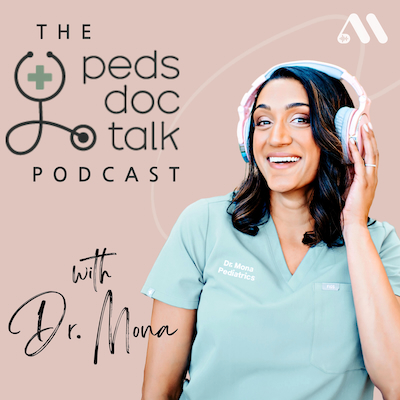

A podcast for parents regarding the health and wellness of their children.
My hope is that if you have experienced trauma, this episode will resonate with you. If you know someone who is going through trauma, this may give you insight as well. And if you ever find yourself grieving in the future, I hope my words will always live with you.
00;00;06;20 – 00;00;36;03
Dr. Mona
Hey, everyone, welcome to the PedsDocTalk podcast. I’m your host, Doctor Mona, where each week I hope to educate and inspire you in your journey through parenthood with information on your most common concerns as a parent and interviews with fellow parents and experts in the field. My hope is you leave each week feeling more educated, confident and empowered in the decisions you make for your child.
00;00;36;06 – 00;01;00;18
Dr. Mona
Hello and welcome to this episode where I am doing an episode that is unlike any other that you’ve heard so far. I am not talking about parenting. I’m not talking to experts. I’m not giving you guys education. I am talking about me, my birth trauma and how it has changed my life. And I don’t share a lot of personal information on social media.
00;01;00;19 – 00;01;19;25
Dr. Mona
Obviously, you guys see my son, you guys see what we’re doing, but I don’t share a lot of personal posts. And it’s not because I don’t want to share. It’s because I started Pete’s Dog Talk on Instagram to be more of an educational platform. So I never was able to kind of get into that, that realm of having to do more personal content.
00;01;19;28 – 00;01;43;28
Dr. Mona
I love, love, love sharing those personal moments with you guys. And this episode is really talking about the how the birth story that I shared on social media, how it really impacted me. If you have not already, I really encourage you to pause this episode and go read my birth story on my Instagram at Pete’s Dog Talk, where I talk about the entire experience.
00;01;44;04 – 00;02;04;25
Dr. Mona
What happened. I don’t talk a lot about the nitty gritty and how I felt through it all, although you guys can feel that through the emotions. But I really encourage you to go take a look at that because it will help you. When I talk about the story, I’m not going to be going into nearly as much detail as I did, on my Instagram, but it’s in black and white images on my feed.
00;02;04;25 – 00;02;29;07
Dr. Mona
I highly encourage you read it. I when I posted it, it resonated with a lot of people, women, men, people who knew people who had gone through birth trauma. So please take a look at it. But what this episode is going over is what that trauma did for me. And I heard this amazing quote one day and it was called Make Your Mess.
00;02;29;07 – 00;02;47;04
Dr. Mona
Your message. And basically saying that whatever you go through in life, if it’s something really shitty and it’s a mess, use that and make it your message. After we had our birth trauma, I came home. We came home and it was fine. And we got a lot of cards and, you know, flowers and whatnot. People reached out to us.
00;02;47;07 – 00;03;11;19
Dr. Mona
The letter that came to me that was most memorable was actually from one of my mom’s coworkers, who I knew because I used to work with my mom as a volunteer at her hospital, and she sent me a card, and part of the card was basically saying how if anyone could go through birth trauma, it could be me, because I’m a fighter and she knows me as a fighter, and she knew me from when I was a young kid and that nothing could put me down.
00;03;11;22 – 00;03;32;00
Dr. Mona
But she said that, you know, as hard as this is and she’s like, I know you’re suffering, and I know this is very hard. She’s like, you had this happen because you are going to send a message out to the world that people can get through tough times. And it makes a lot of sense because I look at, you know, I look at the birth trauma, I look at what happened, I look at my life.
00;03;32;00 – 00;03;54;09
Dr. Mona
And it was very traumatizing. And, you know, I may make it emotional throughout the whole episode, but it was traumatizing. And I, I look at it and I look at where we are now. I’m recording this about five months after, Ryan was born. And I look at the progress I’ve made and what I’ve learned through the experience, and it was eye opening, and I, I am a new person because of it.
00;03;54;15 – 00;04;20;17
Dr. Mona
You know, it is absolutely, absolutely eye opening, what it did for me. And sometimes that trauma doesn’t feel real. Sometimes I just look at it and I see the pictures and I see the story, and I look at Ryan and I talk to my husband, and I’m like to that really happen. It’s almost like this, this the sheet, this film that comes over my eyes, like, almost blocked out any of that processing and allowed me to heal.
00;04;20;17 – 00;04;46;17
Dr. Mona
I don’t know why it happened, but it really was an awful time of my life. But somehow I’ve come out of it, and I really want to share how this trauma changed me as a person, as a mother, as a pediatrician, and also what I did that I felt helped me get through this serious trauma. So what you’re going to hear on this episode is more about the trauma, things that I didn’t mention on my birth story.
00;04;46;17 – 00;05;19;00
Dr. Mona
So this is like birth story 2.0. How I got through it, right? How it made me a better person, I feel. And the message I want to give to all of you, as someone who went through birth trauma, my hope is that when you’re listening to this, if you’ve gone through birth trauma, that you can relate to me, that if you know someone who has gone through a traumatic incident of any kind, that you can relate to them, and that if you ever find yourself in a traumatic incident, whether it’s birth, trauma or something else, that you maybe can find the skills to cope and get through to the other side and that is
00;05;19;00 – 00;05;39;27
Dr. Mona
what this episode is about. It’s making my mess my message towards you guys. So to begin, I need to tell you who I am and what you’re like. What? What are you talking about? Who I am now versus who I am. Who I was six months ago, five months ago, two years ago. It was a different person, right?
00;05;39;29 – 00;06;03;01
Dr. Mona
It’s 2020 and I cannot tell you the growth that I’ve gotten, not even just from the birth trauma, but over the last two years. So the person I used to be five years ago, I’m going to describe this girl to you. She was stressed, anxious, short tempered, stubborn, I, I was a happy person. I loved my life, but I was a stubborn, stubborn woman.
00;06;03;03 – 00;06;20;26
Dr. Mona
I would basically think that it was my way or the highway, and I and I really had a hard time just again letting go. I was also super anxious, like I said, and I had a very high functioning anxiety, which basically, in my opinion, meant that I could kind of get by day to day and no one would really notice, but things would set me off right.
00;06;20;26 – 00;06;43;09
Dr. Mona
And I was not in a very mindful place. I met my husband and slowly started to see how those behaviors were just not okay in a relationship, and I started to find out that I just didn’t like the way that it made me feel also. Right. So let alone you’re dealing with someone else? Yeah, my husband didn’t like it or my boyfriend at the time, but I also realized that what is this behavior, this anxiety, this anger?
00;06;43;15 – 00;07;02;11
Dr. Mona
What is this serving me? So after I met my husband, I changed a lot. We we both went through growth together. Right? We started doing yoga and meditation and this was a few years before we started to try to have a baby. I started to change my outlook on life a little bit, and I got into a more mindful place.
00;07;02;14 – 00;07;19;28
Dr. Mona
I started seeing a mindfulness coach, which basically was my yoga teacher, and I met with her like once a month, and we talked about ways, almost like a therapist on ways that I could improve my wellbeing, reduce stress, reduce anger and get to a more happier place. And I did, and I did that before we tried to have a baby.
00;07;19;28 – 00;07;37;15
Dr. Mona
It was really important to me that I got to a place where I felt that I was in a mental capacity to handle a child, where I was not a short tempered and more patient. And so that was important to me before we even started trying to conceive. And when I started to see that I was improving and my husband too, we were like, you know what?
00;07;37;18 – 00;07;57;03
Dr. Mona
We are both in a very good place emotionally to now to try to have a child. And it was that was one thing that was important to us, but it was completely, completely different than who I am now. When I was pregnant, I, you know, I had gone through all that mindfulness. I was doing much better. But I started to get a little anxious.
00;07;57;03 – 00;08;11;13
Dr. Mona
So when I found out I was pregnant, you can read it from my birth story a little bit on my Instagram, as well as how as to how I found out I was pregnant. I found out I was pregnant at the doctor’s office. We had been trying for about five months, and I found out I was pregnant at the office because I had schedule an appointment.
00;08;11;16 – 00;08;25;07
Dr. Mona
So just talk to the ob gyn because I hadn’t had a visit in a few years. And I was like, you know what? We’ve been trying for five months. Let me just set an appointment up. She came in, then Emma came in. She was like, congratulations. I’m like, for what? And turned out that I had a positive pregnancy test.
00;08;25;07 – 00;08;48;06
Dr. Mona
It was four days before my miss period. I had. Or my next period. I had no idea. No symptoms, nothing. So I was pregnant. The first trimester was hard, I was anxious, that anxiety started to creep back up. I would worry about everything. I was a worrywart that first trimester and I don’t know if it’s because I had a chemical pregnancy prior or what, but I was just an anxiety ball.
00;08;48;06 – 00;09;06;16
Dr. Mona
I didn’t want to work out. I didn’t want to do anything. I was so petrified about eating certain foods. I was worried, worried, worried all the time, to the point where one time my husband was actually late from a work event and he texted me like he was leaving and an hour and a half went by and he hadn’t showed up and it should take him about 20 minutes to come home.
00;09;06;18 – 00;09;26;25
Dr. Mona
I went into an anxiety spiral where I basically cried. I was ten weeks pregnant, I cried, I held my dog. I literally looked up resources online about how am I going to raise a child on my own? How do people do it? I literally went through went into a anxiety spiral that was not like me for a very long time of my life.
00;09;26;28 – 00;09;47;11
Dr. Mona
So that happened. Second trimester came and a lot of anxiety, by the way, guys, is hormone related, right? So you can be feeling okay, but all of a sudden this kind of stems up second month or second trimester. I was actually in a much better place in terms of my anxiety. I still had it, but it was definitely more functional and I didn’t have to end up seeing a therapist at that point because things were okay.
00;09;47;14 – 00;10;06;08
Dr. Mona
But I had asked my OB in the first trimester when I was having this about some resources because I didn’t want it to, you know, snowball. But thankfully it got it got better. So I manage my anxiety through meditation and through a prenatal yoga, and it was very helpful for me. The meditation was a huge component. I found a lot of peace from it.
00;10;06;08 – 00;10;26;09
Dr. Mona
It’s what I had been using prior to you know, obviously conceiving and when we were pregnant, but it was really, really helpful. Everything went smoothly. My water broke actually, on a, on a Sunday. I had been there has been talks of maybe doing an induction and that induction didn’t happen because my water broke. And I want you to read more about my birth story.
00;10;26;16 – 00;10;46;10
Dr. Mona
But the water broke. I was so thrilled. We were like, oh my gosh, we don’t have to get induced. You know, he’s coming on his own. And when you read my birth story, we’ll find out more about that. But the day Ryan was born was the worst day of my life. And oh, it feels actually kind of good saying it, because how?
00;10;46;10 – 00;11;06;11
Dr. Mona
What mother would say that, right? What mother would ever say that the birth of their their first child was the worst day of her life. But Ryan’s birthday, December 16th, 2019, was the worst day of my life, of worst day of my husband’s life. And the subsequent 13 days that we stayed in the hospital were the worst days of our life.
00;11;06;13 – 00;11;24;14
Dr. Mona
And it sucks because you know you have a baby. You expect this beautiful. Like, you know, it’s what social media and movies will say. Oh, it’s this beautiful experience the baby gets on your chest. This is awesome thing. Read my birth story. It was not like that for us. And in many ways I felt robbed of that experience.
00;11;24;14 – 00;11;54;19
Dr. Mona
I felt robbed of that beautiful moment that mothers can say that they had. Right. But as I started to reflect more on my birth story, I didn’t look at it as a, you know, as something I didn’t have. I looked at it as a wow, I had this experience and it’s allowing me now to help other women. It’s allowing me to share my story so that other women who’ve gone through similar things and tons do, but just don’t talk about it, will feel that they matter and that their story matters just as much as the stories of a happy, healthy delivery.
00;11;54;21 – 00;12;12;09
Dr. Mona
So in summary of my birth story, I’m not going to go into detail. My son was born on the sixth. On the 16th, he was stuck. So he was big. I had I had progressed through labor a lot. So he was stuck in my pelvis. And when they opened up, they couldn’t get him out. So time was of the essence.
00;12;12;09 – 00;12;35;20
Dr. Mona
He ended up having, minor oxygen deprivation, resulting in a perinatal stroke. So he had a stroke, subsequently developed seizures in the NICU, crazy imaging, crazy blood tests, and while all that was going on, yours truly developed a post op. Elias would basically mean my bowels stopped working and I was vomiting bile, and I had an infection in my abdomen.
00;12;35;23 – 00;12;58;11
Dr. Mona
Let me tell you, saying that in like the fastest way possible was probably probably the best coping mechanism, but it was a doozy. It was awful. There’s no sugarcoating. It at all. I’m not going to. I can try to be all, you know, bright eyed and say, oh, it was this. It was awful. Months later, now I can look at the benefits of what happened to us as a way of like how I can help other people and how I’ve changed as a person.
00;12;58;11 – 00;13;16;16
Dr. Mona
But in it, it was shit. And I need you guys to remember that, that anyone who’s gone through trauma, even if they’ve come out the other side feeling great, it does not negate the fact that they went through a really, really hard time. And they are just strong and they’re moving and they’re trying to get better. And it can take months.
00;13;16;16 – 00;13;42;00
Dr. Mona
It can take years, it can take decades for them to feel that healing. But trauma is trauma, and no one should ever, ever minimize that trauma. It was interesting because I had premonitions during the whole hospital stay. From the moment I came, I basically went into the hospital. So I don’t know what the Sixth Sense was, but part of me was concerned.
00;13;42;00 – 00;13;58;08
Dr. Mona
I was worried for something and I couldn’t tell you what it was. But I’m just going to tell you a little bit about the premonitions I had. The from the moment we walked into the hospital. So we walked into the hospital and on their way to labor and delivery. It’s the NICU. And as we rolled by, because I had to be rolled by in a, in a, wheelchair because that’s the protocol.
00;13;58;11 – 00;14;18;14
Dr. Mona
I looked at the NICU and I said, I said, oh, hopefully we won’t need to be here. And I turned to my husband, right. And he was like, okay, we’ll go into labor. And delivery was fine. We’re going to C-section. I was fine, I didn’t feel worried. And then Ryan was born. He got stuck. He came out blue and limp, and the NICU had to be down there and resuscitate him.
00;14;18;17 – 00;14;37;27
Dr. Mona
And when they couldn’t get him out, I was worried because as a pediatrician, I know when they can’t get a baby out, time is of the essence and that baby can go through some trauma and they can end up getting oxygen deprivation, which can subsequently cause issues with their development. And, something called HIV, which is hypoxic ischemic encephalopathy.
00;14;38;02 – 00;14;59;26
Dr. Mona
So as I was laying on the table and he came out, it was this weird out-of-body experience where I felt like I was outside of my body looking down, but I couldn’t see what was going on because I visually couldn’t see. But I was, I just saw myself laying there and in a daze. I literally had I was not moving, my tears streaming down my face, and Ryan was not breathing.
00;14;59;26 – 00;15;22;21
Dr. Mona
I didn’t even get to see him. I didn’t even get to hold him. I didn’t get to hear him cry because he didn’t cry initially. He got taken to the the warmer and intubated and got sent to the NICU. So my husband went to go see him in the NICU while I went to recovery. And when I finally woke up from all the meds because he had given me a bunch of meds because they needed to relax my uterus and get the baby out and calm me down.
00;15;22;24 – 00;15;38;09
Dr. Mona
I had my husband walks in and he tells me Ryan’s off of the intubation. He’s off the tube, he’s breathing on his own, and he’s doing well. And in my days and my medicated days, I kept asking him, but how’s he neurologically? And he was like, what are you talking about? He’s fine. I’m like, is he okay? Is he is he alert?
00;15;38;09 – 00;15;58;26
Dr. Mona
Is he okay? And he’s like, yeah, I had this weird premonition that something was wrong neurologically. And if you guys know my birth story, he ended up obviously having the stroke and seizure. So I kept saying it. I was like, okay, great, he’s fine. I and I was and again, I was loopy and I kept saying it. The next day when I was on rounds at the house at the NICU is when I saw the movements.
00;15;58;26 – 00;16;14;09
Dr. Mona
And then when I showed the doctors in the NICU, it had stopped already, so they couldn’t really see it. And then it happened again. I got on video and of course they agreed that it was a seizure activity. And it was, you know, I said that mommy intuition set in when I saw that movement for the first time.
00;16;14;09 – 00;16;32;22
Dr. Mona
I’m like, mom, this is not a normal, new, more movement. This is a seizure we need to monitor. Obviously, he was on the on the oxygen monitor and the apnea monitor in the in the NICU, but he wasn’t having to saturations or apnea or anything. So they obviously couldn’t really tell if he was having a seizure when he was hooked up in the monitor.
00;16;32;28 – 00;16;54;06
Dr. Mona
I only saw because I visibly saw my son having a seizure. And that is a visual that I’ll never forget for the rest of my life. Yes, five months out, I’m still in a much better place, but I have that video on my phone and I probably should delete it. But sometimes I look at it, you know, sometimes I look at it and I see it and I’m just like, whoa, I can’t believe that happened.
00;16;54;06 – 00;17;11;23
Dr. Mona
And I can’t believe I held him while it happened and that I was the one who saw it. But it was these weird premonitions, right? The okay, we hopefully won’t need the NICU will hopefully doesn’t have neurological problems. And then my my, in my third premonition, when I saw him having the seizure, I turned to my husband. I’m like, he’s going to be fine.
00;17;11;25 – 00;17;28;02
Dr. Mona
He’s going to be fine. And I again, this is wishful thinking of the universe. I’m like, I know he’s having the seizure, but the outcome is going to be fine. And that was really hard for my mama brain and pediatrician brain because my mama brain wants to have hope, right? That’s what we are women. We want to have hope.
00;17;28;04 – 00;17;49;10
Dr. Mona
My pediatrician brain kept thinking of all the rare cases of everything that can happen when babies get strokes, cerebral palsy, autism, developmental delay, all the things that strokes can cause. Because I know it. Because I obviously know the literature and see it. Yes, these things are rare, but they happen. And that is what, you know, obviously is very hard to remove.
00;17;49;10 – 00;18;07;11
Dr. Mona
That mama hat and that pediatrician hat, especially when your child’s acutely ill. So that premonition of, you know, he’s going to be fine. I still am sticking to it. And I know a lot of it may be wishful, and a lot of it might just be hope to, you know, wheeled out into the universe. And I hope you guys will do the same with me.
00;18;07;19 – 00;18;25;24
Dr. Mona
But it was these weird, weird premonitions. The other premonition that happened was when my hunt, when my son was in the Nikki Orion and I was in the in the normal floor. I wasn’t feeling great, I wasn’t feeling super sick. But I asked them if I could extend my stay because I had a C-section and I had to, you know, I was feeling, you know, pain.
00;18;25;24 – 00;18;42;20
Dr. Mona
And and Ryan was in the NICU. I asked him if they could extend my stay. And, you know, I was supposed to go home on a Thursday. I asked him if I could stay till Saturday. And they’re like, well, maybe till Friday. It ended up happening that they extended my stay and I was feeling off but not sick.
00;18;42;22 – 00;19;01;06
Dr. Mona
And it ended up happening that I ended up having this post-op Elias Fevers. Infection concern. So I almost I was telling my husband I was telling the nurses that something wasn’t right. Right. And we know our bodies. I was like, look, I don’t feel like this is normal. I feel very tight. My stomach feels very tight. I feel like I’m pregnant and it’s my stomach was tight.
00;19;01;13 – 00;19;17;07
Dr. Mona
It wasn’t soft. It was super, super tight. I kept asking the staff, you know, I know the staff. I worked with them and I’m like, look, I’m not passing poop any more. I’m not passing. Guess what’s going on? And there were like, you know, you sound gerbil monitor. And I knew something was wrong. And I we kept pushing it.
00;19;17;07 – 00;19;45;04
Dr. Mona
And I’m going to do a whole other post-holiday podcast of how to advocate for yourself as a, as a patient. But we had to push because I get it. They were concerned. They actually thought I had a little bit of anxiety because they were concerned that, you know, oh, you have a daughter, you have a son in the NICU, and you’re going through a lot that they thought all my symptoms of pain and my heart rate being high and me being winded was anxiety, and I almost got like gaslighted initial a little bit to think that I was that it was anxiety and it wasn’t real.
00;19;45;11 – 00;20;06;01
Dr. Mona
And I’m saying that not to obviously bash doctors or anything because I am one, but that we all, you know, we’re not perfect. We have to start to listen to our patients a lot more, especially when they’re telling you something is not right. I need I need something to be done. It doesn’t mean that there’s going to be something wrong, but the thorough workup should be done, in my opinion.
00;20;06;04 – 00;20;35;12
Dr. Mona
And we were very clear on this. Right? And ended up happening that I had this infection and this obviously illness that thankfully got better. But it’s these weird premonitions that kept happening. And it was so, so bizarre. And I don’t know if any of you who’ve experienced trauma or anything in life have had these sort of weird premonitions, but it’s almost like I felt a little guilty that did I will this, did I is it because I said that he was going to have neurological devastation, that he had the stroke?
00;20;35;12 – 00;20;52;20
Dr. Mona
Like, is it because I said that we won’t be in the nick that he ended up in the nick? Like it’s this weird kind of karma thing that I felt was happening. And weirdly enough, there’s a lot of irony around what happened. First, the biggest irony for me was that I’m a pediatrician who does not prescribe a lot of medicines.
00;20;52;20 – 00;21;22;06
Dr. Mona
I’m very anti and antibiotics if we don’t need it. I’ve never had surgery. I’m a healthy person, I’ve never had anything and I’m very low intervention as a pediatrician. But it was funny that the person whose low intervention intervention as a pediatrician ends up with three different antibiotics and antifungal lines, two surgeries, pretty much everything that could have been done was done to me and my son, who again, I’m low intervention, got more interventions than any child of yours has probably had done in their lifetime.
00;21;22;09 – 00;21;46;24
Dr. Mona
He had multiple IV sticks, multiple, you know, multiple IV sticks, multiple blood draws, and a multiple EEG, which is imaging of the brain for seizures, MRI’s. He had an LP, which is a lumbar puncture. He pretty much had the gamut of everything. And, you know, when I look at him and I think about all this, I’m like, well, first of all, what an a how resilient our kids that they he went through all that and he will never remember.
00;21;46;26 – 00;22;22;03
Dr. Mona
And he’s an awesome ass kid and I love him to death. And how ironic it was right that the person who really likes low intervention things ends up with the most intervention for herself and her son. And then the other weird, ironic thing, and you guys know this if you follow me prior to getting pregnant and prior to obviously having Ryan, I’m a pediatrician who’s really big on development, infant development, toddler development, and it’s a very ironic situation that my son, who again, had a healthy pregnancy, ended up with a diagnosis of stroke seizures that can impact his development.
00;22;22;05 – 00;22;42;03
Dr. Mona
Isn’t that weird? It’s kind of like this weird sort of doctor curse that they talk about where we ironically enough, we have a lot of, you know, we know people who are hematologist oncologists whose children end up having cancer or they end up getting cancer, radiation oncologist that have cancer. Women who are fertility doctors end up having fertility issues.
00;22;42;06 – 00;23;02;06
Dr. Mona
People with endocrine issues end up having endocrine issues. It’s this weird, weird situation. It’s called the doctor curse that somehow the worse things, quote unquote, happen to doctors or nurses. And it was nuts. I mean, it’s ironic to me, right? The person who really value development has a child that now development is the name of the game here, right?
00;23;02;06 – 00;23;22;09
Dr. Mona
Engagement is the name of the game. It is a bizarre, bizarre situation. Now I want to go over like the stages of grief and how I move through the stages of grief. And I’m going to briefly go through this. There’s different. Everyone has different definitions, but I’m going to go through the five stages of grief. First of all, was denial.
00;23;22;12 – 00;23;43;10
Dr. Mona
So I talk about the denial phase, which was probably the first 48 hours for me. And again, everyone goes through the stages of grief at very different paces. Okay. So there’s no rush if you’re if you’re still grieving and I still grieve, but my denial phase lasted about 48 hours, so he it happened. I was on the, you know, operating table for the C-section.
00;23;43;14 – 00;23;59;13
Dr. Mona
And I just kind of was in a daze. And I’m like, this isn’t happening. It’s not happening. It’s not. He’s fine. It’s not. This is nothing. And then in the the the next day when I, you know, it was we was born at like 243 in the morning. So the whole day I was in cloud nine, Ryan was on rumor I, my pain was better.
00;23;59;13 – 00;24;17;08
Dr. Mona
I was feeling fantastic, things were good. And I was like, it’s going to be fine. The NICU the next day I went there. I was also a little bit in denial. Still, I kept looking at him. I’m like, this feels very surreal. I don’t feel like it’s me watching this happen. I feel like I’m again outside looking in.
00;24;17;14 – 00;24;37;03
Dr. Mona
And again, I think this might be a coping mechanism that people do, but I just felt like I wasn’t really there. I was outside of my body and I was in denial. And then finally it hit me on rounds when they talked about him and we basically they were talking about our birth story and talking about everything, and it just hit me that this is my reality right now.
00;24;37;05 – 00;24;55;08
Dr. Mona
And then that’s when the anger set in. And I just started yelling and screaming. And, you know, I was on rounds with my colleagues, by the way, people I know, residents I trained in other ways. And I just started saying, how is this happening? How is this fair? This isn’t fair. Why me? Why me? I’m a good person.
00;24;55;10 – 00;25;18;08
Dr. Mona
I have treated people with respect. What did I do to deserve this? These are questions that came out of me in that anger phase. And as you guys know, no one does these things and no one deserves trauma, you know? Yes, you can debate that some people are bad people and karma should deserve it. But in general, good things happen to good or sorry bad things happen to good people and bad things happen to bad people.
00;25;18;13 – 00;25;40;22
Dr. Mona
It doesn’t mean that the person deserve that. It just means that that’s what happens. And I kept thinking that this was something personal that I was. I did something that I what did I do? Who do I have to talk to? But, you know, that makes it better. And I was so, so angry. Finally, that anger stage of grief subsided and I went into that bargaining phase.
00;25;40;22 – 00;26;03;16
Dr. Mona
Right. I started kind of negotiating and praying and looking for ways. And this happened during my ICU stay as well, you know, what can I do to to make this better if maybe I did this and maybe it’ll be fine and we’ll be okay, and, you know, I’ll, I’ll go, I’ll go to I’ll go to temple or I, you know, I did a lot of bargaining with God and I’m, I’m a spiritual person more than a religious person.
00;26;03;16 – 00;26;18;13
Dr. Mona
So I was like, maybe. Do I need to become religious? I had the chaplain come and I was okay with them blessing me and whatever religion they wanted to bless me. And it wasn’t obviously Hinduism, it was different religions. And I just wanted to be blessed and I just wanted to feel that I was I was doing something.
00;26;18;14 – 00;26;42;11
Dr. Mona
I was just bargaining, please let this be, let this be over. What can I do to trade this life that I’m having and the pain that Ryan was going through? What can I do to make it go away? And then the depression set in, and that’s the next stage. And the depression set in, in in the hospital. And again, he gets a little emotional talking about it because it was a very difficult time in the hospital.
00;26;42;13 – 00;27;04;09
Dr. Mona
So my sister came my sister came actually on a Friday. So Ryan was born on a Monday. She came on a Friday. If it wasn’t for my sister, I think I would have been in the depressive stage of my trauma for a long time. And I don’t know if she’s listening to this. I don’t think she will because she’s not a podcaster, but, I mean, she what she did for me in that time was huge.
00;27;04;15 – 00;27;26;07
Dr. Mona
She was there for me. She basically speaks to me in the language I need, you know, the love language I need. And so she was there. She was bright eyed. She was supportive. She was empathetic. She was everything I am. But I couldn’t be to myself because I was going through trauma. And I thank her because I think because she was there, I was able to go through the depressive stage much faster.
00;27;26;09 – 00;27;42;28
Dr. Mona
And again, it’s not a contest going through these stages. It’s basically everyone’s grieving process. But I’m grateful because I was able to jump through the stages because of my sister. And how did this look like for me? This look like me staring into space. The nurse would come in and she would be like, do you want to watch TV?
00;27;42;28 – 00;28;03;20
Dr. Mona
And gave me the remote and I would just stare at the clock, the big clock on the wall, almost like I was in a prison. I would just stare at it and I would just stare and look at it, and then I would look at the cube cam, I would cry, I would pump, which I ended up stop pumping after my second surgery because I just was exhausted and febrile and septic, and I just couldn’t do it anymore.
00;28;03;23 – 00;28;28;03
Dr. Mona
And I just would sit there and stare. I stopped going on social media. So if you guys followed me, I actually remove the app from my phone while I was in the hospital because being on social media didn’t help me. And also people kept asking how I was because a lot of my followers are amazing. And I had posted that we had a baby and then I never I went radio silent, so I remove myself from it because I didn’t want to have to explain to people like, well, this, this is happening.
00;28;28;03 – 00;28;53;18
Dr. Mona
So I’m feeling until I processed it on my own, right? And that’s why I waited to tell my birth story. It’s just a personal thing that I needed to do. The next phase was the acceptance. And the acceptance phase happened also in the hospital, and mainly in that first week when we went home and the acceptance phase came from help, also from my sister, my obviously my husband, my mom, everyone who came to visit, I started to accept it.
00;28;53;18 – 00;29;10;16
Dr. Mona
I started to accept the reality. I started to see Ryan do things and developmentally that make me. It made me reassured. And already in the two week period, right. He was eating on his own. He started to make some smiles at us, like, you know, in his sleep. He was doing very well. And I also started to do better, like physically.
00;29;10;23 – 00;29;29;20
Dr. Mona
So I started to accept it and say, this is our reality. And I start to use humor, which is a big coping mechanism. I started to use humor a lot. I started to talk about it with people, and it really started to help me through that next phase. So with all of this, right. And of course, I didn’t go into the nitty gritty of the birth trauma.
00;29;29;22 – 00;29;53;14
Dr. Mona
How did it change me? Right. First, I want to really talk about how it changed me as a pediatrician pediatrician, because so many of you have asked this and already in five months. It has changed me so much in the way I practice. First of all, I have to say that, you know, before we had Ryan, I was really into child behavior and development, and I am really big on sleep and eating and tantrums and all this stuff.
00;29;53;14 – 00;30;09;17
Dr. Mona
And I would have people come into my office and I’m like, this is what we’re going to do. And, you know, this is the problem. This is how we’re going to fix it. And I felt like I had it all figured out. I understood that there were struggles, right? I understood that there struggles with sleep training or making your kid sleep eating pickiness behavior and tantrums.
00;30;09;24 – 00;30;25;22
Dr. Mona
I knew it, but I felt like I had a plan and I was like, okay, I’m going to become this mom. I’m going to do all the things that I thought I would do, and it’s going to be perfect and we’ll get through it. And yes, we’re going to struggle, but I know what I need to do. And it was almost like karma, right?
00;30;25;27 – 00;30;41;15
Dr. Mona
Was like, you know what? You think? You know what you need to do. You think you know it all. Here is a curveball. So it’s kind of in a way I look at this and that’s how I kind of look at the positives when I try to look at my birth trauma, that this birth trauma taught me that I do not know at all.
00;30;41;18 – 00;31;00;15
Dr. Mona
I, you know, think that I have it all figured out, but none of us do. And it’s this perspective that has really changed me as a pediatrician. I have always been a very sensitive pediatrician, always very empathetic. But when you add on birth trauma, there is no denying that the level of empathy has gone up tenfold. It is a whole different level.
00;31;00;20 – 00;31;22;21
Dr. Mona
Having experienced the trauma I had, the second thing that it changed was how I view pain. So I mentioned earlier that I had pain and I was dismissed. And I’m going to be very blunt in saying that. And like I said, eventually I’ll do an episode or a a post on my Instagram about how to be an advocate for your health because I was dismissed.
00;31;22;21 – 00;31;46;07
Dr. Mona
And, you know, I was told that I was having anxiety attacks. I was told that I need to calm down. I was told all of this and I was not feeling good. I knew something was wrong with my body and this was being dismissed. And as a doctor, you know, I have always felt very, very attuned to people’s needs in terms of, you know, making sure that I take the whole mind body whenever a family comes in and has an ailment.
00;31;46;11 – 00;32;04;12
Dr. Mona
I always think about the differentials and I always put mental health stuff on there, right? Anxiety, depression can cause a lot of physical symptoms in our body. But after what I went through, I saw it happen and I saw how anxiety was labeled as, you know, what I was going through, when in reality I was having a major medical issue.
00;32;04;14 – 00;32;31;28
Dr. Mona
And so, you know, when I finally went back to being a pediatrician again after all this, I really changed the way I kind of view this, right? Obviously, I still put mental health stuff as a differential, but in a way, because I was dismissed so much, I am more sensitive to those people that come in for pain, or even anyone coming in for any sort of, you know, physical ailment and, you know, making sure that I make them understand that I believe their pain because that was something that wasn’t done for me.
00;32;31;28 – 00;32;53;25
Dr. Mona
Right. And whether it means needing to do $1 million workup or talking to them about the differential of anxiety or depression as part of their physical ailment, it was important for me to say that as a doctor, that I believe you. I believe that you’re having these symptoms, and I need you to know that. Right. Almost. That verbal affirmation for my patient made me feel better, because that’s what I was lacking when I was in the hospital.
00;32;53;27 – 00;33;18;13
Dr. Mona
The next thing that changed me is my breastfeeding and formula perspective and again, I will say that I was actually a very supportive fed as best mentality prior to becoming a mother. You know, and if you obviously read my birth story, I ended up choosing to formula feed Ryan after all my complications and my lack of desire and almost depression that pumping put me through.
00;33;18;15 – 00;33;41;15
Dr. Mona
So before I had Ryan, I actually was pregnant even two years prior. I actually ran training sessions. And, you know, educational sessions for lactation with a lactation consultant. So we would have sessions with families and mothers and talk about, breastfeeding. I was not a certified breastfeeding consultant, but I just obviously knew a lot about breastfeeding just for my own interest.
00;33;41;23 – 00;33;56;03
Dr. Mona
And I bought all the bras, I bought all the pumping tops, and I brought all, you know, two types of pumps, and I was ready. I knew it was going to be difficult. Right. But I told myself, I know it’s difficult, but I’m going to do it. It’s going to be something that I’m going to do. I’ll troubleshoot.
00;33;56;03 – 00;34;16;15
Dr. Mona
I actually had two lactation consultants that I had on the side that I was ready to hire. And then this happened and I ended up formula feeding my son. And can I tell you it was the best decision I ever made? Why does this matter to me? What I really need the message to, you know, be said to mothers who are listening.
00;34;16;18 – 00;34;35;28
Dr. Mona
I chose to formula feed my son for me. More than anything, it was for my mental health. I was sitting in my bed in the hospital. I had just had a second surgery, and the lactation consultant came by to see how I was doing. I was exhausted, my body had been through hell and back and I said, I’m like, I’m done.
00;34;36;00 – 00;34;52;17
Dr. Mona
I’m done right now. Maybe in two weeks when I’m home, I’ll I’ll do it, but I can’t. I need to rest. And it was the best decision and I’ve had so many mothers in my office, you know, before, having Ryan and even after who I’ve connected with, when I say I get it, I know how hard it is.
00;34;52;17 – 00;35;13;05
Dr. Mona
I’m here for you. And the choice that you want to make. And now, having gone through it, you know, having that that sympathetic feeling of understanding, that decision, that gut wrenching decision that we have to make when we choose to formula, feed our child, when we know that breast is beneficial, was a hard decision, but it’s one that I don’t have guilt about.
00;35;13;07 – 00;35;33;23
Dr. Mona
And, you know, if you are listening to this and you are pro breastfeeding, I want you to know that I am 100% pro breastfeeding. I will continue to promote breastfeeding. I will continue to hope that maybe if I have a second child, I’ll be able to breastfeed that child so that I can have the experience right. But I took care of my mental health and that is something I’m going to mention more at the end of this episode.
00;35;33;23 – 00;35;55;27
Dr. Mona
But I valued what I needed to do, and I know that formula for babies can turn out okay. I was actually formula fed baby, but I see them in my office all day, and I knew that I was making the best decision for us at that time. And this is something that’s so important because now, as a pediatrician, when patients come into my office and mothers are in tears, I can tell them, I hear you, I feel you.
00;35;56;04 – 00;36;11;17
Dr. Mona
I know how hard this decision is, and I’m here to support you in whatever way you need me to support you, whether that’s continuing to give you the resources and education to breastfeed, or if it’s telling you it’s okay to do formula.
00;36;11;20 – 00;36;30;23
Dr. Mona
Obviously, there’s so many other things that have changed me. And, you know, obviously with this birth trauma as a pediatrician. But now I want to talk about how it changed me as a mother and as a person. And again, this is going to be my message. You know, so many of these things I hope that you carry away and that you don’t need birth trauma or a traumatic incident to to change how you look at life.
00;36;30;25 – 00;36;46;22
Dr. Mona
The first thing is my anxiety. And you’re like, what? How would birth trauma make your anxiety better? So interestingly enough, after my birth trauma, I went through this sort of like almost like a denial phase. But after the birth trauma, we came home and I was in bliss. I was so grateful to be home that I actually had no anxiety.
00;36;46;22 – 00;37;11;14
Dr. Mona
My mom was here, Gaurav was here. My husband, my in-laws were here. I was just a happy, happy, happy person. I was feeling so blessed to be home and alive and my son to be alive, that the anxiety kind of went away. And it was weird. And, you know, I thought a lot about it. And I think a lot of the reason why it went away for me is that I’d been so anxious and having this kind of high functioning anxiety for so long.
00;37;11;16 – 00;37;29;07
Dr. Mona
And then this happened, and I realized that I can’t control everything in life. I tried so hard. And if you know, I try, you know, I ate, right? I did everything, but this was out of my control. What happened in that labor and delivery room and in that C-section? Obviously the operating room was out of my control.
00;37;29;09 – 00;37;48;25
Dr. Mona
I didn’t bring that on. This was all just what happens. And so much in our life is like that, right? You can try to control, control, control. But so much of our life is out of our control. And when I look back to it, right, I almost feel like all these things happen to us for a reason. And I know you’re like, oh God, how can you say that?
00;37;48;25 – 00;38;07;04
Dr. Mona
You know, death or this in this instance? Okay, I, I really feel like it changed me. And I really feel like it almost happened to knock the anxiety out of my life. And this doesn’t say that I still, you know, doesn’t mean that I don’t get anxious, I obviously do. I think some degree of anxiety is important for us to be, vigilant mothers.
00;38;07;04 – 00;38;26;20
Dr. Mona
Right. Because we obviously when we’re anxious, we can kind of be protective of our young, our youngins, but it’s not overwhelming anymore. I understand what I can control, and this was something that really happened after my birth trauma. The other thing that trauma did for me, it made me really grateful for being a mom. And I know you’re like, well, I’m grateful I am.
00;38;26;28 – 00;38;48;12
Dr. Mona
Now, this is a different degree. I because we went through what we did because my my story as a mother began with such awful circumstances, and I was in the hospital for the holidays. I was separated from my son. I have so much gratitude for being a mom and all the other little things that that motherhood brings the the fits, the crying, the sleepless nights.
00;38;48;14 – 00;39;03;23
Dr. Mona
We actually when Ryan came home, my husband and I were up one night because he was crying and, you know, having a little fussy episode. It was like three in the morning when it usually is, and we turned to each other and we’re like, well, I think we might be the only parents to say this, but we are just so happy to hear him cry.
00;39;04;00 – 00;39;24;24
Dr. Mona
I know you’re like, what the heck? How could they say that? Our son Ryan didn’t cry when he was born. It was silent. He came out limp and blue and silent. So we. I never got to hear that cry, right? That when you deliver a baby and you hear that beautiful cry. I never got that. And so, you know, when you come home and you hear that baby.
00;39;25;01 – 00;39;40;12
Dr. Mona
And even in the NICU. And he cried, I was like, oh, he has such a strong cry. I’m I was so grateful to hear him cry. And now we talk about that when he gets upset and cries. We obviously have figured him out to know what what he needs, but when he cries, we don’t let it faze us.
00;39;40;14 – 00;39;57;20
Dr. Mona
We really understand that you know what? We’re going to be there. We know what to do. We were trying to figure him out, like I said, but we don’t sweat the small things because we obviously went through something major that we understand that the small thing sweating over that is not going to do any benefit. And that’s why I encourage a lot of you guys to do, too.
00;39;57;22 – 00;40;15;06
Dr. Mona
You do not need a traumatic incident to stop sweating the small stuff. It’s okay here and there to say, oh, this sucks or I don’t like it. But if you’re finding that you’re always complaining about something in your life, I really encourage you to kind of find ways to remedy that, right? I call it that woe is me mentality, right?
00;40;15;06 – 00;40;31;18
Dr. Mona
If you always feel like, oh, my life sucks and this sucks and I suck and I hate my life and this and that really don’t look externally. Think in yourself what is making you so unhappy? Because I don’t want you to go through a traumatic incident to feel that way. Right? I want you to look at for it now.
00;40;31;25 – 00;40;50;26
Dr. Mona
Find ways to make yourself happy if it’s your partner, but it may not be that your partner can help you. If it’s seeing a professional, a mental health professional, do it because we don’t want to waste our lives thinking about, okay, well, this is happening and I hate this. Joy is there and joy is a beautiful thing, especially as a parent.
00;40;50;28 – 00;41;04;21
Dr. Mona
And a part of me always wonders what what life would have been like had we not had our trauma. I talk about that a lot with my husband. I, you know, I’m like, wow. Like, you know, this is where we’re at. And I, I think this all again happened for a reason. And I’ll go into that in a little bit.
00;41;04;24 – 00;41;22;13
Dr. Mona
But I, I wonder what our life would have been like. What would Ryan have been like? Right. But I don’t I won’t ever know. This is our life. So when I looked at that, I’m like, this is what I’m in. This is my life right now, and I’m just so fucking grateful. And you guys know I curse. If you listen to other episodes.
00;41;22;15 – 00;41;44;13
Dr. Mona
I’m just so fucking grateful to be alive. And I am just so, so grateful that we made it out of that damn hospital all together. And that is the. That is the beauty, the gratitude. Right? We don’t need trauma to find gratitude. Find that gratitude every day, guys. Find it in the littlest things. Be grateful for what you fucking have because it could be taken away in an instant.
00;41;44;19 – 00;42;13;26
Dr. Mona
I could have died in that hospital. Ryan could have died at childbirth. It is. It is really scary when you think about how scary childbirth can be. We don’t talk about that a lot. But mortality is high and, you know, not obviously as high. Obviously there’s way more healthy deliveries, but it happens and it needs to be talked about because it is such a amazing perspective that I gained from knowing that I went through this, that other women go through it, and that I am just so grateful to be alive.
00;42;13;28 – 00;42;32;22
Dr. Mona
The other thing that I really want to say and how birth trauma changed me. I just found joy in myself and I have always been a very happy person when I say that. Like I’ve just always been very happy with who I am. And this is something I really, really value. And I talk to a lot of friends, like a lot of the friends I really get along with really well, our friends that have a lot of self-confidence.
00;42;32;24 – 00;42;51;20
Dr. Mona
It’s I just connect better with them because they also just get it right. They are self-confident and there’s a difference between being self-confident and cocky, self-confident and saying, I know, I know my strengths. I know my weaknesses, and I’m willing to work on my weaknesses. Cockiness is saying I’m amazing and nothing is wrong with me, so I have self-confidence.
00;42;51;20 – 00;43;09;14
Dr. Mona
I know the things I know, I know what I need to work on, and I’m always working on those things. And the trauma basically propelled me to another level of finding joy and self self-help. And it was really, really eye opening. I feel like I became this more relaxed person. I feel like I started to look at life more clear.
00;43;09;20 – 00;43;32;10
Dr. Mona
I always have looked at the most meaningful things in life, right? I never have been a very materialistic person. I’ve always valued, wellbeing, relationships, things like this, but it really just kind of put everything even more into perspective how life’s, how short life is and how I really needed to find joy in myself to be happier. And that included things like deciding not to breastfeed Ryan.
00;43;32;10 – 00;43;50;21
Dr. Mona
Right. Because that wasn’t bringing me joy having to pump when I was away from my son. It didn’t bring me joy. Joy that I could have spent resting, joy that I could have spent with him rather than on a pump right after cleaning pump parts, all that. So I made that decision, and I really encourage you to find that joy for yourself because it’s out there.
00;43;50;23 – 00;44;14;03
Dr. Mona
And again, let the small things go. Guys, it is not worth it. Our lives are too short. Trauma can happen any time. We just want to be living a life of gratitude and living a life of this is the best thing that’s happening to me now and not what’s happening ten minutes from now. Not what’s happening four days from now, four years from now, I am just happy being and letting the small things go.
00;44;14;06 – 00;44;35;02
Dr. Mona
The other thing that changed, I became more patient. I am way more patient now and it really helped me as a mother. And part of me was really worried about my postpartum prior to having Ryan, I thought I was going to be this anxious ball, super impatient. I wouldn’t be able to adjust to postpartum, but because of the trauma and the gratitude that I had for just being alive, I became way more patient.
00;44;35;04 – 00;44;50;08
Dr. Mona
I sat in that hospital bed for days and just stared out the window and stared at a wall. I had to be patient. I had to be patient with myself and my healing. I had to be patient with my body. I had to be patient with the doctors, and I had to be patient just with the way things were going.
00;44;50;08 – 00;45;10;18
Dr. Mona
I couldn’t control any of it, and the only thing I could do was just be. And I really think we need to do more of that, right? We talk about human beings and not human doing. Just be and just be in yourself and enjoy the moment that you’re in and just be in that present state, because it can really help you when you’re going through tough times and even good times.
00;45;10;21 – 00;45;35;13
Dr. Mona
The other thing that really helped me, and I started to do more of the trauma is letting others help me. And this was hard for me. I’m very Type-A. I feel like I have to do everything, and I feel I take on that burden. But after trauma, you basically realize that you can’t do everything, even when I was on, you know, on that hospital bed, getting sponge baths as a 34 year old, healthy, able bodied woman, I had to have a sponge bath.
00;45;35;13 – 00;45;52;17
Dr. Mona
I had to have a nurse help me out of my bed. I had to have someone help me poop and pee on a commode. These are things that when you go through, right? And again, when you’re physically active, you’re, you know, doing hit workouts and yoga and kickboxing and all this stuff. And then now you have to have someone help you.
00;45;52;24 – 00;46;08;12
Dr. Mona
You realize that you need to let that go and let others help you in other ways. So postpartum, I let people help me, and I don’t know if I would have done that right. I may have just said, I’ll do it, I’ll do it. But no, I utilized my resources because I knew that that’s the way to heal, right?
00;46;08;12 – 00;46;28;28
Dr. Mona
If you’re dealing with stress and if you have the resources, you know, a friend or a loved one or your partner or a grandma or a nanny, whatever it may be, letting go of having to do everything. And that really helped me after the trauma. The other thing is that it really changed my relationships, right? I obviously strengthened relationships.
00;46;28;28 – 00;46;54;19
Dr. Mona
Many of my relationships, especially with those friends and, you know, family members that uplifted me. Right? The people who have that sort of, you know, self-help and wanting to be better, that those relationships only got stronger. My relationship with my husband only got stronger. What I found, though, is after the birth trauma, some friendships and relationships naturally died out, and a lot of it was because I decided to remove a lot of toxicity from my life.
00;46;54;22 – 00;47;14;03
Dr. Mona
You know, I said this earlier, the woe is me mentality, the people who really try to bring you down and are not uplifting, and I know they do that from a place of lack of confidence or jealousy. But after this, I kind of realized that I don’t need that energy in my life. So I had to, you know, with some with a friend, like, tell them this is not working out right now.
00;47;14;05 – 00;47;32;21
Dr. Mona
And sometimes we have to do that in our life at checkpoints. Right? Look at all the relationships we have and evaluate that. Is this a healthy relationship for me? And if it’s not finding a way to remedy it, and if it’s you’ve had those conversations and it’s still not being remedied creating distance, it doesn’t mean not talking to that person forever.
00;47;32;21 – 00;47;50;24
Dr. Mona
And and that’s not who I am. It’s more saying that, you know what? Right now I need to create a boundary. And if trauma taught me anything, it’s about creating emotional boundaries. And if someone is not in your life that’s not uplifting you and not there to serve your well-being. And this doesn’t mean physical well-being. It doesn’t mean, you know, you’re you have to go out with them.
00;47;50;24 – 00;48;16;05
Dr. Mona
I’m talking that that emotional connection. If that person is not reading your emotional connection, you need to reevaluate that relationship. And I did that and I can I can’t tell you. I feel so much lighter. I feel so much lighter. Not being a people pleaser. I feel so much lighter. Just being and being kind, but also understanding that even when I’m kind, people still may not like what I say and what like what I do, and that is that integrity that I’ve had even prior to birth trauma.
00;48;16;05 – 00;48;41;28
Dr. Mona
But when you go through something so severe, you kind of get that perspective and saying, you know what, I am good, I am happy. I’m going to continue to be a beautiful light in this world. And if anyone doesn’t like that, that is on them. And that’s not on me. I hate that this trauma needed to happen. I hated it, but as you can see, I really feel like it changed me, and I, I know that, I know this is you’re like, wow, how does she find the beauty in this?
00;48;42;00 – 00;49;03;04
Dr. Mona
It’s the only way I feel like you can heal right when you start to look at the positives, right when you start to look at those silver linings, this is my message for you. We need to start changing things. We label as problems into opportunities, right? When you look at what happened to me, the birth trauma, it was a series of unfortunate events.
00;49;03;07 – 00;49;24;28
Dr. Mona
Awful. But this entire event that happened, that birth story I look at as a as a part of my life that is a series of unfortunate events, meaning everything that’s happened in my life has been a almost karmic wheel of putting puzzles together. The puzzle pieces of my life into place. So I kind of want to briefly talk about that.
00;49;24;28 – 00;49;43;05
Dr. Mona
Right. What is the series of Unfortunate events that brought me here today? Today. And I’m going to go back about maybe five years, okay. And it’s going to be pretty quick. But looking at problems and opportunity, the first problem was I matched into residency in the middle of nowhere. Okay, I’m saying middle of nowhere. Guys, I know you’re like, if some of you are from upstate New York, it’s not the middle of nowhere.
00;49;43;05 – 00;49;58;25
Dr. Mona
I should I should preface that. I met in Albany when I grew up in LA and New York. I thought I wanted to be in a big city. Matching in upstate New York was the best thing that ever happened to me. It was my last choice, but I got the best damn education I could have gotten it. Honestly, how?
00;49;59;02 – 00;50;18;00
Dr. Mona
I think I’m a great doctor and a very critical thinker because of my training and residency, and I’m so, so happy for that. It was in residency that I met my husband, so I was in upstate New York, and I really wanted to meet an Indian guy because culturally, that’s what I wanted. And I went online because in Albany there wasn’t a lot of Indian men.
00;50;18;03 – 00;50;36;22
Dr. Mona
So I went online and I met my husband and we he was in New York City, and we hit it off, and we talked for hours and hours when we first met online. And, you know, a phone conversation will last six, seven hours. And we met and we fell in love and we had an amazing relationship. And we ended up getting married.
00;50;36;25 – 00;50;56;27
Dr. Mona
But part of that problem obviously was matching it to residency, but turning it into an opportunity was getting an education and meeting my husband. The next problem was my long distance relationship with him. You know, it forced us to communicate our our large part of our relationship was communication. We couldn’t be together nearly as much as, you know, a relationship should.
00;50;57;00 – 00;51;18;22
Dr. Mona
And it really helped us, right. It helped us in the birth trauma. It helped us now in the pandemic. And it just helps us that even though we had that problem, it really turned into an opportunity that we communicate well. And then the next problem was when I graduated residency, like in April when I was about to graduate, I didn’t have a job and I had been visiting my husband in New York, and he lived in Long Island City, and I walked by a pediatric practice.
00;51;18;22 – 00;51;33;13
Dr. Mona
And it you know, I walked by and I didn’t have a job. And my husband’s like, why don’t you just call and see if they have an opening? I’m like, oh, they probably don’t recruit that way. I called and, you know, I didn’t have a job. That was my problem. And I walked by, my opportunity opened up, and I ended up getting this job.
00;51;33;13 – 00;51;49;29
Dr. Mona
And this job I it was the job that helped create the doctor I am today. It is the job that taught me so much about parenting. My mentors there were phenomenal, and if I had not gotten that job and settled for any of the other jobs I was applying to, I don’t think I would have been able to start a stock talk.
00;51;50;05 – 00;52;06;16
Dr. Mona
I don’t think I would have had the insight, because I learned so much about parenting that I did not learn about in residency. And then the next problem is, after we lived in New York, we moved to Florida, and we didn’t know a lot of people here. We had no friends here. We were away from everything we ever knew.
00;52;06;16 – 00;52;21;04
Dr. Mona
We were in hurricane zone. It was it was kind of hard for us, right? It was a problem. We were alone just me and my husband. It was a struggle for our marriage initially because, you know, having to start new jobs, new city. We got a dog and it was the best decision, right? We ended up coming down here.
00;52;21;09 – 00;52;40;26
Dr. Mona
We we came down here for our jobs. We saved some money, paid off our loans because New York City, we were not making a single dent in our catastrophic medical school debt. And we’re still have a long way to go with that. But it was something very smart that we did. And here is where obviously, I started my job here, but we got our dog, who we love to death.
00;52;40;28 – 00;53;01;12
Dr. Mona
And it’s that job that I started the next problem that fed me to the next opportunity. I started this job, and I actually have a really hard time at my job because it doesn’t feed my soul. It’s a job that is very business driven and not quality driven. So I see a lot of patients, but I don’t get the time I want with my patients.
00;53;01;12 – 00;53;25;09
Dr. Mona
And I learned so much from this job, though I learned so much. I see so many people, I see so many things. And even though it’s so hard, I get that opportunity to just learn. And it’s I was burning out so bad. And it’s because of that burnout that I started. Pedes Doc talk piece doc talk would have not been started had I not had this job, because if I had been in my old job, I would have been happy.
00;53;25;09 – 00;53;52;20
Dr. Mona
Kush. I wouldn’t have needed that outlet. It was because of this job not feeding my soul that pedes doc talk was born. And so for I will forever be grateful for this job, for giving me so many opportunities to teach residents to do, you know, newborn rounds, which I hadn’t done before, to basically pad my portfolio and pad my resume with so many amazing, enriching experiences, and also for giving me the motivation because I was so exhausted to start PS doc talk.
00;53;52;23 – 00;54;19;17
Dr. Mona
And then birth trauma happened. And like I said, you heard how that changed me, right? It inspired me. That time is short and I’m just tired of waiting, right? I because of the trauma I had been putting off doing my podcast and I was like, F this, I’m going to start this thing. I’m going to inspire people. I’m going to do what I wanted to do all my life, which is have a platform to share, just love and my experience.
00;54;19;17 – 00;54;44;10
Dr. Mona
Right. This is a platform that comes from true, genuine love. Guys, if you know me, if you know me, you’re probably like, yep, that’s right. She’s a genuinely happy and loving person and if you don’t, I am totally an organically loving person. There is no ulterior motive. I am so happy and just full of life to share everything that I have going on in my life with you, so that hopefully you can be inspired and feel confident in what you do.
00;54;44;13 – 00;55;05;26
Dr. Mona
And the last problem is the pandemic. You know, obviously this is a horrible trauma and I was you know, obviously I was listening to a podcast episode by Jay Shetty where they talked about how people who’ve went through significant trauma have been actually doing pretty well in the pandemic because they’ve experienced overwhelming grief. And I actually couldn’t agree more because the pandemic happened.
00;55;05;26 – 00;55;25;26
Dr. Mona
And I actually because of the trauma, I was able to cope better with this pandemic. I was able to roll with the punches a little bit better. I was able to support my husband, who had a really hard time with the pandemic because of, you know, running into the fire, as a New Yorker doc. But it helps having that trauma, and it’s because of the pandemic that I was actually able to do.
00;55;25;26 – 00;55;46;06
Dr. Mona
Tell him it and tell him and just give me a new skill that I can use to eventually, you know, maybe start my own practice or start or partner with another doctor to start my own talent practice. I mean, I think about the possibilities of being able to provide my services to my Instagram followers or whoever or, and tellement is giving me that skill.
00;55;46;10 – 00;56;16;18
Dr. Mona
You know how it works. The platforms and me and how I like it and how patients like it and what is good and what is not good. So I’m so grateful I would have not had that opportunity had the pandemic happened. And telemedicine also allowing me to be with Ryan. And when a time, at a time when I just was not ready to go back to work, it allowed me that it allowed me that time to spend with him and just be around him, even though I have to work to see all those milestones, see his smile, and just be there for all those big events.
00;56;16;21 – 00;56;36;22
Dr. Mona
So, you know, I talked about those those messages and I hope it resonates with you. For those of you dealing with trauma, you know, how do you move forward from this? Right? How do you deal with emotional trauma? I will say that the things that help me, which I hope help you first, just be willing to heal and accept your reality to move on.
00;56;36;25 – 00;56;57;09
Dr. Mona
This is extremely important, right? If you deny, if you’re in that denial phase, it’s just not going to be something that you’ll find that sort of clarity for, right? You need to accept it eventually, and there’s no rush on this. Take your time, but once you accept it, you’re going to be able to move on. And that may take, you know, a year, five years, four months, five months, who knows?
00;56;57;12 – 00;57;14;27
Dr. Mona
But once you accept that reality, you’re going to say, this happened to me and I am going to be amazing and move on past it. I am resilient and you can do this. And this is something that, you know, validation helps us as well, right? So number two is tell your story to a friend to a grief journal.
00;57;15;00 – 00;57;32;11
Dr. Mona
If you want to go to social media, you can I did it’s what helped me a lot guys I don’t know if you know, but you guys helped me. A lot of telling my story on social media helped me so much in my grieving process. Feeling validated, feeling that other women went through the same thing and that I put people into tears because they really resonated.
00;57;32;11 – 00;57;52;24
Dr. Mona
It actually helped me heal, knowing that my experience was helping other people and that I went through something that was being validated. So definitely find someone who validates your experience, okay? If it doesn’t help, seek mental health, help from a trained professional. This is important. I don’t want you to feel like you have to do this alone.
00;57;52;26 – 00;58;18;06
Dr. Mona
I had insight I was in actually a really good place, but I went to a therapist because I knew that these scars can run deep and that they can manifest at different times. So I went to go see a therapist and saw her for, obviously PTSD, and it really helped me. So I really, really encourage you guys that if you’re feeling like you’re not getting that validation, that you can’t move on, that you find the help from a mental health professional.
00;58;18;06 – 00;58;35;29
Dr. Mona
That’s what they’re there for. And it really helps to get that validation from them and to get those tools to move, move on through the grieving process. But I really encourage you from a mom and pediatrician how important it is for us. Whatever trauma may be. And you don’t have to go through birth trauma to have trauma, right?
00;58;36;06 – 00;58;55;18
Dr. Mona
It could just be your normal postpartum anxiety depression that happens to so many women. It could just be guilt. It could just be so many things that we deal with as women that rob our joy. There are people there to help, so don’t ever feel fearful of getting that help. The other thing that helped is practice practicing gratitude and mindfulness.
00;58;55;18 – 00;59;14;08
Dr. Mona
Right? I, like I said earlier, we survived, I was here, I was just so grateful to be alive. Every day I wake up and I cuddle with Ryan before I actually get up. I take him from my crib and I cuddle with him in bed and I, you know, I don’t, I don’t co-sleep. So we do a little cuddle session and I just tell him and I, I’m so happy, I love you, you’re so sweet.
00;59;14;08 – 00;59;31;08
Dr. Mona
I’m so grateful for you. At the end of every night when I read to him, I’m also grateful. And I tell him what I’m grateful for, you know, and this is important, right? To do this every day with our children and with our partners and with our loved ones. What are you grateful for as a mom? What are you grateful for as a human being?
00;59;31;10 – 00;59;49;04
Dr. Mona
And the last thing about, you know, my tips on how to move on. Remember that moving on doesn’t mean that you will ever forget what happened to you. Moving on doesn’t mean that this doesn’t happen and that it doesn’t. It negates everything that you went through and that it doesn’t matter. It will always matter what you went through.
00;59;49;07 – 01;00;11;15
Dr. Mona
Losing someone going through trauma. This is stuff that will live with us for the rest of our life, right? But what we’re doing is learning ways to be resilient and move forward and not move on. Right? This is life. It’s not about that denial of like, well, if I if I let go and say that this does, you know, that I moved on, that that means that this doesn’t it’s not part of my life.
01;00;11;22 – 01;00;34;24
Dr. Mona
This is always going to be part of your life. This will always define you. It’s that weird limbo of you want you want to forget the trauma, but you also want to remember that that was part of your life, right? That this was something that defined you. It will always define you. But to live in that sort of sadness and that grief, I want you to come out of that at your own time, and I hope that you take this message to heart.
01;00;34;26 – 01;00;57;12
Dr. Mona
So in summary, for all of you listening, whether you’ve gone through trauma or not, my message that I want to send to you my how, I want to make my message, my message, learn to surrender and let go. You can only control so much in your life, okay? We have to learn to do this as mothers. And if you’re a man listening to this, I love you because that’s awesome.
01;00;57;19 – 01;01;16;10
Dr. Mona
But you have to learn to let go. We can’t do everything in life. We can’t control everything in life. And this is something I learned from that trauma. Number two, try to find that gratitude every day. It’s there. It may be hard some days, some days are such shit in my life. Even now, guys, I’m exhausted. Ryan is a force.
01;01;16;10 – 01;01;37;25
Dr. Mona
I’m just so tired with everything. But find that gratitude. Go to bed feeling joy. Okay? And if you’re not going to bed feeling joy, and if you’re not waking up feeling joy, please seek help, right? Number three, be patient with yourself. Understand that things and changing your life and changing your mental health and changing your outlook can take time.
01;01;38;03 – 01;02;00;18
Dr. Mona
But just be patient. Because if you can be patient with yourself, you’ll be better able to be patient with your children. Number four surround yourself with uplifting people only. Remove that toxicity from your life. It’s not worth it if it’s someone who’s a family member and you can’t completely do that. Create physical distance or emotional distance, you know, and tell them like I, you know, I love you, but I need space.
01;02;00;18 – 01;02;16;19
Dr. Mona
But if you don’t want to, you don’t have to always answer their calls. You don’t have to always respond to their texts. Check in though, right? Because they’re family. If it’s a loved one, don’t completely excommunicate yourself, but create those emotional boundaries to people that don’t uplift you. But you should also be doing the same, right? You should also be lifting people up.
01;02;16;22 – 01;02;34;00
Dr. Mona
But if you’re finding that you’re an uplifting person and you’re just getting that woe is me anger people who just are not feeding, feeding your soul, there’s no point continuing on. There’s no point being a people pleaser in life, right? Not everyone will like us, right? Not everyone is going to love us. And it’s not. It’s not you.
01;02;34;01 – 01;02;54;02
Dr. Mona
It’s them. It’ll always be them. Take care of yourself so that you can take care of your child. This is the the key to me, right? The only way we can take care of our children is taking care of ourself. That is my message on stock talk, right? This means getting help if you need it. This means talking to your partner, utilizing your resources.
01;02;54;05 – 01;03;15;05
Dr. Mona
Because guys, mothering is extremely hard and we put a lot of pressure on ourselves and I don’t want any of you to go through trauma to have to get this realization. And that’s why I’m sharing this episode. I hope that you can take home all of these messages and change some aspects of your life, right? Look at the relationships you have.
01;03;15;05 – 01;03;36;28
Dr. Mona
Look inside yourself. Because really, if we can learn to change ourselves more, we can really impact our children in a much better way. Guys, I love doing this for you. I hope this episode really, you know, resonated with you. Please leave a comment on my post for today. Please share this episode if it if it’s something you liked, write a review.
01;03;37;01 – 01;03;48;07
Dr. Mona
As always, I love you guys. I love the PedsDocTalk podcast to follow me on Instagram at PedsDocTalk if you’re not. If you’re not already. Thank you. I love you. Talk to you soon.
Please note that our transcript may not exactly match the final audio, as minor edits or adjustments could be made during production.
Need help? We’ve got you covered.
All information presented on this blog, my Instagram, and my podcast is for educational purposes and should not be taken as personal medical advice. These platforms are to educate and should not replace the medical judgment of a licensed healthcare provider who is evaluating a patient.
It is the responsibility of the guardian to seek appropriate medical attention when they are concerned about their child.
All opinions are my own and do not reflect the opinions of my employer or hospitals I may be affiliated with.