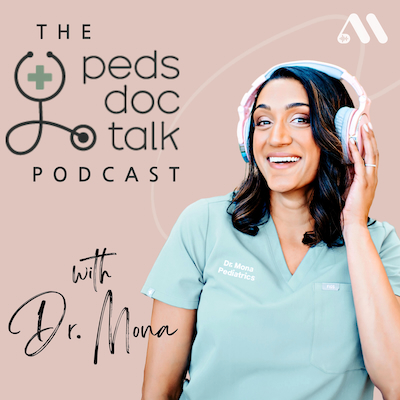

A podcast for parents regarding the health and wellness of their children.
On this episode I welcome Dr. Jessica Steier, a public-health expert, and Dr. Andrea Love, an immunology expert. They are the hosts of Unbiased Science, a podcast devoted to objective, critical appraisal of available evidence on health-related topics relevant to listeners’ daily lives. We discuss the following:
00;00;08;29 – 00;00;38;15
Dr. Mona
Welcome to the PedsDocTalk podcast. I am so excited to have the following guests. One of my favorite Instagram accounts and podcast, The Unbiased Science Podcast. The host of this podcast is here today, doctor Andrew Love, who has a PhD in Immunology and Microbiology, and Doctor Jess Steier, who has a Doctorate of Public Health. They are both joining me to talk about how social media has harmed public health and just health in general.
00;00;38;16 – 00;00;41;03
Dr. Mona
Thank you so much for joining me today.
00;00;41;06 – 00;00;48;29
Dr. Jessica Steier
We are so excited. Thank you for having us. Thank you, Mona, for having us. We love your podcast too.
00;00;49;01 – 00;01;06;19
Dr. Mona
You can hear it in my voice how excited I am because one, I wanted to connect with you all for so long and finally, with timing. I know you all are very busy with your platform, your real lives, and also your podcast. We were able to do this, and I think the timing is really great because there has been some major changes in the pandemic.
00;01;06;19 – 00;01;29;05
Dr. Mona
We are recording this in April when mask mandates were just dropped on airplanes, and it just seems to be that there’s always this social media information, the mainstream media, the government, I mean, it’s all over the place and social media has a huge role in how we communicate public health information and just health information in general. And you all are two people I look up to.
00;01;29;05 – 00;01;42;14
Dr. Mona
And I’ve always said this on my Instagram, who spread information, not fear, who are just very unbiased as your name says. So thank you for doing that, because I think social media really needs that.
00;01;42;16 – 00;02;05;27
Dr. Jessica Steier
Well thank you. Yeah. It’s interesting. I’d say that the silver lining, if there is one of pandemic, is that it’s given rise to accounts such as ours that have, you know, allow for real scientific information to have a platform to shine through. But of course, it’s a double edged sword because there’s also tons of misinformation, which is what I’m sure we’re gonna dive into today.
00;02;06;00 – 00;02;16;26
Dr. Mona
Yeah. And tell me more about yourself. So obviously, what prompted you all to start this platform again? The Instagram account, plus the podcast. It’s not just one or the other, but what prompted you to do this?
00;02;16;29 – 00;02;36;09
Dr. Jessica Steier
Yeah. So Jess and I, we met in undergrad, actually. So we’ve known each other since college. Jess was in the Ys program, which is the Women in Science and Engineering program, and I was in the Honors College at Stony Brook. And we were both in, you know, science fields, but very different science fields. And we kept in touch over the years.
00;02;36;09 – 00;03;03;04
Dr. Jessica Steier
And, you know, I work directly immunology, particularly infectious disease immunology and cancer immunology. So I’ve been kind of immersed in the misinformation about vaccines, about, you know, seek cures for cancer and all sorts of other things for really my career. But, you know, when Jess had her first kid, you know, she started joining mom groups on Facebook and started realizing how pervasive these myths and this misinformation really was among the general population.
00;03;03;04 – 00;03;34;02
Dr. Jessica Steier
And really, that is non-science people, people out on the field. Right? And so we had chatted, I think, for years, kind of off and on, like, we really should do something about this and, you know, but it was never a good time, right? You know, career life, all sorts of things get in the way. And then when the pandemic started, we were both separately posting stuff on our Facebook pages and Instagram pages to dispel myths and to calm people’s fears and to kind of distill a lot of the preprints that were circulating.
00;03;34;12 – 00;03;54;27
Dr. Jessica Steier
And we decided, you know, there’s no time like now. Like that was really the impetus to kind of do what we had talked about for so long and really put it into action in the Instagram. And the Facebook pages really were designed to be a companion to the podcast. But if you listen to the podcast, every episode is a different science or health topic.
00;03;54;27 – 00;04;13;13
Dr. Jessica Steier
And the Instagram page really for quite a while was very Covid focused because people were just, you know, in a silo of misinformation and they needed reliable sources to kind of distill and provide more credible sources.
00;04;13;16 – 00;04;31;03
Dr. Mona
Oh, and I agree you’ve been doing that. And like you said, this whole pandemic, the blessing has been the rise of proper information accounts that are, you know, trained in the area that they’re discussing. You know, for quite some time, there have been many people who claim themselves to be experts in a field that are not experts, per se in that field.
00;04;31;10 – 00;04;54;26
Dr. Mona
Maybe they have an experience in that field, or maybe they feel that they have mastered it themselves, but it doesn’t make them a master for everybody else’s life and opinion. So totally, very much agree with that. Now, one of the biggest things that we’re talking about is social media. But I also want to talk about just public health in general and what’s kind of happened in the United States with this pandemic.
00;04;54;27 – 00;05;15;00
Dr. Mona
I’m sure you all are watching this with your training given. You all are very trained immunology, microbiology and obviously public health combined. What could have been done differently in the United States with this pandemic? And I know that’s a very loaded question because we’ve been in this war. I looked at the number we’ve been in this pandemic for 770 days from the time it was declared.
00;05;15;00 – 00;05;32;09
Dr. Mona
Yeah, from the time that we were recording this podcast, which we’re recording it April 20th, 770 days, and I’m sure that that is a lot to go over. But what would you say are the biggest issues that you have seen that have not been done so well with the governmental approach to this pandemic?
00;05;32;12 – 00;06;02;24
Dr. Jessica Steier
So, you know, messaging is so, so critical. And I just think back to early in the pandemic, we often discussed this when we were all kind of united in this fear of this totally novel unknown virus. Right. And then very quickly, as with most things, it got very politicized. So, you know, it became a very polarizing issue. And there wasn’t it wasn’t like we the people versus the virus spread.
00;06;02;26 – 00;06;28;10
Dr. Jessica Steier
You know, it became we the people versus we the people. You know, and it was a nightmare. But I don’t want to comment on the political approach necessarily. I do think that had there been a more unifying approach to the messaging and that whole, you know, we’re in this together, that would have helped. But, you know, I don’t envy the position that the CDC is in because they have a lot of balancing interests.
00;06;28;10 – 00;06;56;04
Dr. Jessica Steier
You know, they have to evaluate the science. They have to put out evidence based recommendations and policies. But they’re fighting against a lot of competing interests, a lot of non-belief, disbelievers, a lot of people who are very frustrated with mitigation measures. And so, you know, I think back to when was it a few months ago, Andrea, when they revamped the guidance on what to do if you have Covid and how long you should quarantine and all that.
00;06;56;07 – 00;07;17;08
Dr. Jessica Steier
They came out in the recommended five days, remember that that whole thing and then a lot of people were really up in arms about that recommendation. Because really, if you look at the data, you know, we were saying it should really be a minimum of seven days. But anyway, so I think that the CDC not to pick on them, I think they could have done a better job.
00;07;17;25 – 00;07;44;09
Dr. Jessica Steier
You know, from a PR perspective, with their messaging and their, you know, I want to see transparency, but with their scientific communication, I think it fell on so many of us, you know, the three of us who are on this podcast right now are three of many people who sort of emerged as scientific communicators in response to some of the what’s lacking in our government scientific communication.
00;07;44;09 – 00;08;20;09
Dr. Jessica Steier
So, yeah, well, I’m going to add to that because, you know, and I know Justin, I don’t know, necessarily share identical political beliefs or, you know, approaches to kind of, you know, politics. But I think it’s fair to say that of the countries that were hit very hard with Covid, aside from, you know, the lack of a concerted, you know, coordinated message, it was very politicized and very polarizing, depending on which political party you belong to.
00;08;20;09 – 00;08;58;07
Dr. Jessica Steier
And that’s something that we didn’t necessarily see in other countries that have bipartisan legislatures. So, for example, Australia is actually run by a pretty conservative government, yet they had a very different approach to our conservative government that happened to be in place when the pandemic hit the U.S and so by highly politicizing the severity of the pandemic in the first place, and actually politicizing non-pharmaceutical interventions like masks, that made it that much more challenging for public health organizations like the CDC to be effective messengers.
00;08;58;10 – 00;09;21;17
Dr. Jessica Steier
On top of the fact that many of the figureheads for those organizations that are part of the government are political appointees. So, you know, we have, I think, too much political interference with science and public health in this country. And that’s certainly a systemic issue that I think needs to be addressed and needs to be overhauled. But that’s certainly made the challenge of combating the pandemic worse.
00;09;21;20 – 00;09;35;26
Dr. Jessica Steier
And still to this day, even though you know those in positions of authority have changed, we’re still seeing a lot of the headbutting and the roadblocks that we encountered very early on.
00;09;35;28 – 00;09;59;29
Dr. Mona
Oh, absolutely. And I love that you’re bringing up that, you know, there’s different political views, but in a public health emergency crisis, you know, politics really don’t have a place because it’s public health. It’s just something that is science. Evidence based. And I know a lot of the thing that parents and, you know, people listening probably are now realizing, but was hard at the beginning is all a lot of the back and forth with wear masks don’t wear masks.
00;09;59;29 – 00;10;16;13
Dr. Mona
And a lot of the the information that was sent out, a lot of the times the messaging was not clear, but also there was no messaging that said, here’s what we know and here’s what we don’t know because I think in a public health crisis and a pandemic, we have to be honest with ourselves that there are some things that we do not know.
00;10;16;13 – 00;10;32;21
Dr. Mona
But sometimes parents would be left like wondering, well, what does this mean? What am I supposed to do? And I had to be honest and say, look, we don’t know at this point what this means, or X, Y, and z. All we know is what we know on this day, at this current moment. So that’s what we have to kind of take and run with.
00;10;32;23 – 00;10;48;21
Dr. Mona
And that’s really hard for a lot of people. But then when the media will get involved and, you know, different politicians will get involved and say, you know, this and this and we’ve defeated the virus and you know, don’t worry about it anymore. And then people are like, oh, okay. Well, my government and my people are telling me that I’m fine.
00;10;48;23 – 00;11;11;21
Dr. Mona
It’s just there’s so much nuance in a pandemic that I think, again, your account was great at doing and it continues to do of like, well, you know, like this could be good, but let’s just think about these people who are more vulnerable and I think we’ve lost so much of nuance with this entire pandemic, which is something that I think most health care providers, scientists have always had.
00;11;11;21 – 00;11;21;15
Dr. Mona
But now we’re kind of competing with people who don’t understand the scientific nuance or health care nuance that we practice every day. Yeah. And I think.
00;11;21;15 – 00;11;55;14
Dr. Jessica Steier
You bring up a great issue, Mona, where normally scientific studies and research papers undergo the peer review process before becoming more visible or publicly available. But during a pandemic, because there was such a rush to find information or distribute information, because so much was unknown and uncertain, we had a lot of data repository servers that were publishing preprints, which are non peer reviewed studies and as a result can have flaws in the experimental design and the conclusions drawn from them.
00;11;55;17 – 00;12;19;13
Dr. Jessica Steier
And then that was compounded by media organizations and journalists who are not typically trained. Scientists misinterpret writing a conclusion or a piece of data in those studies. Then those become the sensationalized headlines that are circulating, and then us as scientists and clinicians have to be like, wait, wait, wait, wait, take a step back. This was done in a mouse, or this was done in a petri dish.
00;12;19;15 – 00;12;51;15
Dr. Jessica Steier
You know, you can’t extrapolate that to what’s going on in the real world. And it’s certainly underscores a systemic scientific literacy problem. But I think, you know, in some ways, yes, the availability of preprints to disseminate information amongst researchers has its benefits. I wonder if it maybe didn’t do more harm than good. I totally agree. And, you know, as you said, Andrea, the media, they pick up on these things and they report them as fact without acknowledging exactly as you said.
00;12;51;15 – 00;13;24;08
Dr. Jessica Steier
You know, this is it’s a scientific process. And those preprints are just the first step in a long process of critical appraisal and review, you know, by other experts. So I think even, you know, if the media wanted to report those things, which I agree is very dangerous, there should have been a lot about, you know, I, you know, explaining that the, you know, the science by headline is, you know, we’re reporting things that are we’re still not sure of, you know, these are still unproven, you know, theories, hypotheses, whatever it is, we’re still testing them.
00;13;24;08 – 00;13;47;08
Dr. Jessica Steier
We’re still getting data. And then that was seen as flip flopping by a lot of the public. Right. And it’s not flip flopping. It’s just a part of the scientific discovery process. And so, yes, it just became a mess. And I think that it’s really eroded a lot of the public’s trust in the scientific data. And then you have sorry, I have one more thing, one more bone to pick.
00;13;47;22 – 00;14;16;06
Dr. Jessica Steier
But then you had the false appeal to authority, right? And, Mona, you already kind of touched on this, where people were positioning themselves as experts in a particular field, but really did not have the training or expertise. And we saw that with economists publishing papers about public health or psychologists publishing papers about virology. And again, the average person doesn’t know that when they read a study, they have to go and verify that the credentials are appropriate for the person publishing the study.
00;14;16;09 – 00;14;41;29
Dr. Jessica Steier
But we saw those again getting circulating wildly, making false claims or making claims without any data to support them. And again, you know, then you have, you know, once you open the door and the horse is out of the barn, it’s so much easy, it’s so much more difficult to kind of walk that back and not even really walking it back, but being like, listen, this person is not an appropriate resource to rely on for this sort of information.
00;14;42;02 – 00;14;56;10
Dr. Mona
Yeah. And I, at the beginning of the pandemic, right, I was actually in maternity leave, my son was three months old and I was on a social media break because I was on mental leave and I was like, I had a difficult delivery and I was like, I need some time. And then this whole thing happened in March 11th, 2020.
00;14;56;12 – 00;15;20;05
Dr. Mona
And I remember not only myself, but a lot of doctors, like people who are not trained in public health or, you know, immunology. So all this stuff started going on social, including myself, and talking about the pandemic and what we know and all that. And I think it’s important that we go and clarify things that we know. But it’s also so important, and I sort of realizing it, that we also had to stay in our scope of practice.
00;15;20;05 – 00;15;38;10
Dr. Mona
Meaning I don’t know anything about public health because I’m not a masters of public health, so I can’t say what are the right precautions. What are we supposed to do? Because you all we’re still learning about that. At the beginning of the pandemic, all I can say is clinically, here is what I’m seeing. Here is what we know as a health care professional.
00;15;38;15 – 00;16;10;06
Dr. Mona
And here are some resources for public health or things like that. And I think, you know, I talked a lot about that with some of my colleagues too. On social. I’m like, look, we’re pediatricians, and I think we know a lot about a lot of things, but we are not pandemic experts. And I have also been very big on throughout this pandemic, kind of slowing down on what I talk about with the pandemic, meaning I’ve gotten much more reserved as to what I’m going to comment on and taking my personal opinions out of just the science, because sometimes they don’t always agree.
00;16;10;06 – 00;16;32;08
Dr. Mona
I’m going to be very honest with you. Sometimes I think, well, could we do this? Could we do this? Yes. But I also understand that that’s not okay for everybody. Right? Like you got to take the personal out of it and just really present scientific fact, which a lot of social media accounts don’t do. A lot of media accounts, like you said, you know, we understand we have to really respect the fact that they don’t respect it.
00;16;32;08 – 00;16;54;09
Dr. Mona
But you have to respect that media. It’s all clickbait, right? They’re going to create these sensational titles and article names that you click on their article, or that you want to watch their news so that you keep coming back for more. And because of that, it’s going to sometimes feed fear or feed anger or feed, negative emotion so that you keep coming back.
00;16;54;09 – 00;17;11;17
Dr. Mona
And as a consumer of health care information or consumer of any information, it’s so important to say this is actually good information. But is it being presented to me in a way that’s unbiased? Is it being presented to me in a way that makes sense? And that’s really hard for, I think, a lot of people to do.
00;17;11;24 – 00;17;27;25
Dr. Mona
And I’m going to be honest, especially parents of young children. Right? I mean, we’re in a stage right now where children under five don’t have a vaccine, and it just feels extremely isolating. And I’ve talked to so many families that I don’t have something for my kid, like, why are we left behind? And I’m trying to explain to them that we’re not left behind.
00;17;27;25 – 00;17;48;16
Dr. Mona
There’s a process with the vaccines. It’s going to happen, but they have to make sure that everything is okay and that the benefit is there. Like it’s not a vaccines are not there, and we should be super angry and angry and angry. Yes. But there’s a reason why it’s taking so long. As frustrating as it can be, there’s checks and balances to all of this.
00;17;48;18 – 00;18;14;18
Dr. Jessica Steier
Yeah, absolutely. I mean, Mona, I think you are probably one of the pediatrician accounts that at least me personally, really, I think did a great job in balancing exactly what you’re just saying, right? Trying to leave personal emotions, especially you as a parent of a young child, you know, balancing your expertise in pediatrics, but also, as you mentioned, your lack of expertise in other related fields that are all converging in the middle of a pandemic.
00;18;14;24 – 00;18;45;17
Dr. Jessica Steier
And I do think you’re right. You know, there are people that overstep and include a personal biases in their interpretations. And that might be good for some people’s consumption. But that’s really why our podcast is so named, is that we really want to be as dispassionate as possible. Like Jess and I don’t agree on everything personally, politically, professionally, you know, but we try and everything we present is based on a critical appraisal of the data available around the topic in question.
00;18;45;22 – 00;19;09;00
Dr. Jessica Steier
And we get accused of being used all the time because we’re saying, oh, vaccines are beneficial, but that’s because that’s what the data say, right? No it’s not. Yeah. And can I just say that I think it’s so awesome that we’re doing this right now and that we’re taking such an interdisciplinary approach because Mona, as you said, you know, I’m not going to stand here and say anything about you guys, about immunology and the immune system or anything like that.
00;19;09;00 – 00;19;21;14
Dr. Jessica Steier
I’m going to stay in my lane. But together, I think that we make a really strong team. And I think that this is just a fantastic opportunity to collaborate. So anyway, just wanted us. Yes.
00;19;21;17 – 00;19;38;00
Dr. Mona
Love that. Yes. And I really respect that. And that’s why I love, you know, I as you all know, I share your information on my social when people are like, hey, what about this one? Like I’m pretty sure unbiased tripod like has a post about this. Let me just look. And of course you all do because you’re and it’s not always going to happen that way.
00;19;38;00 – 00;19;57;29
Dr. Mona
But it just so happens that you have this entire pandemic when I don’t have time to create a person because of life and other things, you all are there for me. So I appreciate that so much. But, you know, the next thing I want to talk about, which is also the purpose of this episode, was there’s a difference between misinformation and disinformation, obviously similar, but a little bit of nuance there.
00;19;58;08 – 00;20;07;04
Dr. Mona
But I think it’s important and defining those terms, but also, how has social media played a role in those things for you all, from what you’ve seen?
00;20;07;17 – 00;20;35;02
Dr. Jessica Steier
Well, let me I’ll start with the basics, and then I’ll let just jump in with some more of the, you know, the granularity of, you know, the impact of social media. But so misinformation is basically incorrect information. So someone is sharing it or propagating it because they think it is true, but it’s actually incorrect information, whereas disinformation is that but someone is sharing it with intent.
00;20;35;02 – 00;21;13;01
Dr. Jessica Steier
So they are using it to deliberately mislead or they are knowingly sharing it even though they know it’s deceptive. And so an example of misinformation could be, you know, something that someone read on Facebook, like, I remember early on in the pandemic, there were all these at home remedies to like, minimize your Covid illness severity, like sleeping in certain positions and doing something with some sort of diet, eating eggs or not eating, I can’t remember, but you know, it was one of those like chain mail sort of posts that everybody was sharing, and it was because people were doing it in an effort to share awareness about this disease that very few people knew a
00;21;13;01 – 00;21;33;13
Dr. Jessica Steier
lot about. But it turned out that it was incorrect. So misinformation would be you thought it was true. You want it to potentially help someone you know that you were affiliated with, that maybe had Covid, so you were putting it out on your channel, whereas disinformation would be you knew it was true before you shared it. You created it in order to mislead somebody and you still continue to share it.
00;21;33;13 – 00;22;10;10
Dr. Jessica Steier
So really the big difference there is they’re both false, but disinformation has the intent to harm. Yeah. Intention. Right. And most I’m sure you’re familiar with the center for Countering Digital Hate. But they’re really incredible. And they put out a report called The Disinformation Dozen. We’ve reported on this. And you could easily, you know, find this online. But they basically they scoured the internet and they found that I think it’s something like 65% of anti-vaccine content can be traced to 12 individuals or and their organizations.
00;22;10;12 – 00;22;27;00
Dr. Jessica Steier
And when people say, you know, why are people doing this? Why would you intentionally spread disinformation? And the answer is often, you know, for fame, for profit, there are political motivations. You know, we’re not mind readers, but if you look at some of the the net worth of.
00;22;27;00 – 00;22;27;12
Dr. Mona
Some of.
00;22;27;12 – 00;22;49;20
Dr. Jessica Steier
These people, you’ll see it’s in the, you know, multi-millions and they’re selling books and supplements and altering ative treatments. So when you actually do some digging, it becomes, you know, a little bit clear what the motivations are. And it’s obviously this is something that we come back, we three and others are combating on a regular basis.
00;22;49;22 – 00;22;51;15
Dr. Mona
Oh yes. And I see yeah. Go ahead.
00;22;51;23 – 00;23;11;03
Dr. Jessica Steier
I was I was just going to say, you know, social media has given all of us a platform to reach many people. But if you look at some of the metrics, there was an MIT study years ago, actually, that found that misinformation and disinformation spread at least six times faster than credible information. It’s that much easier for people spreading false information.
00;23;11;03 – 00;23;36;02
Dr. Jessica Steier
And for those of us trying to debunk or dispel the false information that’s out there. So it’s really this uphill battle. And, you know, because a lot of these social media sites are really monopolized and really not monitored with a lot of oversight, it becomes very easy for people to pretty much say whatever they want with no real repercussions or even, you know, fact checking.
00;23;36;04 – 00;23;58;25
Dr. Mona
Yeah. And I think, you know, no, I think, like one of the biggest things is how overwhelming it is when I’m like on my social and I have to, like, limit my how much I go into my DMs. Because I’ll get, panicked. Mom, I think you were saying just when you were, you know, a young mom and had you were going into mommy groups, all the misinformation that you would see or like the spread of info that just was not correct.
00;23;58;28 – 00;24;16;08
Dr. Mona
I mean, how many people will write me like, is this true, Doctor Mona, or can you comment on this? Right. I’m not even talking about just the pandemic, right? We’re talking about all the things that you all debunk as well, like fluoride and this and that. And I’m like, and they’re like, you know, this thing, this thing. And I’m like, wow, if my brain sometimes is like, oh my goodness.
00;24;16;08 – 00;24;37;15
Dr. Mona
Like, how am I going to organize all of this misinformation and, you know, debunk debunked right in itself is a lot of it’s exhausting. I don’t think people understand like someone had asked me like, why don’t you go and talk to Candace Owens, who is like a huge anti-vaxxer and she is in charge, and I know you know, that are not a story.
00;24;37;15 – 00;24;52;27
Dr. Mona
I’m sure if you’re listening, you should know. I hope you don’t listen to what she says. You know her? Yeah, but people are asking me, why can’t she go talk to him like one? I will never speak to her because she’s a bully. Like she’s a bully. And I don’t speak to bullies. Bullies are people who will not even give you the time and space to actually have a reasonable conversation.
00;24;52;27 – 00;25;09;20
Dr. Mona
And I have been bullied in my childhood to know that as an adult, you can recognize a bully from a mile away. Like you know when it’s not a fair fight, you know? You know when it’s not going to be an, discussion and it’s going to be more of a one sided, you know, you’re a clown did it out, which is what they do.
00;25;09;20 – 00;25;29;09
Dr. Mona
And I. Right. That whole process is so exhausting. How do you all I mean, you guys, you ladies, obviously you’re not only dealing with, the pandemic, but you also deal with fighting misinformation in health and science in so many ways. Like how do you all, I guess, want to show up every day to do this? Like what gives you the joy?
00;25;29;12 – 00;25;48;16
Dr. Jessica Steier
It’s a huge you know, it’s a huge challenge. And I think before I jump in, you know, one other thing that puts us at a disadvantage when we’re debunking something, right? Someone who’s making a false claim, whether it’s intentionally or not, they just often use a lot of sciencey sounding buzzwords, and they kind of string them together and it makes it sound something scary.
00;25;48;22 – 00;26;06;16
Dr. Jessica Steier
But in order to debunk that, we have to provide a foundational education about the principles of the topic at hand before we can even get to the debunking. And so it’s so much more labor intensive, because if you just say, no, that’s not true, then they’re just going to say, well, you’re just saying that you have no evidence.
00;26;06;16 – 00;26;26;10
Dr. Jessica Steier
And then in order to actually provide the evidence, you have to start from, you know, high school level science principles that you learned decades ago to really build the foundation for why, you know, an RNA vaccine is not integrating with your DNA. You know, you’re going back to molecular biology principles, and it’s so labor intensive, regardless of what the topic is.
00;26;26;10 – 00;27;01;05
Dr. Jessica Steier
But, you know, I think I think for me, you know, I’ve always done this. You know, I did Lyme Berlioz’s research for my PhD work. And Lyme disease is another area that is rife with controversy and misinformation. It was exhausting as a graduate student combating that. But I’ve always felt this sense of obligation to use my expertise and use my training to help people live better, because there’s so much fear mongering out there and a lot of it is really preying on people’s emotions, particularly young parents.
00;27;01;08 – 00;27;25;05
Dr. Jessica Steier
It’s very common, you know, all these, you know, things you shouldn’t be feeding your children, things you shouldn’t be, you know, letting your children touch in the house or you can’t use these cleaners, you can’t eat this food. You know, it’s all based on fear. And then it’s also preying on people’s finances. And so for me, you know, I’m of the very strong belief that health care is a right and we should have affordable and accessible health care equity in this country.
00;27;25;05 – 00;27;44;04
Dr. Jessica Steier
We don’t. But we know that individual with lower socioeconomic status have worse health care outcomes for a variety of reasons. They also often live in places like that or food deserts, so they don’t have access to nutritional foods or things like that. So when you have companies that are like, well, you need to only eat organic because it’s better for you.
00;27;44;04 – 00;28;12;21
Dr. Jessica Steier
When the science literally says the opposite, then you’re making people feel bad for not even having the financial resources to even access those sorts of things. Whereas in reality, yeah, just eat as much balanced, nutritious food as you can. So I wholeheartedly obviously, I agree with everything that Andrea just said. And I think that, you know, sometimes when we communicate, we get accused of like shaming people for thinking certain things or believing certain things we’ve covered.
00;28;12;25 – 00;28;37;20
Dr. Jessica Steier
You know, obviously Andrea just mentioned things like chronic Lyme, and I’m using my air quotes here. We just debunked the medical myth of adrenal fatigue. And it’s not that we’re shaming people for believing these things because as we’ve all just said, you know, there’s misinformation out there. You know, sometimes people are consuming and resharing this information without the intention of, you know, they don’t know that it’s misinformation.
00;28;37;20 – 00;29;08;10
Dr. Jessica Steier
They don’t have that education. They don’t have the training to be able to discern, you know, fact from fiction. And so what we’re trying to do is arm people, you know, not shame them, but arm them with information so that they could be better consumers of information. They could make smarter purchasing decisions. You know, we talk a lot about things like the organic label and non-GMO, and there’s so much misinformation out there and clever marketing and branding they’re preying on.
00;29;08;12 – 00;29;20;16
Dr. Jessica Steier
They’re banking on the fact that people don’t know any better. And so that’s what I see is, you know, our role is to use our expertise to arm people again, to be better consumers of information.
00;29;20;18 – 00;29;39;16
Dr. Mona
Well, I really feel like, you know, I obviously have two lives. I have my life where I’m a pediatrician in my day job, where I see families who are not at all on social media, getting any education, parenting advice, nothing off of social. They’re just living their life. They’re doing what they need to do. Maybe they’ve got some education from their other generations.
00;29;39;18 – 00;30;02;19
Dr. Mona
And then I have my social media life, which is people who are on social media getting education, and then also my families who are also on social media getting education and advice or whatever. And I notice that the ones that are not on social are actually much happier because they’re not so bogged down with the overload of information and the people saying, you need this and you must have and don’t do this and don’t do this.
00;30;02;19 – 00;30;16;19
Dr. Mona
And they’re just almost they’re just living. And you would assume that those people are not in the know. You know, they are not up to date. And actually they are you know, they just know that this is what I’m going to do. This is what my resources are for my family. This is what my information that I know.
00;30;16;24 – 00;30;30;20
Dr. Mona
And I’m going to keep my kids safe and serve them this food and not worry so much about what another person is doing or saying. And in many ways, look, if you can consume information that way and say, I want to learn, but I also know that I need to make the choices that are best for my family.
00;30;30;20 – 00;31;01;23
Dr. Mona
But I want to learn what are best practices, like for safety and for health and for food and all of that. But not get into the marketing or the social media fear mongering because it is so, like we said, exhausting. It’s funny because we’re all science minded, right? And I feel like I am living a very happy life with my child, but I worry so much about the families that feel like they don’t have the science background and they feel like, well, I need to do this, that, or the other, or my kid’s not going to be healthy or grow up.
00;31;01;23 – 00;31;02;14
Dr. Jessica Steier
Not loved.
00;31;02;14 – 00;31;19;15
Dr. Mona
Or grow up not safe. And I’m like, no, no, no, no, no, I need to debunk all this for you because it’s not it’s not like that. Like it’s just there’s so much out there on you must or you must and this is it and this is it. But let’s just kind of in this those those are the terminology of you must and this is how it’s going to be.
00;31;19;15 – 00;31;22;06
Dr. Mona
It can be very draining for I think many people.
00;31;22;09 – 00;31;50;02
Dr. Jessica Steier
It’s exhausting. And you know, I’m fortunate, right, that I’m a scientist. And, you know, I can see the signs from credible science. But yeah, there are tons of people out there. And as you know, they’re preyed on when they’re vulnerable. Right? They have a helpless child that they’re trying to take care of and do good things for. And they’re told that everything is riddled with chemicals, even though everything is chemicals, and everybody’s going to die from being exposed.
00;31;50;02 – 00;32;12;17
Dr. Jessica Steier
All these toxins, which again, the dose makes the poison. I mean, but a lot of these things are, you know, as you mentioned, there’s very little nuance in many places. And so people are led to believe that the world is black and white, regardless of whether we’re talking about Covid or breastfeeding versus formula feeding or, you know, canned vegetables versus fresh vegetables or organic versus conventional.
00;32;12;17 – 00;32;30;08
Dr. Jessica Steier
I mean, it’s all out there, right? It’s one or the other. And it’s, you know, there’s no nuance, there’s no gray area. And it’s all built around this emotional, you know, appeal. And then also shaming people who are not doing what, you know, they must be doing. And again, I put in air quotes there.
00;32;30;19 – 00;32;49;05
Dr. Mona
I agree, now, I know this is not part of the conversation, but since I have you and I’m sure my listeners would love to hear this, what would be? I know you don’t have a crystal ball, but what is this next phase of this pandemic? I mean, obviously these new variants keep coming out, not showing to be, but I hate using the word severe or not severe because I can be miscommunicated, obviously.
00;32;49;05 – 00;33;04;12
Dr. Mona
But we’re talking about like rate of hospitalization, all of that. But obviously we see these variants and they continue to come out and they’re subvariants. When do we say that this is what does that even mean? What are we looking at for the next six months, or what are some possibilities of what how this is going to pan out?
00;33;04;15 – 00;33;07;20
Dr. Mona
I know that’s a loaded question, but I would love to know.
00;33;08;24 – 00;33;34;15
Dr. Jessica Steier
It’s it is. I mean, so, you know, a lot of people misinterpret what endemic means. So endemic basically means a disease that is present at a definable rate. And so that is going to be a situation where we’re not seeing surges or spikes in case numbers or hospitalizations or deaths. So it’s a relatively stable rate of illness, rate of hospitalization, rate of death.
00;33;34;15 – 00;34;17;23
Dr. Jessica Steier
You know, so endemic doesn’t mean that it’s milder or less harmful. It just means that we can predict the patterns of illness better. And so there’s a lot of endemic diseases in human populations. Seasonal flu, you know, HIV, measles, chicken pox, etc. and many are controllable or at least partially controllable through vaccination. So that is going to become, you know, a part of the mitigation as we move into and a city now, we’re not there yet because we are still seeing surges, recent wastewater surveillance, which is really one of the more accurate ways, I think, to monitor viral spread around the country since so many people are at home testing and we’re really underreporting cases
00;34;17;23 – 00;34;39;07
Dr. Jessica Steier
now, are showing surges across many places in the US. But I think the next six months are really going to be telling because we’re going to have additional tools in the tool kit, we’re going to have more access and availability of antivirals, which have some very convincing data that they are effective if taking early in illness, such as Paxlovid.
00;34;39;09 – 00;35;02;25
Dr. Jessica Steier
I think once we have a vaccine available for kids under five, we’re going to be in a better position because of course, they’re still completely unprotected, especially those under two, because they can’t even wear masks. You know, I think coupling vaccination with key non-pharmaceutical interventions like masking in particular instances, that’s going to be also a tool in the toolkit.
00;35;02;28 – 00;35;23;12
Dr. Jessica Steier
But, you know, a lot of people have kind of given up, right? As you said, it’s, you know, seven, seven, 700, 780 something days, seven, seven days. It’s a long time. Right? People are exhausted. We get it. It’s hard. You know, we have to adopt a risk mitigation approach or risk tolerance based approach. You know, we know zero Covid is never going to play out in the US.
00;35;23;12 – 00;35;43;24
Dr. Jessica Steier
And it never was going to play out in the US. But I think the rate of the emergence and spread of these new variants is all dependent on how freely we let the virus spread, right, because these variants emerge as a result of random mutations, and the random mutations that are beneficial to the virus are the ones that are going to stick in the viral population.
00;35;43;24 – 00;36;07;20
Dr. Jessica Steier
It’s just evolution. But the more we allow it to reproduce, the more mutations will accumulate, and that’s going to accelerate the rate of these new variants. And the way a virus reproduces is infecting people and replicating in people. So, you know, anything we can do to reduce that spread is also going to slow the rate of the emergence of potential new variants, which I think a lot of people have lost sight of a little bit.
00;36;07;20 – 00;36;33;20
Dr. Jessica Steier
You know, everybody’s very focused on, you know, Omicron is generally milder, meaning on an individual basis it seems to cause less severe illness. But if you look at the sheer numbers of cases during the Omicron surge, pediatric hospitalizations were actually more than two fold higher in the Omicron period, when vaccines were available for kids five and up versus the Delta period, when vaccines were not yet available until early November.
00;36;33;27 – 00;37;00;12
Dr. Jessica Steier
And so, you know, maybe on a person by person basis, it might cause generally milder illness. On a population level, it’s still a huge public health burden. So obviously, Andrea, that was a super comprehensive, answer, but I would just chime in and say that I think that there’s a lot of people who understand that it’s not like a flip is going to get switched and were suddenly going to be in an endemic phase of this.
00;37;00;12 – 00;37;23;08
Dr. Jessica Steier
Right. And that even within the scientific community, there’s some disagreement about when things are going to be considered endemic. There’s no set threshold like some people want to see. I think it’s under, 200 cases per 100,000 or something like that. But there’s no number that’s going to say, okay, now we’re endemic. It’s really more about the predictability.
00;37;23;12 – 00;37;42;20
Dr. Jessica Steier
So like with the flu, we can kind of predict when we’re going to have waves and spikes. Right. And right now we’re just not there because of with Covid, because we can’t really predict what’s going to happen with these new variants. So as Andrea said, you know, endemic means that we know that it’s always going to be present at some baseline level.
00;37;42;22 – 00;38;05;08
Dr. Jessica Steier
We’re not thinking that we’re ever going to be able to eradicate this. It just comes down to, you know, surges and the unpredictability of Covid. And we’re still in that unpredictable phase, which means that I’m I as a public health scientist, we’re not comfortable saying that. We’re that it’s endemic. You know, cases are on the rise. We have new variants emerging.
00;38;05;10 – 00;38;07;25
Dr. Jessica Steier
We’re just not there yet.
00;38;07;28 – 00;38;27;12
Dr. Mona
Well, thank you so much for saying that part about the switch, because I feel like a lot of people and we’re talking about the fact that we don’t have a vaccine for our kids under five. And my son is two and a half or almost two and a half, and I hear a lot of sentiment that a lot of parents want that vaccine because they feel like it will give them more security, which I agree, it’s going to give them more security than not doing anything at all.
00;38;27;12 – 00;38;49;20
Dr. Mona
But I want to be clear that even from what we know right now, that vaccine is not 100% in preventing us from getting Covid, including that age group. Even the Moderna trials that have yet to be reviewed by the, you know, for the EUA. But they were saying it was under 50% for contracting symptomatic Covid, right? I mean, yes, it’s going to protect you from getting into the hospital or deaths, which is so important in messaging.
00;38;49;20 – 00;39;07;13
Dr. Mona
Like I told my families, like I’m like, even though I may you may still get Covid. Let’s be honest, a lot of us thought Covid during the Omicron surge, right? Who even if you’re vaccinated, even if you get Covid, the messaging should be that you should have the vaccine. You’re going to have a less, less, less likelihood of being hospitalized or obviously dying of complications.
00;39;07;13 – 00;39;24;04
Dr. Mona
I mean, that is what’s so important. And it’s not a switch. I mean, I think parents are holding out for the switch. You know, they think it’s going to be a switch. And I want to explain and I’m happy you did that. It’s going to be a tool in the tool belt, right? Of course we want that vaccine so that maybe you’ll feel more comfortable in assessing your risk a little bit differently.
00;39;24;04 – 00;39;47;14
Dr. Mona
Maybe I want my children under five, my patients under five who have more chronic medical conditions to have access to a vaccine, you know, but it is such a multifactorial, like dimensional, you know, protection thing. It’s the masking. It’s the vaccines. It’s, you know, like you had said, you know, deciding to mask in certain situations. Right? Like, I don’t I’m not going to indoor crowded concert because I don’t feel comfortable.
00;39;47;18 – 00;40;04;21
Dr. Mona
But I do go to my brewery. I do go to, you know, Ryan wants to go to the gymnastics class. You know, I’m not worried about that. But that’s a risk assessment that I’ve done. Right. So it is a lot of mental gymnastics that I know. A lot of parents and people listening have been doing for 770 days, or longer.
00;40;04;23 – 00;40;20;06
Dr. Mona
But it is important to make those decisions and also listen to the right people like Andrea and Josh and myself, but people who are trying to help you out, you know, we don’t want to see you sick. We don’t want to see you full of anxiety and stress, but we also want you to feel informed so that you can make.
00;40;20;10 – 00;40;43;04
Dr. Jessica Steier
And I think, you know, you bring up a great point because as Josh said, it’s not a switch. It’s going to be a gradual switch into and a city, you know, you know, from a public health point of view and an infectious disease point of view. There are going to be some people that are, you know, more cautious still even at that phase and less cautious, you know, same as we’re seeing right now in the pandemic phase or in the more acute phase.
00;40;43;06 – 00;41;13;04
Dr. Jessica Steier
But yeah, we need multiple layers of mitigation. And everybody’s you know, we’re trying to balance like realism with pragmatism. Right. We know people are not they’re not going to stay cooped up for two years. Right. They want to go do some things that they used to do before the pandemic. So, you know, you have to balance if you take a risk in one situation, like you mentioned, bringing Ryan to gymnastics, then you avoid a risk in another situation, like you don’t go to a concert.
00;41;13;04 – 00;41;34;15
Dr. Jessica Steier
So like, I’m not dining indoors, but I’m going to the lab and I’m working right. And I did get Covid and I’m vaccinated and boosted and I have symptomatic illness. And it was not, you know, it was not fun. It wasn’t severe illness. It would be classified as mild illness. But, you know, I mean, people that diminish the severity of it, you know, in a way to persuade people against not getting vaccinated.
00;41;34;15 – 00;42;03;01
Dr. Jessica Steier
I can’t imagine how much worse it would have been if I was not vaccinated. And I think, you know, getting that nuance across, like, yes, vaccines will reduce your likelihood of getting infected, but not prevent it outright. But then if you do get infected because you have T-cell and B-cell memory immunity, your illness severity will be milder. You’ll be a much lower risk of getting hospitalized, and you’ll certainly be much lower risk of dying from this.
00;42;03;03 – 00;42;13;10
Dr. Jessica Steier
And I think we have to be really clear with, you know, the multiple layers of protection in the scope of disease severity that the vaccines really offer under it.
00;42;13;10 – 00;42;30;21
Dr. Mona
And just thank you so much for this. I’m like so excited. And obviously I love my podcast because I get to talk to people who are so passionate about what they do, and obviously I can sense it. And I could talk to you forever and ever about this topic and what your thoughts are on the pandemic and so many other things.
00;42;30;23 – 00;42;41;02
Dr. Mona
But really, I wanted to thank you all. I will have to have. It was Andrea who did the Lyme research, right? Yes, yes, I will have to have you on because Lyme disease is also something obviously big in the.
00;42;41;04 – 00;42;42;14
Dr. Jessica Steier
Yes, very big.
00;42;42;14 – 00;42;53;27
Dr. Mona
I would love to have you on, but there’s so many overlap of our content that I can’t wait to discuss with you all more. Where can everyone find you in terms of the podcast and Instagram account? And I’m going to be putting that on my show notes also.
00;42;53;29 – 00;43;22;26
Dr. Jessica Steier
Thank you. So we are on every major, podcast platform. So Apple Podcasts, Spotify, Stitcher, all of those things. So we’re on there as the Unbiased Science Podcast. You can follow us on Instagram at unbiased CI pod. We’re also on Twitter and Facebook and LinkedIn and all the places. And what am I forgetting, Andrea? Anything else? Oh, our website is unbiased.
00;43;22;26 – 00;43;44;26
Dr. Jessica Steier
CI podcast.com and we have our searchable database. So if you’re ever looking for like a specific post on a given topic, you can actually type in a keyword there. So like Mona, even if you’re looking at something about Covid, you know you can type it on the website. It’ll pop up with the actual link to the post. But all of the sources that we use to correlate the data for the post as well.
00;43;44;29 – 00;43;49;01
Dr. Jessica Steier
And then, of course, you can even access our podcast episodes directly on the website.
00;43;49;04 – 00;44;10;11
Dr. Mona
Wonderful. And again, thank you so much. I’m going to be putting all of this on the show notes, everyone, and please give them a follow and listen to their information on their podcast. Again, you have to use our database because if you are hearing some misinformation about X, Y and Z, please go to the experts and I will absolutely vouch that these two are experts in their field, and I love learning from them too.
00;44;10;19 – 00;44;12;15
Dr. Mona
Thanks again for joining me today.
00;44;12;17 – 00;44;15;17
Dr. Jessica Steier
Thanks so much, Mona this for thanks so much for having us.
00;44;15;20 – 00;44;17;03
Dr. Mona
So much fun.
00;44;17;06 – 00;44;32;27
Dr. Mona
Thank you for tuning in for this week’s episode. As always, please leave a review. Share this episode with a friend. Share it on your social media. Make sure to follow me at PedsDocTalk on Instagram and subscribe to my YouTube channel, PedsDocTalk TV. We’ll talk to you soon.
Please note that our transcript may not exactly match the final audio, as minor edits or adjustments could be made during production.
Need help? We’ve got you covered.
All information presented on this blog, my Instagram, and my podcast is for educational purposes and should not be taken as personal medical advice. These platforms are to educate and should not replace the medical judgment of a licensed healthcare provider who is evaluating a patient.
It is the responsibility of the guardian to seek appropriate medical attention when they are concerned about their child.
All opinions are my own and do not reflect the opinions of my employer or hospitals I may be affiliated with.