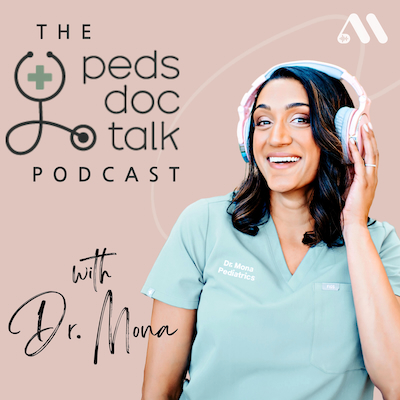

A podcast for parents regarding the health and wellness of their children.
On this highly requested Finding Joy episode, I tackle health anxiety. Having had a child with stroke and seizure and dealing with repetitive viral illnesses over the last year, I offer some support and reframe when approaching worries around our child’s health. I discuss:
Birth Story: https://pedsdoctalk.com/ryaans-birth-story/
Podcast about Repetitive illnesses: https://podcasts.apple.com/us/podcast/monday-mornings-with-dr-mona-why-is-my-kid-always-sick/id1501057527?i=1000549494964
00;00;01;05 – 00;00;20;02
Dr. Mona
If we think positively and hopefully. I’m not saying that this automatically means good things are going to happen, but it does bring hope and healing into a difficult situation which everyone can benefit from as we go through something hard like an illness, no matter the severity of the illness. And remember, hope and healing does not mean that you cannot be worried.
00;00;20;05 – 00;00;33;15
Dr. Mona
It does not mean that you cannot be stressed or sad. It doesn’t mean that when someone asks you, oh, how are you doing with so-and-so at home? You know, being sick or in the hospital that you have to say, oh, it’s freaking wonderful. It’s going to be fine. Life is great. Now you can admit that it’s very, very hard.
00;00;33;21 – 00;00;56;23
Dr. Mona
But also tell yourself that although this is hard, I will get through it in my own time because we do. We are incredibly powerful human beings and our minds are even more powerful if we know how to be compassionate towards ourselves and the signals it’s showing us. So. Hello and welcome back to the show and another episode of the finding Joy series.
00;00;56;25 – 00;01;20;05
Dr. Mona
If you haven’t listened to any of these episodes, every month I tackle a topic in parental mindfulness. I go through tough situations we go through as parents and especially as mothers that can rob us of our joy and strategies to navigate them. I believe that parenting goes more than teaching you what to do for your kids. You know, with picky eating or tantrums or sleep.
00;01;20;07 – 00;01;42;10
Dr. Mona
It’s also helping guide you and learn from each other through the ups and downs we go through as mothers and as parents. So welcome to the Talk podcast and the finding Joy series. Remember, if you love this episode or any episode one, leave a review please. This is how more people find this episode and the podcast and how it continues to grow.
00;01;42;12 – 00;02;11;02
Dr. Mona
And number two, share it on social media. Tag me. Share it with a friend. This is also how people discover the podcast. Now let’s get to this episode. This is a topic I’ve been meaning to do for a while. You know we are talking about finding joy, health, anxiety, a highly requested topic. I’m recording this in November 2022, more than two years into the pandemic, and we are seeing a large spread of common childhood viruses.
00;02;11;02 – 00;02;38;28
Dr. Mona
And I’m going to go over in this episode why health anxiety is so common and difficult, and the different aspect of illness in our children that give us frustration and worry, anxiety and how to reframe and navigate these very difficult feelings, but very normal feelings. Remember, the finding Joy series is not therapy, but it does give you tools to practice reframing how we look at stress, anxiety, and difficult but normal emotions.
00;02;39;01 – 00;02;57;25
Dr. Mona
So my story with health anxiety and our son Ryan goes back to his birth. We had a traumatic delivery with ICU stays for both me and Ryan. And for those of you unfamiliar with this story, you can find it on my website and I’ll probably put it in the show notes as well. So we emotionally and physically healed as one could after such an event.
00;02;57;28 – 00;03;15;01
Dr. Mona
And when Ryan got his first viral illness at 14 months, and I know some of you listening may be like, wow, I have an infant who’s sick right now. Well, remember, we had Ryan in the pandemic, so it may seem kind of late, but thanks to the pandemic and nobody getting together and very minimal social activities, he didn’t get sick in his first year of life.
00;03;15;01 – 00;03;44;18
Dr. Mona
And we also had a nanny. So 14 months when he got sick, he got a virus that also caused croup. And boy, did this experience trigger my postpartum experience. I remember walking into his room when he woke up sick, and immediately seeing flashes of the NICU and sound of the monitor going off. I mean, this new illness was triggering a traumatic experience, a time where we were all very vulnerable and this was being triggered by another vulnerable health experience, the unknown, the uncertainty.
00;03;44;19 – 00;04;03;22
Dr. Mona
What’s going to happen? Is he going to be back in the hospital? I mean, flood of emotions that brought me back to the NICU and also caused me to kind of go into the spiral. And this is common for many Nikki families, the grief and worry of illnesses to come. You spend so much time in the hospital, whether it was a day, months and then you go home.
00;04;03;24 – 00;04;20;13
Dr. Mona
You don’t have any monitor, you don’t have any nurses, and then your child gets sick for the first time. And it really can bring you back to those flood of emotions, the flashbacks. You know, we are programed to be on high alert after a real threat. A real threat, meaning your child was in the ICU. Maybe your child almost died.
00;04;20;13 – 00;04;38;10
Dr. Mona
I mean, there’s a real threat there. And our baby being sick in the hospital is that threat. Ryan was in the NICU, you know. Hello. A threat to safety. Hello, health anxiety. And now our brains are looking for threats. So when he got sick again, it really kind of brought us back to that moment of, oh, my gosh, is something going to happen?
00;04;38;12 – 00;04;58;15
Dr. Mona
Our brain is wanting to protect us and our family now. This health anxiety is common for many. Regardless if your child was in the NICU, the hospital or not, it doesn’t matter, you know, or if they had any major medical issues. Remember, when we talk about anxiety, this is a feeling of fear, dread, worry, or uneasiness. It’s a feeling.
00;04;58;15 – 00;05;19;20
Dr. Mona
It’s not who you are. And sometimes I think we let anxiety define us. Anxiety is protective. I think also we feel like it’s this bad thing, but anxiety is something that protects us, you know? So if you’re outside playing on the street with your child and all of a sudden you hear a car speeding, even if it’s not coming near you, you’re going to look around, you’re going to make sure that there’s no threat to your immediate safety.
00;05;19;25 – 00;05;40;15
Dr. Mona
This anxiety is telling you to get your kid out of the street. So anxiety exists to protect us from threats in our environment, threats to our health, and our safety and health. Illness anxiety is somewhat part of this. You know, many worry about the health of their child because this is their safety. Health and safety are the basics of what we want to provide our children.
00;05;40;18 – 00;06;01;29
Dr. Mona
Yes, people may say, you know, I want them to thrive developmentally. This and that. But at the core, we want our children to have safety and health. This is the essentials I think every parent wants for their child, and everything else is a bonus. But when you have threats, especially in a global pandemic, especially coming out of a pandemic and we’re seeing all these viruses, it can really feel very heavy.
00;06;02;02 – 00;06;29;05
Dr. Mona
But I want to be very direct here. Although we have the amazing ability to imagine all sorts of possible dangers with our brains, we are unable to control every outcome with our mind. So although you may worry about the health and safety of your child, it’s important to accept that we can control only what we can and that we cannot protect ourselves or our children completely from pain or illness or suffering.
00;06;29;07 – 00;06;51;28
Dr. Mona
This acceptance doesn’t make us dismissive of threats. This acceptance means acknowledging the reality of a situation and accepting our human limits of control. I can’t control every illness my child will get or health outcome, but I sure as heck can be hopeful, mindful, and focus on what I can control, which I’ll get into those three things at the end of the episode.
00;06;52;05 – 00;07;23;01
Dr. Mona
I’m a pediatrician, my husband is an ear doctor, and we had the unfortunate experience of having a traumatic birth for our son, and he ended up having a stroke and seizures because of that traumatic delivery. It took us that experience and parenting and working as physicians in a global pandemic to really reframe how we approach illness and threats to our health, because we both realized that living in fear and dread 24 over seven would not be sustainable, both in our personal lives and in our professions.
00;07;23;01 – 00;07;45;02
Dr. Mona
As healers and health care workers, health threats would be constant in our lives, and our son went through it. I went through it, and we see patients deal with this in a global pandemic and even before or beyond. So after my son’s first illness and me having those flashbacks, which my husband had as well, I continued my mindfulness practice work tips that I will mention in this episode.
00;07;45;04 – 00;08;07;20
Dr. Mona
But I also encourage all of you listening that if you are feeling overwhelmed with fear and anxiety related to the health of your child, that you seek therapy. If you can’t sleep because of the worry, you can’t leave your house. You can’t see other human beings. If you are struggling with activities of daily living related to the anxiety, no podcast, book or blog will be the only way through this.
00;08;07;22 – 00;08;29;04
Dr. Mona
You want sustained therapy and mental health support to guide you on the progress to having anxiety work for you and not against you. Because remember, anxiety isn’t an a feeling is not a bad thing. It’s when it becomes all consuming that we really want to address it. When we look at health anxiety and anxiety in general, we can feel very negative feelings towards it.
00;08;29;07 – 00;08;50;15
Dr. Mona
Gosh, why am I so worried? Oh this sucks. Negative self-talk, all that stuff that we tell ourselves, you know, negative words that just commonly come out when we’re dealing with anxiety, when you feel anxious, rather than getting upset at yourself, have some compassion for yourself. Get curious and ask yourself, what is the threat here? Is it real? Is it perceived with health anxiety?
00;08;50;15 – 00;09;12;26
Dr. Mona
It could be a real threat, yes. But then you have to also ask yourself what is the risk here? Take RSV for example. RSV is respiratory syncytial virus. It is a reality. It’s always been a reality. We’ve seen RSV for as long as I’ve been a pediatrician and more. It’s not a new illness. And your brain can look at RSV and say, wow, yeah, this is not something I want my child to get that I want to get.
00;09;12;28 – 00;09;33;02
Dr. Mona
I’m going to limit sick visitors. I’m going to wash my hands. I’m going to do my best here. Or your brain can choose to say, wow, this is a threat. This is a threat. This is this is a problem. This is bad. This is doom. This is doom. Everyone dies with RSV. Everyone gets hospitalized with RSV. When posed with a health threat, we tend to want to go to the worst case scenario.
00;09;33;05 – 00;09;51;16
Dr. Mona
This is especially true if your brain has been programed to look for the worst case scenario, something that my husband actually did a lot of before having my son Ryan, and then also after his delivery. And we have to undo that. But when you look at something like RSV, you’re looking at the media, you’re hearing all these horror stories.
00;09;51;16 – 00;10;17;00
Dr. Mona
These things are important to know so that you take the precautions that you can humanely take in your life. You think about what are the risk reduction strategies that I can do, but you also have to remember the overall big picture RSV. The hospitalization rate is five out of 100,000 people and 2.4 deaths out of 100,000. The statistic is not to be dismissive of the lives lost or the burden of having your child be hospitalized.
00;10;17;00 – 00;10;37;04
Dr. Mona
I’ve had a hospital as a child. I know that if someone was like, oh, Mona, you know, children with strokes like do this side the other, it doesn’t feel good. But I also think that it’s important to see optimistic things, to see hope, to understand that getting a diagnosis or having this happen to your child is an automatic negative doom sentence.
00;10;37;12 – 00;10;55;14
Dr. Mona
And it’s important to have this sort of reframe. So if your child does get sick, let’s use the as for example, saying to yourself, my child has RSV and although I know there may be some non favorable outcomes, I’m going to be by my child’s side through this and hope for the best. If we think doom, we’re going to feed doom.
00;10;55;16 – 00;11;20;04
Dr. Mona
And also it doesn’t help in being mindful in the moments that our child needs us and in the moments we need to get through those difficult times. If we think there’s no hope, there’s no hope. We have to change our mindset to kind of say, hey, I am in a tough situation. I am not dismissing the fact that my child is sick and I’m stressed and I feel all these feelings that I’m feeling, but I also have to be in the moment right now so that we can all get through this as a family if we think positively and hopefully.
00;11;20;07 – 00;11;38;29
Dr. Mona
I’m not saying that this automatically means good things are going to happen, but it does bring hope and healing into a difficult situation which everyone can benefit from as we go through something hard like an illness. No matter the severity of the illness. And remember, hope and healing does not mean that you cannot be worried. It does not mean that you cannot be stressed or sad.
00;11;39;05 – 00;11;56;09
Dr. Mona
It doesn’t mean that when someone asks you, oh, how are you doing with so-and-so at home? You know, being sick or in the hospital that you have to say, oh, it’s freaking wonderful. It’s going to be fine. Life is great. No, you can admit that is very, very hard. But also tell yourself that although this is hard, I will get through it in my own time because we do.
00;11;56;12 – 00;12;16;06
Dr. Mona
We are incredibly powerful human beings and our minds are even more powerful if we know how to be compassionate towards ourselves and the signals that are showing us. After Ryan’s first illness at 14 months, he went through a lot of back to back illnesses, and with every illness my nephew flashbacks got better and a lot of it was me remembering the following.
00;12;16;06 – 00;12;37;16
Dr. Mona
And I want you to remember this too. Number one, I can’t control every outcome in my life and my son’s life. I mean, this is obvious, but I think we try so hard to control control outcomes, control health, control our child’s trajectory. And similar to Ryan’s delivery with his stroke and seizures. I had a healthy pregnancy and I did everything quote unquote, right.
00;12;37;18 – 00;13;02;01
Dr. Mona
But unfortunately, we had a traumatic delivery. And as I started to realize, you know, I know that we did our best and that we cannot control everything. Ryan’s delivery awakened something in me that says, I am doing my best, and my best is good enough, and sometimes there’s going to be hard times. Sometimes I’m going to get sick, sometimes is going to happen, but I am going to do everything I can that’s in my control.
00;13;02;03 – 00;13;23;14
Dr. Mona
Letting go of this control again doesn’t cause you to get permissive. It allows you to remember that you are human and you cannot control every aspect of your outcome or your child’s outcome, but you make choices that are sustainable and that make sense to you with the information and resources that you have. Number two, I’m doing my best with the resources I have.
00;13;23;16 – 00;13;40;22
Dr. Mona
For example, I had to send my son to child care and we still continue to send him. And I was working full time. My husband was working full time. We needed the help. And so, so many of us could say, okay, well, if I kept my child home, if I was a stay at home mom or if we had a nanny at home, then he wouldn’t be in school.
00;13;40;22 – 00;14;00;29
Dr. Mona
He wouldn’t be getting sick all the time. But we know that when children are around other children, illnesses happen. So you have to look at the resources that you have and accept that and say, well, I need to do what I need to do. I’m doing my best. I have to send my child to child care. It’s important for us because we need to work and someone needs to watch my son that’s responsible and that is okay.
00;14;01;02 – 00;14;17;12
Dr. Mona
Now. Yes, with that it could mean illnesses. And I’ll get into how to reframe and remember this, but it’s important to know that your resources are individual to you. You can look at your friend down the street that has two nannies for each of their children, and is able to keep their kids home until they’re five, but that is their life.
00;14;17;12 – 00;14;38;10
Dr. Mona
That is their resources. That doesn’t mean that what you’re doing, your child getting sick back to back, is a negative. This is their immune system working. Which brings me to number three. I hate these illnesses. I did okay, like the back to back illnesses, especially that first year of childcare was really, really hard. I remember being in tears so many times because I was missing work.
00;14;38;10 – 00;14;56;06
Dr. Mona
My son was sick. I just felt like nothing was going right. It felt very overwhelming. And you’re just worried about your child. You’re worried about your job. You’re worried about everything. You’re to have no stability. And I’ll get into all those things that make us stressed, when our children are sick. But with every illness, we would remind ourselves his immune system is learning.
00;14;56;09 – 00;15;12;14
Dr. Mona
This reframe was actually very helpful when it was going back to back, and it doesn’t take away from the fact, again, that those back to backs were really hard, that we were missing work, that he was sick, the fever, the worry. But it really helps to kind of know that, okay, this is normal. I’m going to look out for what I need to look out for.
00;15;12;19 – 00;15;31;10
Dr. Mona
I’m going to make sure that I’m not missing anything, and that’s the stuff that I’ll get into. But it’s really important to remember that this is actually very, very common for children when they start group childcare. And we did see, increase in viral transmission once the pandemic kind of lockdown kind of ended and everyone’s kind of coming together again.
00;15;31;15 – 00;15;48;19
Dr. Mona
We saw a lot of these childhood viruses transmit more. You know, we just felt like it was happening more because, yes, kids were getting together for the first time in a year. And so then you’re going to see sickness. But the reframe can be very helpful. Number four, that can really help when you’re trying to, you know, think about reframing and getting to these illnesses.
00;15;48;22 – 00;16;06;10
Dr. Mona
I know what to look out for in this illness. This is what I’m trying to do with these doc talk to educate all of you on when to be concerned. I know that it’s such a nuanced discussion. I know that your feelings and comfort may be different from someone else’s, but it’s important to know that if your child has a fever, croup, bronchiolitis, whatever it is.
00;16;06;12 – 00;16;23;26
Dr. Mona
When do I need to see a physician? When do I need to go to the hospital? And this is what I hope to continue to do now as a pediatrician, I will say that yes, having this knowledge when Ryan is sick is helpful. But what was not helpful is knowing all the rarities, right? The children who don’t do so well with the illnesses.
00;16;23;26 – 00;16;44;00
Dr. Mona
My husband sees the worst scenarios in the E.R., but we had to really remember and lean in on the positive stories. The fact that children do recover from illnesses, the fact that we did our best to reduce risk. But illness happens. We can’t control every virus that comes into our life, but we can control what we’re looking out for, what we’re doing in the moment with our child.
00;16;44;02 – 00;17;03;29
Dr. Mona
And number five, if he does get sick. I’m a physician and my husband is a physician, and we know that modern medicine can do so much right now, and we will get him the help he needs if he needs that formal medical help. This is huge to me. And I bring this up not to again say, okay, your kid gets sick.
00;17;03;29 – 00;17;18;28
Dr. Mona
Don’t worry, we have a hospital. That’s not what this means. This means that I don’t want any child in a hospital if I can avoid it. I hated Ryan being in the Nicky. I love the Nicky people. Don’t get me wrong. I love the staff. But I do not like being in a hospital. Even though I’m a physician.
00;17;19;05 – 00;17;40;11
Dr. Mona
I don’t like it. It’s not fun for anybody. It’s not an easy experience. But I also know that sometimes it’s the best place we need to be to heal. And although it may seem daunting and I want you to go home as soon as possible, modern medicine can really help us compared to centuries ago. So when you find that your child is sick, what I want you to focus on is my child is sick.
00;17;40;11 – 00;18;03;17
Dr. Mona
What do they need now? What am I going to help them with? What do I need to know in terms of when my child needs to get seen, when they need to go to an ER or the doctor’s again, and also leaning in and understanding that if I need formal help, it’s there. You are not alone. I feel like so much of health, anxiety and anxiety in general comes from the fact that we feel isolated in this experience, and the finding Joy series is about that.
00;18;03;17 – 00;18;26;02
Dr. Mona
To know and make you feel like you are not alone because you’re not. We are all going through very similar experiences and know that you have a support team. Whether it’s your pediatrician, whether it’s a hospital, whether it’s your friend, you have that support. When we have health anxiety, we often go down the rabbit hole. Worst case scenarios, Google searches, reading stories of sad outcomes.
00;18;26;04 – 00;18;44;12
Dr. Mona
I remember when my son got his stroke and seizure diagnosis. I chose to surround myself with positive stories stories of survival, stories of hope, stories of healing, stories of children who went on to lead a very normal life. This doesn’t mean that I lived it with my head in the clouds, where I knew that the other stories didn’t exist.
00;18;44;12 – 00;19;13;11
Dr. Mona
I’m a pediatrician. I know that they do. I know that there are not so great outcomes with certain diagnoses. I know outcomes aren’t always roses and butterflies. In my career, I’ve seen the most dire of situations freak accidents, negative outcomes from conditions, etc. but I have also seen miraculous recoveries. I’ve seen hope. I’ve seen kids overcome some horrible illnesses or accidents and walk out of hospitals like nothing ever happened.
00;19;13;13 – 00;19;30;23
Dr. Mona
So I chose to focus on hope. So I asked myself, why are parents so much more anxious about health anxiety than years past? What is going on? You know, I feel that there’s more tension, fear and anxiety and I am on social media, so I hear a lot of concerns, but I also feel that it’s happening in my office.
00;19;30;28 – 00;19;52;11
Dr. Mona
I feel like there’s just more tension in parenting and the health of our children, and I do think we have the pandemic to thank for this. For two years we have been programed to avoid a threat to Covid. Okay, avoid Covid handwash mask, vaccinate, vaccinate. Covid is bad. Covid is bad. If people got Covid, especially early on right, we thought that they weren’t doing enough, but they weren’t social distancing.
00;19;52;13 – 00;20;13;29
Dr. Mona
There was this hierarchy of oh, you are not doing this right, I’m better or you’re worse. Our brains have been told to fear, fear, fear, fear, Covid. And the media is also to blame. Okay? But to some degree this was important so that we made choices to reduce risk. But remember it’s reducing risk. You cannot eliminate all risk when it comes to a viral illness or illness in general.
00;20;14;01 – 00;20;34;16
Dr. Mona
But if it becomes all consuming, right this fear and affecting life now, the anxiety has now tipped over to becoming unsustainable and unhelpful. We cannot completely avoid risk when it comes to respiratory virus. When I say completely avoid, the only way you can completely avoid getting sick is that if you stay home and never see another human. Anybody in your family?
00;20;34;16 – 00;20;54;27
Dr. Mona
I’ve said this before, it’s the only way. But we’re human beings, we’re social creatures. We have to see other people at some point. And so with that comes the risk of human spread, of contact, of illness, you know, and it’s a reality. We can reduce risk. However, you know, we can do the hand hygiene, we can take the precautions, but we have to accept that we cannot completely reduce it.
00;20;54;29 – 00;21;22;19
Dr. Mona
This is important so that you do what’s in our control and let go of what’s not. And it’s also important to remove guilt, because if you think that you do x, y and z and you will not get sick, or your children will not get sick, and then you do you feel like a failure? Common during the Omicron surge in December 2021 and beyond, when everybody who had never had Covid or maybe got the vaccine started getting Covid and felt like a failure, I got DMs like, oh my gosh, like, I can’t believe my family is going through this.
00;21;22;19 – 00;21;51;07
Dr. Mona
We took every precaution. I feel like a failure. You are not a failure if you get sick, you are not a failure if your child gets sick. You are a human living amongst humans doing your best. Remember that I asked my followers on dog talk on Instagram why their kids getting sick was stressful or anxiety provoking for them, and I got some really great responses and I want to normalize some of the major ones here and offer some reframing.
00;21;51;09 – 00;22;15;27
Dr. Mona
Number one was feeling like you’re waiting for the other shoe to drop when there’s so much illness around. Oh, I feel this so strongly. The hardest thing is that I work clinically as a pediatrician, as you all know, and I see all the freaking illnesses circulating and I see some kids do really well. Some need the hospital, but I know every single virus circulating in the community, and I’m also waiting for the other shoe to drop.
00;22;15;29 – 00;22;36;21
Dr. Mona
When Ryan is healthy and I’m in my office, I’m like, oh gosh, are these going to reach his preschool or his soccer practice? And when you’re feeling this right, when your child is healthy and you’re watching the news, or you’re on social media and you’re hearing people say, you know, this of this virus in this, I want you to remember that now your kid is healthy.
00;22;36;21 – 00;23;03;29
Dr. Mona
You are healthy. It’s okay to enjoy the healthy moments and celebrate. We are human beings. If you are waiting for the other shoe to drop and choose to avoid all social activities, that’s your choice. But is that a sustainable plan for you? Baby? You focus on avoiding unnecessary indoor activities to reduce risk, so we know that viruses spread more likely in an indoor setting where there’s poor ventilation versus an outdoor party.
00;23;04;02 – 00;23;20;13
Dr. Mona
So if you are concerned about the viral spread right now but you still want social activity, maybe you keep the social activity small. Maybe you keep it outdoors, maybe you only hang with friends and have a pact to keep the kids at home. I mean, if we could all do this, I would be great, right? Like if your child wakes up and is cranky, has like 110.
00;23;20;15 – 00;23;42;24
Dr. Mona
Even though that’s not a fever, you can probably assume that they’re not feeling well and maybe keep them home that day. But if you’re waiting for the other shoe to drop, you can miss out on the healthy moments, which are really beautiful moments, which is what mindfulness is and what I like to talk about on these. Finding Joy episodes, celebrating the now and being aware of the past and future, but not letting that consume your thoughts in the present.
00;23;42;27 – 00;24;00;15
Dr. Mona
Number two, this is a very common one that was brought up on my Instagram account. The uncertainty of illness and repetitive illness. This was a huge one and many mentioned that it just lacks any predictability and this can go into many facets. You know, our kid being sick in itself is super stressful. The back to back is is something I need to be concerned about.
00;24;00;17 – 00;24;15;21
Dr. Mona
Is it the same illness or is it a new illness? Like, seriously, what the heck is going on? And I’m linking another podcast episode about back to back illnesses and why kids were getting sick a lot, especially, you know, in January. And I’m gonna I want you to listen to that too, if you haven’t already. But with uncertainty, it’s also the uncertainty of missing work.
00;24;15;28 – 00;24;33;01
Dr. Mona
This can be a huge stress for many of us who are working parents, and I had this a lot in 2021. I was out of sick days by July because of my own health issues with IVF and also Ryan’s repetitive illnesses, and my husband doesn’t get sick days the way his job works. So it kind of fell on me to take the time off.
00;24;33;03 – 00;24;53;09
Dr. Mona
So I had to go unpaid. And with this, you kind of have to start to really have conversations, especially if you have a partner, one, you have to have discussions on who is going to be the one to call out in the setting of an illness so that it’s equitable. So it seems fair, right? Sometimes one job can be more flexible, or maybe one job has more sick days.
00;24;53;16 – 00;25;13;12
Dr. Mona
So thinking of that is important. Number two is speaking to your employer. Some are just not understanding. And I respect that. I get that that’s not easy for some employers and employees situation. But knowing the sick policy, knowing the work from home policy, if that’s an option, and being clear that your child is in childcare and what this means.
00;25;13;14 – 00;25;44;09
Dr. Mona
Number three is enlisting the help of someone in good health willing to help out. This could be a hired nanny, a family member. This can be hard since the child is sick, but backup does exist and you can utilize these people right at your own comfort. Ideally, it should be someone trusted because of course, since your child is sick and that person should also be told that your child is sick, you do not want to ever tell a hired help or a family member that hey, come watch my kid, and then your kid is spiking $100 and that person is now at risk of getting whatever your child has, right?
00;25;44;14 – 00;26;04;13
Dr. Mona
Don’t hide that from them. But you will be surprised that some people are very open to it. They’re okay. You have to just be very clear about what’s happening and utilizing those resources. The other reason why this uncertainty can be so hard is the uncertainty surrounding child care. And this can be twofold. If you get sick, having to care for a child is tough.
00;26;04;13 – 00;26;22;10
Dr. Mona
So if you’re sick, it’s very hard taking care of a sick kid, I understand that. And number two, if your child is sick, that’s actually can be really tiring for you. And sometimes you need a break. I know, you know, we as moms and parents like we do so much, but sometimes you’re drained. You know, the food refusal, the sleep refusal, the worry, it gets to you.
00;26;22;10 – 00;26;39;03
Dr. Mona
And sometimes parents feel bad for admitting this, but I get it. It’s draining taking care of someone sick and also being sick. All of it. So when we think about the uncertainty, not only are we thinking about your child being sick and what that means for them, you know, the repetitive illness, do you need to be worried? All of that?
00;26;39;06 – 00;27;03;05
Dr. Mona
But there is also a reality of all the other factors that we are doing as working parents. The lack of sick days, the who’s going to take time off? Who’s going to watch my kid? I am freaking tired and really coming up with a plan with your partner if you have one, or talking about options for hired help if that’s an option for you, and if it’s not speaking to your employer about the reality of the situation so you don’t have that work.
00;27;03;05 – 00;27;19;12
Dr. Mona
Guilt. I know so many of us have been there, right? Like, oh my gosh, I have to call it again, as a pediatrician, it means that I have to reschedule all of my patients who’ve been waiting to see me. You know, they were planning on see me on whatever day that they scheduled. And now I can’t come and you feel bad, but you also have to be there for your child.
00;27;19;12 – 00;27;37;19
Dr. Mona
So removing the guilt, saying that you are doing the best that you can, and coming up with a plan that makes sense for your family. Another topic that people on my Instagram have said, that makes them very frustrated or stressed about when their child is sick is changes in your child’s behavior. You know, sleeping, eating, overall demeanor. And now this is so tough.
00;27;37;19 – 00;27;52;03
Dr. Mona
Let’s not deny the fact that when your child is not themselves, even when you’re not yourself, it’s not fun. I mean, I recently recovered from the same virus my son had and I got it and I was like, man, after I got it, I was like, wow, you must have been so miserable. But he did pretty good. Like it was an awful cough.
00;27;52;03 – 00;28;09;21
Dr. Mona
You just feel achy, like it was not fun. And as parents, this is so hard. We love seeing our kids playful and healthy and happy, and that’s not anything that I think anyone of us will disagree on. There’s nothing wrong with wanting them to be in good health, but we know that illness is tough for us and it’s tough for them.
00;28;09;23 – 00;28;32;17
Dr. Mona
But remember that they are healing their bodies, creating memory here to fight illnesses. Their immune system is getting so strong. And I said this already, but this is important so that when you’re in these moments, I remember being there with my husband and I would be so stressed and tired and I would be crying due to the repetitive illnesses, and my husband would just sigh and say, he’s got this, we got this.
00;28;32;19 – 00;28;54;06
Dr. Mona
His body is learning and fighting and we will help him. It’s hard, but remember, this is fleeting. They will sleep again. They will eat again. Focus on what they need now and what you need to get through these illnesses. Another thing that we commonly talk about is unsure of when to be concerned, and your child not communicating, or you missing something.
00;28;54;09 – 00;29;19;08
Dr. Mona
I know parents don’t believe that they have it, but in my ten years of training and practicing as a pediatrician, I’ve learned the power of parental instinct. Trust yourself and educate yourself, and I hope my platform will help you with the latter. Right? Knowing when to be concerned. Understanding that if your child’s not communicating, you know, if they’re not hydrated, if they’re not breathing well, if those fevers are persistent, those are all signs, right.
00;29;19;08 – 00;29;38;27
Dr. Mona
But if you really step back, I know you know what you’re doing. And I’ve seen this I’ve seen mothers come into my office and they’re like, hey, I wasn’t sure. And I just wanted to bring him in. And I said, hey, I’m really happy you did. The worst thing you do is bring your child in to be seen, meaning to say your intuition is telling you something is wrong and your child looks okay.
00;29;38;27 – 00;29;53;05
Dr. Mona
Maybe a little unwell, but things are going to be fine. You brought them in, right? But if your gut is telling you, hey, something’s still not right. My child’s not getting better. I want you to listen to your gut and get help. We want to see you. We want to make sure that we are listening to you. And it’s important that you are heard.
00;29;53;07 – 00;30;12;17
Dr. Mona
The other thing that was commonly brought up on my Instagram page about why illnesses are so tough is guilt. And guilt can show up in many different ways. Number one, it’s the guilt that we’re not doing enough or that we didn’t do enough. Remember that we can only control so much. If we could control everything, nobody would ever get sick or hurt or feel pain.
00;30;12;20 – 00;30;32;14
Dr. Mona
But as humans, we will all experience this. Your child, yourself, everybody. We’re not immune to struggle. You are doing enough. You did enough. It’s not your fault. Yes, you could pinpoint maybe a social event, etc., you know. But what good is this going to do now when you’re sick or your child is sick to point fingers at, oh, this is where it happened.
00;30;32;17 – 00;30;53;02
Dr. Mona
It doesn’t change the outcome that your child is now sick, and you have probably attended many events and never got sick. So why are you putting yourself in that blame cycle? Instead, use that energy and focus on what your child needs now. Feed any anger or disappointment you have into healing. We often want to focus on where it came from, or go down the rabbit hole on what’s going to happen.
00;30;53;05 – 00;31;13;29
Dr. Mona
Focus on comforting your child, how you would want to be comforted if you were sick, instead of searching the internet for what might be wrong, or sitting with your child, but feeling distracted by your worries. Choose to bring your attention to the present moment. Move your distracted energy into being with your child. Being the presence to help them heal so you can all go back to playing and fun.
00;31;14;01 – 00;31;32;22
Dr. Mona
It’s okay to feel guilt and anger, but channel it into good and healing. The other thing that people felt guilty about was feeling frustrated when your child is sick. Oh my gosh, my child is sick. And why am I feeling upset that they’re sick? Okay. This can come from work obligations. This can come from all the things that happen when they’re sick.
00;31;32;22 – 00;31;51;05
Dr. Mona
You know, changes in sleep, behavior, you knowing that you may not sleep, being fatigued, feeling stressed that you’re going to get sick, or feeling upset that your maybe your partner is sick and having guilt about that. Remember that it’s okay to feel frustrated, but we have to see what is it? If you’re stressed about work, so just say your child gets sick and all of a sudden the first thing you think about is work.
00;31;51;05 – 00;32;09;22
Dr. Mona
And I’ve been there. The worst employers are not going to be understanding. Do you like your job? Is your job stressful? Is that why you’re stressed? Because you feel like you’re going to let people down. But your family is really important, right? Your child is really important. They should come first. It’s a reality that that is what’s most important in our lives, the people that we are closest to.
00;32;09;25 – 00;32;32;10
Dr. Mona
So if you’re constantly being stressed about work, I want you to step back and think, is this a sign to maybe consider finding a more flexible job in your industry or switching industries? Is your employer supportive of this? Because if your employer was supportive, you probably won’t feel the guilt or the stress or anything like that. But if you’re feeling like you get no sick days at your employer does not care that your child is in child care.
00;32;32;13 – 00;32;49;03
Dr. Mona
Is this worth the stress for you? You have to think about the big picture and use this experience. Your kid being sick as an understanding of a bigger change that you may need to make in your life. Again, the long term thoughts here. Now, if you’re worried about your own health, right? The guilt of feeling frustrated when your child’s typical, you’re like, oh my God, I’m going to get sick.
00;32;49;05 – 00;33;05;08
Dr. Mona
This is natural, but focus on what you can do. What I do is I go to bed as early as possible, so that I can rest. Meaning I know that my son may be getting up because he’s sick, but I make sure that if I normally go to bed 11, I’m trying to go to bed by 10:00 even earlier so that I can rest my body.
00;33;05;08 – 00;33;24;08
Dr. Mona
It’s been a long day taking care of a sick kid. He may wake up. I need to get my rest to go to bed as early as possible. Drink lots of fluids to stay hydrated. This can also help keep your mucous membranes moist. You know, keep from viruses sticking anywhere that they need to stick. Focus on breathing and stress reduction and honestly hope for the best.
00;33;24;14 – 00;33;42;03
Dr. Mona
And don’t expect doom for yourself either. When my son is sick, sometimes I get sick, sometimes I don’t. You know all of our immune systems too, but I don’t automatically think, oh my God, I’m going to get sick. I’m gonna be like, okay, I’m going to rest. I’m gonna drink a lot of water. I drink my golden milk, which I’ve talked about on my Instagram page, and I take it easy and understand that I’m doing my best.
00;33;42;03 – 00;34;01;29
Dr. Mona
I can’t now avoid me getting sick if he coughs to my face. Right. And the last area of when people feel guilt when their child is sick or just around illness in general, is feeling guilt at your partner because you are upset at them when they get sick. And if this is happening to you if you are upset with your partner, have resentment towards them when they’re ill.
00;34;02;02 – 00;34;23;19
Dr. Mona
I need you to really step back and ask yourself, do you feel that they are helping out normally? Sometimes we feel resentful to our partners when they’re sick because we feel that they’re not carrying their own weight normally. So illness is almost like something we perceive as a break for them, so that you feel like you are having to do all the work, and that maybe you had to take care of the child while you were sick and your partner didn’t have to.
00;34;23;19 – 00;34;43;21
Dr. Mona
And then now you’re doing all the work while they’re sick as well. If you don’t have that extra pair of hands. So when everyone is healthy, it’s important to have a conversation about the workload in the home, resentment, and also ways to support the primary caregiver, because there tends to be someone who’s more of the primary caregiver, or the one that does more of the meals and the shopping and the child rearing stuff.
00;34;43;21 – 00;35;10;10
Dr. Mona
So this may or may not be you, but it’s important to have these healthy conversations. If you’re finding yourself being upset at your partner when they’re sick. Another big area of frustration sadness, guilt with illness is missing out on activities or canceled plans. Now, this is a big comment and let me tell you, it sucks. I’m not going to lie, it sucks, especially for so many of you listening who have done nothing for the entire pandemic or for like a year, right?
00;35;10;10 – 00;35;30;25
Dr. Mona
No birthday parties, no trips for so long. Ryan’s entire first two years of life, it was only preschool or school, but nobody was having birthday parties or other events. We didn’t travel like we thought we would. The pandemic put a wrench in all of our plans, so looking forward to giving your child social activities and then having illnesses, it really sucks.
00;35;30;25 – 00;35;51;20
Dr. Mona
You know, canceled parties, canceled flights. I’ve been there too many times, and we’ve had to cancel so many trips over the last two years, especially in the last year, everything has been open. But because of IVF and Ryan’s illness or my husband getting ill with some random like kidney stone or something, it sucks to have to cancel plans and you pay money.
00;35;51;20 – 00;36;08;04
Dr. Mona
You do all these things. You look forward to these activities. Some reframing here and some things that I want to remind you. You have to tell yourself, I couldn’t control this. I didn’t know I wanted to go to this birthday party or this event or this trip, and I couldn’t control it. And that’s okay. We have a lifetime of travel.
00;36;08;04 – 00;36;25;29
Dr. Mona
We have a lifetime of birthday parties. We will get to go to all of these events and go back to what I said earlier in this episode about when your child is healthy, don’t live in that fear cycle of, well, I don’t want to go to an event because I don’t want to get sick because then you’re missing out on those moments and activities that you are capable and able to go to.
00;36;26;03 – 00;36;45;06
Dr. Mona
So tell yourself, I’m going to do this activity. I’m going to enjoy it. I’m going to hope for the best. And yes, I hope that people will keep their kids or themselves home if they’re not feeling well or, you know, they’re acutely febrile, but it’s okay to enjoy the activities when you are healthy. Take that weekend trip. If everyone is healthy, book something last minute if everyone is healthy.
00;36;45;10 – 00;37;03;04
Dr. Mona
We did this. We had to cancel a plan that we had because of IVF. Okay, this has nothing to do with these repetitive illnesses, but we had to cancel because of some scheduling snafu and I was devastated. My husband was devastated. My parents were supposed to come with me on this trip. We had to cancel and it was what it was.
00;37;03;04 – 00;37;18;09
Dr. Mona
I happened to get the travel insurance because I don’t normally do this, but we did, and then we just booked a last minute redo of that trip when we were able to. It was a week before and we were like, why don’t we go? And it was not peak season to the Bahamas. And we went and it was an amazing trip.
00;37;18;13 – 00;37;41;06
Dr. Mona
We were all healthy. We enjoyed it. So take that last minute trip, book a flight or trip last minute. When healthy, celebrate the healthy moments and go. We tend to not want to enjoy when healthy out of the fear of illness and danger and danger and the red lights that are flashing. But then we’re not living. You’re missing out on all of the healthy birthday parties and activities that make life very special.
00;37;41;13 – 00;38;01;00
Dr. Mona
So enjoy these activities because I get it. Sometimes we have to say no, sometimes we’re going to miss out and that is okay because other events will come. We will miss some events. Sometimes and it stings. And the constant plans being canceled sucks too. I mean, feeling like we’re letting others down or letting your child down if they really wanted to do something.
00;38;01;00 – 00;38;20;00
Dr. Mona
But life is full of unplanned detours and our children will understand that too. But our health matters most, right? We have to rest our bodies if we’re sick and we planned something when better and it’s okay to make a promise to your child if they’re disappointed with canceled plans, a promise of perhaps blowing out a cake at home if they missed a birthday.
00;38;20;06 – 00;38;33;05
Dr. Mona
So we couldn’t go to a birthday party that Ryan was really looking forward to for a classmate. And he was so sad. And, you know, I thought to myself, okay, what do we want to do here? And I was actually really looking forward to his birthday, too, because I love kids birthdays. I don’t know why, but I do.
00;38;33;11 – 00;38;52;23
Dr. Mona
And so I made some muffins and I put a candle in it, and we sang Happy Birthday to his friend, even though he was not there, and we blew out the candles. Reschedule a trip when it’s feasible. Cancellations happen in life, and if you can take it in stride, so will your child. So those were some very common things that people had said.
00;38;52;23 – 00;39;15;12
Dr. Mona
You know why illnesses make them so frustrated. Now let’s get back to the principles I mentioned to navigate all of this. Being mindful. Focus on what you can control and be helpful. So be mindful. Mindfulness goes back to focusing on the now. So instead of googling at 2 a.m., put your phone off and rest. This will help your immune system and be ready if your child needs you.
00;39;15;12 – 00;39;33;18
Dr. Mona
Because we know nighttime weekends happen when your child is sick. Limit any mental distractions while your child is sick so you can be fully present. This means random tests going on the internet, checking the news, things that really aren’t helping you at that moment. Besides what your child needs. And part of being mindful is knowing when to be concerned.
00;39;33;18 – 00;39;59;20
Dr. Mona
And this education is hopefully coming from a reputable place like your pediatrician that you trust. And I hope accounts like mine that can help guide you on these things. But it also comes down to thinking yourself and your gut and your intuition, and knowing that you are a great parent and your child is lucky to have you. It also comes down to knowing risk, understanding that yes, illness is a threat, but getting ill does not mean automatic hospitalization or death.
00;39;59;20 – 00;40;23;13
Dr. Mona
That spiral that so many people go down. This is not to undermine those who have been hospitalized or have lost their lives because of illnesses or tragedy, but it’s to have some hope. If you find yourself in these moments, because we do see positive outcomes, we do see kids heal, we see humans heal. And when you start to focus on that energy, it can be very helpful to get you through the process and be mindful.
00;40;23;18 – 00;40;45;19
Dr. Mona
As you navigate these difficult moments, focus on what you can control. That’s the second portion of what I want to talk about. We know we cannot control every aspect of our life or our child’s life. Accepting the limits of control and taking the actions that can be pursued is a very important concept. So although we might not be able to control everything, we can recognize the importance of taking steps to minimize risk.
00;40;45;24 – 00;41;06;26
Dr. Mona
So in setting of health and safety, doing our best to reduce risk with seatbelts, car seats, vaccinations and the education we do have. And tell yourself this when you feel that guilt or that doubt creeps in. I’m a great parent. My life is abundant. My child’s life is abundant, I am doing my best and my child is doing their best.
00;41;06;28 – 00;41;29;19
Dr. Mona
And the last portion is being hopeful. This is hard for many people and it’s trained to find hope even harder, finding hope in dire situations. I remember when Ryan got his stroke diagnosis at four days old, four days when most people are working on feeding and figuring out, well, how do we change a diaper? I’m now having to deal with my child has a stroke and has seizures.
00;41;29;22 – 00;41;51;26
Dr. Mona
Where do we go from here? The neurologist said that they had no clue how he would respond and what his outcome would be, because the area of stroke research is still ever evolving. We didn’t know if Ryan would ever talk or walk. So at four days old, I was faced with two choices. I would spend my entire life with Ryan, worrying and missing out on being present with him as he grows.
00;41;51;26 – 00;42;10;17
Dr. Mona
Whatever trajectory that looked or I would be in the moment. Engage with him. Be the parent that I know I can be for him, be hopeful, play with him and just love him and know what signs I’m looking for in his development. Know when to reach out for help. Be mindful in being in the moment, but know when and if more is needed.
00;42;10;19 – 00;42;39;02
Dr. Mona
Same thing goes for illnesses and the hope was huge. You know. Hope that why can’t we have good outcomes? Why not us? Hope doesn’t automatically mean things will work out, but it sure is better than feeling like there’s going to be dread and things are not going to work out for you. So I surrounded myself with uplifting, realist people who knew how difficult illness and health issues were, but also could offer emotional support so people who weren’t, you know, toxic positivity like, don’t worry, it’s not a big deal.
00;42;39;02 – 00;43;04;02
Dr. Mona
No, it is a big deal. My child is sick or my child has this health issue, but I’m going to support you through it. You’re going to get through it. I wanted to surround myself with success stories of kids who’ve had strokes and have made strides. Hope just makes you feel better. Hope makes you more mindful so that you can do what is needed for yourself or your child while you all are healing, whether that’s healing at home from a virus or healing in a hospital.
00;43;04;02 – 00;43;29;14
Dr. Mona
With the help of modern medicine, hope is essential and also, when you see hope work, you’ll believe in its power more and more, and you’ll do it more. And it’ll be that cycle of positivity that I talk about. It does help. If anything, it helps your mindset as you tackle difficult times as we navigate the fall and winter illnesses and beyond, or whenever you’re listening to this, remember that as humans, none of us are immune to suffering.
00;43;29;17 – 00;43;49;12
Dr. Mona
But as humans, we have the incredible privilege of being able to control how we approach situations. We have so much power over our minds. Number one, focus on the good. Fear causes us to notice and remember negative events, which reinforces our sense that the world is a scary, terrible place. But it actually has a lot of beauty. It actually has a lot of hope.
00;43;49;15 – 00;44;08;27
Dr. Mona
We can work to change that by deliberately noticing what is positive, even in the toughest of situations. The joy we feel when we see someone we love, when your child is laughing, when someone is healed from harm, and the humor in a situation. Sometimes it’s okay to laugh at the ridiculousness of the situation that you’re in. I’ve been there and it helps.
00;44;08;27 – 00;44;34;22
Dr. Mona
I remember when Ryan was having these back to back illnesses. My husband and I were just laughing like, how is this even possible? Like, is this real life? And we would just laugh. And it was a coping mechanism, right? Humor and laughter is a healthy coping mechanism. When we are able to let our feelings out and say, I’m going through a really hard time and I will get through it, and then you start to notice the good we respect are really human feelings, but then we also program our brains to notice.
00;44;34;22 – 00;44;57;13
Dr. Mona
Good. So if your child is sick and you are frustrated and tired and worried about it all, feel the feelings. But also tell yourself what are the good things right now? Number one, maybe you’re spending one on one time with your little one. Number two, maybe you’re seeing them persevere and you’re seeing things about their character or their behavior that you haven’t noticed before because you’ve been busy with work or household chores or whatever.
00;44;57;16 – 00;45;16;18
Dr. Mona
Three you are persevering through this hard time, for maybe it was the kind doctor or nurse who helped you. Finding good may seem hard and tough situations, but it is possible. I still remember when I was in the ICU, I was not sure what was my outcome going to be, what was my son’s outcome going to be, what’s going to happen?
00;45;16;20 – 00;45;33;18
Dr. Mona
But I would find beauty in very small things. One of the biggest things I remember is finding beauty in the rain. I was so mesmerized by rain and I seen rain before, but I was like, wow, I’m so grateful to be alive right now. Even though I’m in a hospital bed in a nurse’s cleaning. My. But I am grateful that I get to see this rain.
00;45;33;22 – 00;45;57;12
Dr. Mona
I am grateful that maybe I can go in my wheelchair outside and smell freshly cut grass. These moments that you are celebrating the good can really help you cycle good because life is unpredictable and it’s this skill of finding good, even in tough situations, that can make you able to handle life’s unpredictable events, feel your feelings, and choose to see the good even when it can be hard.
00;45;57;14 – 00;46;24;00
Dr. Mona
Number two, you focused on the good. Now you want to not avoid your worries. If you’re finding that you are unable to sleep, go out of your home and do activities of daily living. We need you to have mental health support. Remember, this is for your benefit. Don’t avoid the feelings when they are becoming all consuming. Remember, this is not only for your family’s benefit, but for you to have continued work to break through the anxiety.
00;46;24;03 – 00;46;48;14
Dr. Mona
When anxiety is not working for you and it’s working against you. And the most important thing when you’re finding yourself in these cycles of illnesses and worry and frustration and guilt, give yourself some compassion for your feelings. The guilt, the frustration, the worry. Don’t beat yourself up for feeling these feelings. It’s so important that we recognize all the feelings that we have surrounding something that stresses us out.
00;46;48;14 – 00;47;08;25
Dr. Mona
This is what the finding joy series is all about. So if you’re feeling guilt, if you’re feeling the frustration, if you’re feeling worried about your child being sick, use the strategies that I mentioned in this episode to reframe. Get through these moments and come out on the other side stronger. It doesn’t mean that every time your child is sick, you’re going to be this miraculous human that doesn’t feel feelings.
00;47;08;25 – 00;47;28;12
Dr. Mona
No, it’s going to mean that you will recognize the feelings as normal and be able to process it quicker. So you can be more mindful and you can all heal together. I hope this episode made you feel less alone. I hope that it made you understand that you are not alone in the struggles that we face as parents, especially as mothers.
00;47;28;12 – 00;47;46;02
Dr. Mona
I know a lot of mothers are listening to this podcast. Remember, if you found this episode helpful, leave a review, call out this episode on the review and the finding Joy series. If you love it, share it with a friend or on social media and tag me. I know we are going to get through this season. I know it may be tough.
00;47;46;02 – 00;48;06;25
Dr. Mona
I know when your child gets sick, it’s not easy. I know that when your child goes through anything difficult, it is never something that we want to happen. But I also know that it is part of life that there is going to be ups and downs. That is part of our human experience. And when we can get through it together with some reframing and some hope, it can make everything so much better.
00;48;06;27 – 00;48;30;14
Dr. Mona
Thank you for joining me, and I’m wishing you all health and healing this season and beyond, and I can’t wait to join you for another episode of the finding Joy series. Thank you for tuning in for this week’s episode. As always, please leave a review. Share this episode with a friend. Share it on your social media. Make sure to follow me at PedsDocTalk on Instagram and subscribe to my YouTube channel, PedsDocTalk TV.
00;48;30;16 – 00;48;31;16
Dr. Mona
We’ll talk to you soon.
Please note that our transcript may not exactly match the final audio, as minor edits or adjustments could be made during production.
Need help? We’ve got you covered.
All information presented on this blog, my Instagram, and my podcast is for educational purposes and should not be taken as personal medical advice. These platforms are to educate and should not replace the medical judgment of a licensed healthcare provider who is evaluating a patient.
It is the responsibility of the guardian to seek appropriate medical attention when they are concerned about their child.
All opinions are my own and do not reflect the opinions of my employer or hospitals I may be affiliated with.