
A podcast for parents regarding the health and wellness of their children.
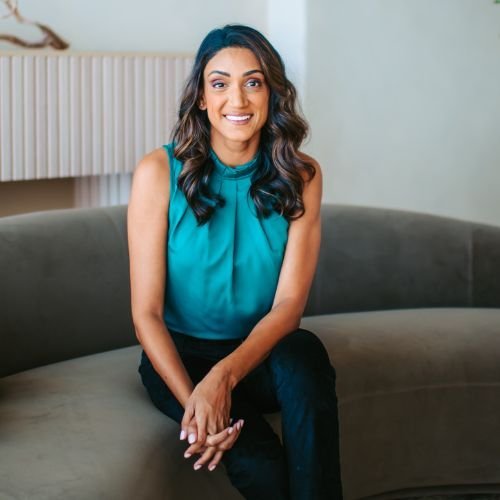
Bilingualism and multilingualism is common in many households, yet there are many misconceptions about it. On this episode I welcome Alisha Gandhi, a bilingual speech language pathologist and clinical assistant professor of Communicative Sciences and Disorders at NYU, to discuss :
Connect with Alisha on Instagram @alishabg_slp
00;00;01;01 – 00;00;21;05
Alisha Gandhi
There’s a lot of concern that kids are going to get confused, that they’re not going to understand how languages work. And what we tend to forget, especially in America, is that globally, multilingualism is the norm. We’re actually kind of the anomaly in that way. We see English as the highest language of power that is supposed to be the most important, but it’s not.
00;00;21;08 – 00;00;41;11
Alisha Gandhi
Globally, kids are learning multiple languages all the time and doing just fine. Yes, there are instances of code mixing and code switching where you might see some words in one language and another. You might see grammatical patterns transfer over. But that’s not confusion. That’s a normal part of language development. And those are things you’re going to see in a kid that speaks one language to.
00;00;41;14 – 00;01;03;09
Dr. Mona
Welcome to the PedsDocTalk podcast. This show’s success is largely due to you and the way you share the podcast with others and leave reviews, so keep doing so and thank you so much. I am so grateful to have the most amazing guest to guide you in your parenting journey. Topics about all things parenting, child health, child development, and parental mental health.
00;01;03;11 – 00;01;23;00
Dr. Mona
Today’s guest is Alisha Gandhi. She is a bilingual speech language pathologist and clinical assistant professor of communicative sciences and disorders at NYU. And she’s joining me today to talk about misconceptions about bilingualism, trilingual ism, and I cannot wait to chat with her. Thank you for joining me today, Alisha.
00;01;23;02 – 00;01;25;27
Alisha Gandhi
It’s great to be here. Thank you for having me, doctor. Mona.
00;01;25;29 – 00;01;41;00
Dr. Mona
I am just so happy that we can chat about this because there are a lot of misconceptions about speaking to languages, especially for our younger kiddos when we are teaching them. But before we get into the conversation, tell us more about yourself and why you love being a speech language pathologist.
00;01;41;02 – 00;02;14;12
Alisha Gandhi
Yeah, of course. So I am a pediatric bilingual speech language pathologist, and I also am a clinical educator and clinical assistant professor. I have spent my career working in the schools early intervention, home care, private practice, medical settings, so kind of across the pediatric population. And I’ve really worked a lot with lingual children and multilingual families. So really supporting their communication and their languaging and all the languages that they speak or communicate in all the ways that they communicate.
00;02;14;14 – 00;02;43;04
Alisha Gandhi
And I love being able to support children and their families and access and communication connecting to the world around them, honoring their ways of Languaging. You know, I truly believe communication is a human right, and everyone deserves to express their message and be validated for it. No one form of communication is more valuable than another, and I think honoring those language and practices, those home languaging practices is so, so important for our kiddos and for their families.
00;02;43;06 – 00;02;54;11
Dr. Mona
Oh, love to hear it. And yes, I love that you have been in many different areas of being involved in children’s life and their development, so I’m sure you gained so much experience just from all the things that you’ve done.
00;02;54;14 – 00;03;04;18
Alisha Gandhi
Yeah, absolutely. It’s been wonderful to get to work with families at all different settings, kind of see all of the different needs and really being able to support kids as they grow up awesome.
00;03;04;18 – 00;03;27;26
Dr. Mona
And like I said, we’re going to be chatting about bilingualism, multilingualism and first of all, before we get into the misconceptions you hear, what are some of the benefits? I know you’ve mentioned beautifully already that there’s no one superior thing. So of course we’re talking about yes, a family is bilingual, wants to teach their children multiple languages. What are the benefits of this multilingualism or bilingualism?
00;03;27;28 – 00;03;58;09
Alisha Gandhi
Yeah, absolutely. So when I think about bilingualism, you know, in terms of just the definition of the word by two languages, I’m languages so often thought of as being in two languages, but a lot of our kids are multilingual learners, which means they are developing multiple languages simultaneously as they develop language in general. That might be in a US context that’s typically English and a language or their family at home, but that also includes sign languages.
00;03;58;12 – 00;04;21;20
Alisha Gandhi
It includes dialectal varieties that was are all considered parts of a child’s languaging and their language development journey. So it’s really important to also kind of keep in mind that it’s not we talk a lot about named languages. So these words that we use like English, Spanish, good coffee. But you know, our languaging practices are really kind of one system within us.
00;04;21;22 – 00;04;46;00
Alisha Gandhi
And it’s really important to support that within our learners. And we know that there is so, so many benefits being multilingual, being bilingual or multilingual. One, we know that our multilingual learners just overall have great language skills. It is well known that kids who are learning multiple languages and multiple ways of communicating are better at learning new words.
00;04;46;00 – 00;05;15;01
Alisha Gandhi
There are great benefits to their literacy development. They are really good at using information in new ways and having that cognitive flexibility just overall, you know, there’s been tons of cognitive benefits that we’ve seen for children who are multilingual working memory benefits, executive functioning benefits, problem solving, and also connecting and listening to other people. Being able to really tune in to what other people are saying because they’re constantly in the process of attuning their communication to their communication partner.
00;05;15;04 – 00;05;38;07
Alisha Gandhi
Another really wonderful benefit of bilingualism is, you know, there’s huge social emotional about for when a child is learning multiple languages. They’re also being immersed in multiple cultures and that connection to their own culture or their own identity, to their family, to their background, to their own identity, to their own history is really important for social and emotional development.
00;05;38;10 – 00;05;44;18
Alisha Gandhi
So encouraging that really fosters their mental health and their emotional growth in that sense as well.
00;05;44;20 – 00;06;02;13
Dr. Mona
Really hitting all their domains, right. Obviously, I think a lot of parents, when they hear about language development, they think, okay, it’s just language. But of course, like you said, there is cognitive development that’s there. There is social and emotional development that’s there. So it is a useful kind of tool and a useful thing for their entire brain and entire development.
00;06;02;13 – 00;06;03;18
Dr. Mona
So I love to hear that.
00;06;03;20 – 00;06;15;10
Alisha Gandhi
Yeah, absolutely. Communication is the way we interact and the meaning of and learn about the world around us. And so all of those pieces are impacted when we’re honoring communication practices.
00;06;15;13 – 00;06;42;16
Dr. Mona
Well, I love to hear this. And obviously, knowing the benefits of bilingualism on multilingualism is absolutely there. There are a lot of misconceptions about this. You know, I think one of the big ones I’ll throw out there and of course, I’m sure you even hear even more than what I’m going to say is the misconception that if you teach multiple languages, that they get a pass on milestones in terms of what we expect of them, in terms of how many words they should have by a certain age.
00;06;42;16 – 00;07;03;20
Dr. Mona
So I get this a lot like, hey, you know, we’re speaking two languages at home. So, you know, they’re a little bit not, you know, they’re not speaking as much. But that’s because of the multiple languages. So that is definitely one of them. But I would love to hear what the other misconceptions or maybe truths that you see about or hear about bilingualism or multilingualism in families with young infants and toddlers.
00;07;03;22 – 00;07;27;04
Alisha Gandhi
Yeah, absolutely. So I think, I mean, I think there’s tons of myths and misconceptions. I think the one that you mentioned about kind of that milestone development and that milestones are different or we don’t look at them because a child is bilingual. And that’s definitely a huge myth that’s out there. You know, it’s really important I of across the world language development, it’s an innate human process.
00;07;27;06 – 00;07;51;12
Alisha Gandhi
And it develops pretty similarly in terms of developing words, hitting milestones. Kids who speak one language in, kids who speak multiple languages are going to develop at different rates. They’re going to develop their language at different rates. There’s really not a huge difference between children who are learning one language, who some learn it faster than others, and children who are learning multiple languages.
00;07;51;12 – 00;08;09;28
Alisha Gandhi
You know, that’s the case no matter what. I think the multilingualism gives people an excuse for why, you know, they feel like their child might be not developing language as quickly as possible. But the truth is that every child develops the way they’re meant to, and they’re doing it on their own timeline. Again, we want to support that.
00;08;10;01 – 00;08;42;25
Alisha Gandhi
We do see, sometimes when a child is exposed to one language in the home primarily, and then maybe they enter a new set in daycare school where they’re now immersed in an entirely new language. And oftentimes in the US context that is English. And we do see sometimes there is a time where maybe their communication becomes a little bit lax, maybe they’re a little bit more reserved or quieter than they’ve been in the past, because they’re kind of taking in all this information, but they’re not developing more slowly, or at a different rate than anyone else.
00;08;42;25 – 00;09;01;29
Alisha Gandhi
They’re honing their cognitive development. It’s kind of like we talk about any milestone, right? They’re learning something new. So something else kind of needs to take a little backseat for a while before it all catches up and comes together. And that’s with all of the milestones. So that’s kind of one big method idea. And the other one, and this is one I got all the time.
00;09;01;29 – 00;09;38;18
Alisha Gandhi
And it’s so frustrating and upsetting and disappointing because typically I hear this from parents who really trust the practitioner, the professionals in their lives like us. They are pediatricians. They’re speech and language therapists, teachers, daycare providers, sometimes family members, educators. There’s so many people that tell families that they should not use their home language practices with their child, and in the US in favor of English or majority’s language, and all of the research tells us otherwise.
00;09;38;18 – 00;10;04;22
Alisha Gandhi
Yeah, we still hear it today, 2023 I think almost every other week I have a parent who said, yeah, we stopped speaking this language at home because he was having difficulty. And the pediatricians noticed that or the speech there lot of that. And we know for a fact that one that’s not true at all. So first of all, one thing with bilingualism, there’s a lot of concern that kids are going to get confused, that they’re not going to understand how languages work.
00;10;04;22 – 00;10;31;28
Alisha Gandhi
And what we tend to forget, especially in America, is that globally, multilingualism is the norm, and we’re actually kind of the anomaly in that way. We see English as the majority language of power. That is supposed to be the most important, but it’s not right. Globally, kids are learning multiple languages all the time and doing just fine. Yes, there are instances of code mixing and code switching where you might see some words in one language from another.
00;10;32;01 – 00;10;50;21
Alisha Gandhi
You might see grammatical patterns transfer over. But that’s not confusion. That’s a normal part of language development. And those are things you’re going to see in a kid that speaks one language to correct. You’re learning new words and learning new ways of speaking. They’re figuring out how to put language together. So it’s not a sign of confusion. It’s a sign that they’re making sense of their language, of communication.
00;10;50;23 – 00;11;21;20
Alisha Gandhi
There’s also concerns that they won’t learn English well if they are exposed primarily to a language other than English at home. And English is often the language of academics and a power in the United States, which again, it’s untrue. Why would learning skills and in fact the better exposure you have to language in any language from as a child is going to really set any child up for success in learning whatever language and language and practices they are going to need in their, you know, academic career, professional career, social lives, etc..
00;11;21;22 – 00;11;49;29
Alisha Gandhi
So really, really important is that one by themselves? Should not be discouraged. It’s not a deficit disorder. It’s not a problem. It is a really strong part of a child’s language development. And then another really important thing is that the best way to teach language and to modeling, which for your child is your as a parent, your language model, and that should be whatever language you feel the most comfortable communicating in.
00;11;50;04 – 00;12;13;05
Alisha Gandhi
That’s your strongest language model, and that’s what you want to model for your child. Your child is going to do just fine developing language. If they have that strong language foundation, and that strong language foundation does not have to be a monolingual or an English language foundation, it just needs to be a strong language capital foundation. So we really, really want to encourage multilingualism if that is a choice that a family’s making in my home.
00;12;13;12 – 00;12;44;21
Alisha Gandhi
And again, I’m including signed languages and dialects. And when I say multilingualism because those are important as well, they’re not going to stop or inhibit any other language from developing, you know, a freshly with our ASL communicators, signs, language communicators, we hear this as well that if they learn sign language, they won’t develop oral speech. And that’s the choice that a family makes that they want their child to communicate both using oral speech and using signed forms of communication.
00;12;44;21 – 00;13;05;05
Alisha Gandhi
There is no evidence that one is going to inhibit the other. They can really develop really well and really support each other, which is really important for all children. One more huge math is that children with disabilities should not learn additional languages. So we get this a lot kind of similar to, you know, the pediatrician, the SLP, they’re having trouble with language.
00;13;05;05 – 00;13;31;22
Alisha Gandhi
They do have a language. They do have a language disability. So they can’t learn two languages. There is no such thing as that. Multilingualism does not cause language impairments or disorders, nor does it exacerbate any language development or disorder. So it’s really important to continue to encourage monolingual ism. Even if your child is diagnosed with a language delay or a disability of some kind, you still want to develop their communication practices in all languages.
00;13;31;24 – 00;13;49;13
Dr. Mona
I think it’s so great how you laid all these myths and misconceptions out and kind of debunk them. You know, the one you said about the people saying that you shouldn’t be speaking these multiple languages? I wonder if there are coming from families who themselves or people themselves who just aren’t multilingual or maybe culturally have multiple languages, but that is.
00;13;49;18 – 00;14;00;12
Dr. Mona
I actually haven’t heard that one a lot. Maybe because myself I don’t really see that too obviously having said that to any families, but that’s a really important one that I think I maybe some listeners might have experienced as well.
00;14;00;15 – 00;14;24;12
Alisha Gandhi
Yeah, a lot of families and there’s been research that that so many families are giving kind of their that’s misinformation. And this I think disproportionately affects children who do have language delays and disabilities. We talk about something called kind of like forced modeling was essentially, which is when practitioners essentially tell families to stop speaking in one language in favor of the academic language or English.
00;14;24;17 – 00;14;45;20
Alisha Gandhi
And that can cause more harm than good. You know, we talked about the benefits, right? That connection to family, community, culture is really important. Taking that part of a child’s identity away from them is so detrimental. Taking away that connection with their family, right? That ability to communicate in their family. So, you know, it’s really important. Again, it hits all the domains when we’re supporting language and practices at home.
00;14;45;20 – 00;14;50;24
Alisha Gandhi
However, any family chooses to communicate is a really, really important option.
00;14;50;26 – 00;15;10;18
Dr. Mona
And you mentioned about modeling language, especially a parent who is inclined to speak a certain a language, you know, prioritizing that. Are there certain techniques or certain methods you recommend? So just say there is a family where I have this happen a lot. One parent speaks Spanish fluently, and then the other parent doesn’t speak Spanish fluently at all and speaks English.
00;15;10;21 – 00;15;21;27
Dr. Mona
How can a parent teach these languages at home if they want to teach both any particular strategy or things to consider when they’re approaching these languages at home with their children?
00;15;22;00 – 00;15;47;15
Alisha Gandhi
Yeah. So one way I really like to think about supporting language learning and multilingual learning at home. It’s a framework that was created by Kathy Honan in a book that I actually teach, in one of my classes, and it’s kind of perfect for this podcast. The mom framework mom stands for means, opportunities and motive. So means essentially is the child having exposure and proficiency to the language.
00;15;47;15 – 00;16;08;04
Alisha Gandhi
So lots of strong models of the language or the languages that are being used at home. So if parents are speaking different languages that they’re getting the strong models in both languages to develop them, and also given opportunities to learn, use and practice those languages, those can happen in different environmental contexts with different partners and those opportunities to learn and use language.
00;16;08;04 – 00;16;37;05
Alisha Gandhi
They can be, you know, through conversations and speech. They can be through writing, and reading can be available in person, virtually media, the internet and then motive. Right. We want to motivate our children to use both languages. And so having them use language for specific purposes, like maybe writing a letter to a grandparent or communicating with a family member who may not share one language with a child but shares another language with their child.
00;16;37;07 – 00;17;03;16
Alisha Gandhi
It’s also important so that motive can be swayed by societal value and attitudes about language. Kids are really sensitive to social values, right? So what we are honoring and valuing, especially as adults, various language practices, they are going to be more motivated to use those different languages. If the adults in their community feel that their language practices are, you know, problematic or deficient in some way, they’re going to realize that too.
00;17;03;16 – 00;17;23;16
Alisha Gandhi
And that’s when the decrease their motivation. So really encouraging that, valuing it as an aside from all of the people in their life is really important. And then, yeah, there’s lots of ways you can kind of implement this like modern framework, right. What’s ways you can provide these opportunities and motivation. So we see a lot what you kind of talk about the Opal framework, one parent, one language.
00;17;23;16 – 00;17;47;21
Alisha Gandhi
So one parent speaks for their child in Spanish. One speaks to their child in English. So that’s, you know, one great way to, develop language at home. Another option is some families really focus on one language at home, typically the language that’s not being used in the community at large or in the academic world. So maybe they speak, you know, Mandarin at home all of the time.
00;17;47;21 – 00;18;05;25
Alisha Gandhi
And then when the child enter school, they are first exposed to English in the academic setting. That’s another way is really just, you know, sticking to one language at home. And then allowing the child to acquire the second language upon entrance to school. There’s also bilingual child care, bilingual education. So family member that can be a nanny and daycare.
00;18;05;25 – 00;18;30;24
Alisha Gandhi
There’s immersion programs, especially if you yourself are not multilingual, but you would like to encourage that in your child. There are definitely ways you can do that as well by providing them with caregivers that might be multilingual and that can encourage about multilingual development. Also, using books, music, TV shows, I mean, there’s tons of stuff out there that really that there’s bilingual books, there’s books that you with multiple languages within the book themselves.
00;18;31;00 – 00;18;44;18
Alisha Gandhi
Those are called like kind of translanguaging books. Song songs are great. I have a 20 month old daughter and I love, you know, I think I have the wheels on the bus. She loves the wheels on the bus. So I have a whole playlist and I have it and a whole bunch of different languages.
00;18;44;19 – 00;18;47;01
Dr. Mona
That’s awesome. Yeah. That’s cool. We did the same thing.
00;18;47;04 – 00;19;14;28
Alisha Gandhi
So there’s so many great ways to expose the child to languages and most importantly, highlighting that richness and diversity of language and language and practices really, again, increases that motivation. Right? It increases when you’re showing how beautiful language and linguistic diversity is. You’re really increasing that motivation to use multiple languages. So most importantly, talking to your child in the language that you can provide the best model in communicating with your child.
00;19;15;01 – 00;19;36;29
Alisha Gandhi
Parents are this to me once I know English, but I can’t love my child in English. I think that was good. Oh, so beautiful because they might be great communicators of English, but the language of your home in your heart, that’s really the best model for your child. So use that. Use that language. Do not let anyone tell you not to use that language.
00;19;37;02 – 00;20;10;13
Alisha Gandhi
Also important if you do have a child who has a language delay or a disability in any way, or your concern that they might need early intervention or speech and language services at any point, if your child is not feeling well, they should be evaluated and eventually treated. If they do need treatment in all of the languages that they speak, that is your right as a parent to advocate for, to make sure that your child is being evaluated in all of the languages of speak, that they are being evaluated for their strength, that their English language knowledge is not what is being tested, but their language and skills in general.
00;20;10;13 – 00;20;31;15
Alisha Gandhi
And if they do need support, they should be receiving that support in all of the languages they speak. And as a parent, you have every right to push for that and tab for that for your child. So that’s really, really important. It’s something I want all parents to know that they have the right to ask for that for their children, and they are not being difficult or demanding by asking for it.
00;20;31;17 – 00;20;39;22
Alisha Gandhi
They are supporting their child, their child’s development. And so I really want to encourage that as well, knowing that you have every right to do that.
00;20;39;24 – 00;20;48;19
Dr. Mona
Well, I love what you mentioned about the mom method, the means, opportunities and motives. And that obviously applies to even if someone’s teaching their child one language. Obviously how important.
00;20;48;21 – 00;20;49;05
Alisha Gandhi
Is.
00;20;49;07 – 00;21;08;01
Dr. Mona
Exposure? But it’s so important. And I love acronyms. So I really, really like that. And I’ve heard obviously the one parent, one language, that’s something that is commonly used in my, you know, the families that I meet in office. This is so great. And you brought up that beautiful story about that mom who said, I just feel like I can love my child better in my native language or my the language I’m more comfortable with.
00;21;08;07 – 00;21;25;04
Dr. Mona
And that just goes in line of acceptance. You know, we talked about how in a lot of cultures, they may speak one language at home, and then when the child enter school, that’s when they’ll get exposed. Using an example of, English. You know, I’m also an immigrant American, as are you. And my family spoke both growing up in the house.
00;21;25;09 – 00;21;46;15
Dr. Mona
But I still remember growing up in a very diverse, especially Asian American diverse community. And a lot of the kids would come to school not knowing English. And we lived in a community that was very accepting of that. But there would be some children that would tease the child, you know, like, oh, you don’t know English or and I remember being a kid and being like, why are they teasing this kid?
00;21;46;15 – 00;22;02;24
Dr. Mona
Like they’re going to learn like, I was young and I realized I’m like, this is not right. So I think one of the biggest things for me is acceptance of diversity and bilingualism. And I agree with you. You mentioned this in the episode already that even in 2023, that acceptance is not as much there as I would love.
00;22;02;24 – 00;22;22;16
Dr. Mona
And I hope that that means that pediatricians and speech language pathologist and teachers can all understand that it exists, and whether they are immigrants or they just choose to, you know, speak another language. I hope that diversity can be accepted so that we can promote this. If this is what a family wants to do with their family in terms of language development.
00;22;22;19 – 00;22;39;15
Alisha Gandhi
Absolutely. And, you know, in terms of like what you said about, you know, kids teasing other kids, I think no matter what language or language is your child speak, your child might be a monolingual English speaker. And there’s nothing wrong with that. By the way, I do not want to devalue the language it is monolingual.
00;22;39;15 – 00;22;53;10
Dr. Mona
He’s you some Spanish and some are native, but 80% of his language is English and I don’t feel a deficit of any kind. We will continue to teach him. But yeah, so putting that out there that I agree. And thank you for saying that because I don’t want people listening or like, but I don’t speak all the languages.
00;22;53;10 – 00;23;07;13
Alisha Gandhi
But it’s a totally right. Yeah. I think what’s most important is that, again, no matter how many languages your child speaks, your your family speaks, whether it’s 1 or 100, right? You can teach them about the value of linguistic diversity.
00;23;07;17 – 00;23;08;17
Dr. Mona
Yes.
00;23;08;19 – 00;23;28;29
Alisha Gandhi
Language richness. Right. So even if your child is monolingual, they can still be an advocate and a support for their multilingual friends. They can support multilingual development that’s going to support their own language development as well. Right? If they’re exposed to different language and practices, that has great cognitive benefits for all children, no matter how many languages they speak.
00;23;29;01 – 00;23;42;02
Alisha Gandhi
So, you know, being able to do that for, you know, for your child, for your community, I think there are so many great ways to promote multilingualism, even if you know your child is not multilingual themselves.
00;23;42;04 – 00;23;51;06
Dr. Mona
This is so great. Well, you already have given so many pearls and that was even amazing. Final message. But is there any final wrap up message you would love for our listeners to hear today?
00;23;51;09 – 00;24;17;22
Alisha Gandhi
I mean, I think just yeah, I’ll just reiterate that your family Languaging practices are the best thing for your child. The choices you make in communication are important. They’re personal. They are not wrong. No matter what anyone might tell you, they are really the best. The language input that you provide your child, and the communication practices that you use at home and in your life are the best thing for them.
00;24;17;25 – 00;24;44;03
Alisha Gandhi
You know children, they want to communicate with you. They want to connect with you. Communication is a great way to do that. And no matter how you communicate again, one language or 100 languages, you are providing beautiful input for your child and you should continue to do that no matter what anyone else says. Continue to love that level in the language and the language and practices that are closest to your heart.
00;24;44;06 – 00;24;59;03
Dr. Mona
Oh, that was so great! What a great wrap up, Alisha. Thank you so much for joining us today and sharing this insights. And this obviously all the debunking of the misconceptions, I love it. I think it’s so important that we get that out there. And I hope people that are listening are not just multilingual families. I hope they’re also monolingual families.
00;24;59;03 – 00;25;04;19
Dr. Mona
So again, we promote the acceptance of what everyone is doing. And thank you again for joining us.
00;25;04;22 – 00;25;09;03
Alisha Gandhi
Of course, it was wonderful to be here. Thank you so much for having me and for everyone listening.
00;25;09;03 – 00;25;29;13
Dr. Mona
I hope you enjoyed this episode. It was great. And if you did, you have to leave a review and rating and also call out Alisha and her amazing information. We love celebrating the guests that are able to come on the show and your reviews means so much to the show, and it’s great to have it continue to be a top 50 parenting podcast in the United States, and I will have another guest next week.
00;25;29;14 – 00;25;45;05
Dr. Mona
Thank you for tuning in for this week’s episode. As always, please leave a review. Share this episode with a friend. Share it on your social media. Make sure to follow me at PedsDocTalk on Instagram and subscribe to my YouTube channel, PedsDocTalk TV. We’ll talk to you soon.
Please note that our transcript may not exactly match the final audio, as minor edits or adjustments could be made during production.
Need help? We’ve got you covered.
All information presented on this blog, my Instagram, and my podcast is for educational purposes and should not be taken as personal medical advice. These platforms are to educate and should not replace the medical judgment of a licensed healthcare provider who is evaluating a patient.
It is the responsibility of the guardian to seek appropriate medical attention when they are concerned about their child.
All opinions are my own and do not reflect the opinions of my employer or hospitals I may be affiliated with.