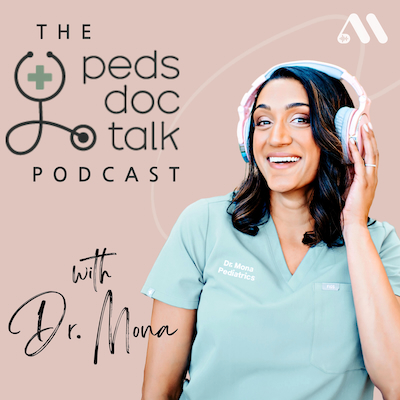

A podcast for parents regarding the health and wellness of their children.
Conflicted about your child using screens in school? From iPads in kindergarten or digital homework apps in middle school we’ll cover how to balance the reality of tech with what your child truly needs developmentally.
I’m joined by Emily Cherkin, M.Ed., former teacher, author, and “The Screen Time Consultant,” who’s leading the charge on tech-intentional parenting and education. Together, we unpack how screens in schools have gone from occasional tools to everyday defaults and why that shift might be hurting our kids more than helping them.
We talk about:
How the pandemic accelerated a trend that was already in motion: more tech, younger kids, fewer real-life skills
What we’re giving up when screen-based learning replaces play, paper, and people
The difference between being anti-tech and tech intentional and how to advocate for your child without feeling adversarial
To learn your rights about opting out check out https://edtech.law/
To connect with Emily Cherkin follow her on Instagram @thescreentimeconsultant, check out all her resources including her newsletter at https://thescreentimeconsultant.com/. Emily also offers free monthly webinars: https://thescreentimeconsultant.com/events
We’d like to know who is listening! Please fill out our Listener Survey to help us improve the show and learn about you!
00:00 – From No Phones to Full Screens: A Teacher’s Wake-Up Call
01:09 – When iPads Replaced Pencils in Kindergarten
03:13 – Meet Emily: Educator, Parent, Screen Time Consultant
06:28 – Skills Before Screens: Why Development Comes First
07:52 – Big Tech in a Sweater Vest? Yep, That’s EdTech
09:15 – Kids Know How to Copy-Paste, But Not Type
10:34 – Safety & Inappropriate Access in Schools
11:06 – Pre-Screen Childhoods vs. Today’s Reality
12:08 – Is All This Tech Really Necessary in Schools?
14:09 – If It’s So Great, Why Don’t Tech Execs Use It?
15:15 – Learning Takes Struggle, Not Just Speed
17:15 – Libraries, Labs, and What We’ve Lost
18:29 – Kids’ Data for Sale? Yes, Even in School Apps
19:15 – Turning Down Big Tech as a Pediatrician
21:13 – Less is More, Later is Better
23:58 – Bring Back the Computer Lab
26:25 – Opting Out: The Power of One (Fish)
29:18 – Parenting with Intention in a Screen World
33:02 – Why Asking for Paper is “Revolutionary” Now
35:01 – Home Habits that Protect Kids
38:24 – Final Takeaway: You’re Not Alone
Our podcasts are also now on YouTube. If you prefer a video podcast with closed captioning, check us out there and subscribe to PedsDocTalk.
Get trusted pediatric advice, relatable parenting insights, and evidence-based tips delivered straight to your inbox—join thousands of parents who rely on the PDT newsletter to stay informed, supported, and confident. Join the newsletter!
And don’t forget to follow @pedsdoctalkpodcast on Instagram—our new space just for parents looking for real talk and real support.
We love the sponsors that make this show possible! You can always find all the special deals and codes for all our current sponsors on the PedsDocTalk Podcast Sponsorships page of the website.
00;00;00;00 – 00;00;25;18
Emily Cherkin
I realize that we went from, you know, no kids having phones to 95% having smartphones in about a decade. And at the same time, I also, as a teacher, was being increasingly asked to put assignments online, posts, the grades, you know, communicate via email. And I hated it as a teacher because what it did was it drove my students to a computer instead of coming to talk to me.
00;00;25;20 – 00;00;46;17
Emily Cherkin
I see that we talk a lot about screen time, and we think about phones and iPads and computers and social media. But there’s this second elephant in the room, which is the use of technology for schools or in the name of education. And as a teacher, I had a lot of concerns. And then I became a parent.
00;00;46;19 – 00;01;09;17
Dr. Mona
Hello, it’s Doctor Mona, your favorite online pediatrician and host of the PedsDocTalk podcast. First off, I just want to say that we hit number two on the parenting podcast in the United States last week, y’all. Number two. You know how that happens. Traffic buzz. People listening and downloading. So please subscribe and download and engage on posts on social media to share the word.
00;01;09;17 – 00;01;30;04
Dr. Mona
It means so much to getting this incredible info out there and the amazing conversations I have with the most awesome guests. Yes, I’m partial, but they are awesome. So here’s a story for you. We were touring a school for my son. He’s starting kindergarten and everything looked great until the tour guide casually mentioned that every kid gets their own iPad for lessons.
00;01;30;07 – 00;01;55;18
Dr. Mona
And I froze. And then I asked why. The response was just the reality of the world. Now that kids will be on computers. Look, I get that tech is part of our lives. I use it, I run a business online, my kids watch cartoons. And Ryan, my kindergartner, has an iPad for educational use and fun sporadically. But something about hearing that screens are being handed to five year olds like pencils, made me stop in my tracks.
00;01;55;20 – 00;02;17;20
Dr. Mona
Yes, it’s the reality. But is the reality really right for our kids? We don’t talk about this enough. What our kids gaining from tech in school, and what are they losing? Skills like handwriting, eye contact, focus and how to sit with boredom or ask for help in person. Those don’t develop when a screen takes over, even if it’s educational.
00;02;17;22 – 00;02;40;00
Dr. Mona
So I invited Emily Churkin, former teacher, mom and author of The Screen Time consultant, to dig into what edtech is doing in classrooms today and how we can rethink it not from a place of fear, but from a place of intention. This is one of those conversations that might challenge you. And that’s the point. And if you’re here for more of these real deal conversations, please subscribe and download the episode.
00;02;40;06 – 00;02;55;23
Dr. Mona
That’s what helps us stay on the charts in the United States. Thanks again. And I’d love to see how far we can go together with the show. Okay, let’s get into this incredible conversation.
00;02;55;25 – 00;03;13;11
Dr. Mona
Thank you so much for joining me today, Emily. Because we’re talking about screens in education, a topic I have not talked about yet on the show, balancing necessity and well-being because our kids are using screens all day, every day as part of education. So thank you so much for joining us to have this conversation.
00;03;13;14 – 00;03;17;19
Emily Cherkin
Oh, thank you for having me. I’ve been a long time follower and I’m excited to speak with you.
00;03;17;21 – 00;03;27;02
Dr. Mona
Yeah. And before we get into it, you know, tell us more about yourself and the inspiration behind your book. And also something that you worked on, which is called the Unplugged EdTech toolkit.
00;03;27;05 – 00;03;49;12
Emily Cherkin
Yes. So, like you said, I have a master’s in education, and I spent 12 years as a classroom teacher. I worked with seventh graders. And one of the things I noticed when I was in the classroom, I was a seventh grade English teacher. And at the beginning of my teaching career, around 2003, I noticed, I mean, maybe 1 or 2 kids had like a flip phone, but, you know, no one had smartphones at that point, children wise at least.
00;03;49;12 – 00;04;12;25
Emily Cherkin
Certainly I didn’t even. And I will say that in about the ten years I was at one school. So it was a 12 year teaching career. I realized that we went from, you know, no kids having phones to 95% having smartphones in about a decade. And at the same time, I also, as a teacher, was being increasingly asked to put assignments online, posts, the grades, you know, communicate via email.
00;04;12;27 – 00;04;36;21
Emily Cherkin
And I hated it as a teacher because what it did was it drove my students to a computer or a digital tool to find out what was wrong, or why didn’t they get this grade on a vocab test? Or how could I fix this essay? Instead of coming to talk to me? And I realized that there was this sort of I see that we talk a lot about screen time, and we think about phones and iPads and computers and social media.
00;04;36;24 – 00;04;57;08
Emily Cherkin
But there’s this second elephant in the room that we’re going to talk about today, which is the use of technology for schools or in the name of education. And as a teacher, I had a lot of concerns. And then I became a parent. So my kids are now 16 and 13. But the very first day of kindergarten for my oldest, he came home with a piece of paper and was asked to learn.
00;04;57;08 – 00;05;08;10
Emily Cherkin
We were supposed to teach him how to do control, alt, delete so that he could log in to do a school like the school district standardized testing. This was ten years ago.
00;05;08;13 – 00;05;12;29
Dr. Mona
I was just going to say I’m like a 16 year old. That’s oh my gosh, wow. Yeah, yeah, ten years ago.
00;05;12;29 – 00;05;31;06
Emily Cherkin
And I was sort of shocked. Like he barely knows how to write his name. And I used to teach him control alt delete. So it was the beginning of this like awareness. I mean, I seen it as a teacher, but I, I worked with seventh graders. Like, I could see, you know, learning word processing and writing essays, like there were some advantages to that.
00;05;31;06 – 00;05;50;15
Emily Cherkin
But a six year old. Yeah. So flash forward through a pandemic where remote learning sort of became the way I like to talk about it. It was the life. But we needed in the spring of 2020. But a lifeboat isn’t long term housing, and we are still relying heavily on the tech that was in the classroom before Covid.
00;05;50;15 – 00;06;04;25
Emily Cherkin
I mean, I don’t want to say that Covid did it. It was well on its way. Well, you know, like my my son, but I just feel like it’s fuel to the fire, you know? And so now what we’re seeing is kindergartners with iPads for school. Yeah.
00;06;04;25 – 00;06;08;03
Dr. Mona
I don’t even have an iPad for my son at home.
00;06;08;05 – 00;06;09;27
Emily Cherkin
Yeah. I’m. Yeah. Because it’s.
00;06;09;29 – 00;06;28;00
Dr. Mona
Yeah, it’s it’s it’s scary. Emily. Like, I, I you said, you know, 2003 was when you, you know, started your, you know, professional way to you, I, I graduated I have to remember now, I graduated high school in 2003. Okay, let’s like, let’s not age yourself, but I look back at my high school years and even going downstream there.
00;06;28;05 – 00;06;57;07
Dr. Mona
And I’m so grateful I did not have screens like I. Yeah. I mean, we’ll get into the impact it has on like, development, but like, we me and you both agree that screens have a place in this world, but we also have to respect the developmental aspect and all the 100% can have. And I love that we’re talking about how it relates to school, what impact do you think increased screen time in school is having on children’s social, emotional, communication with other development and physical development?
00;06;57;10 – 00;07;23;09
Emily Cherkin
Huge impacts, huge, focus, attention, motivation, curiosity, critical thinking, engagement, actual learning. Yeah. Eyesight. Help. Right. We talk about like, you know, myopia, physical posture, mental health, physical safety, student privacy. I mean, the list goes on. One of the things I say all the time is that big. Edtech is just big tech in a sweater vest.
00;07;23;16 – 00;07;52;26
Emily Cherkin
Yeah, yeah, because it functions the same way. The platforms are built with the same business model. The same manipulative design techniques to keep kids on line longer. And it’s very difficult. You know, there’s already funding issues in education, and it’s very difficult to go up against an industry that is very well-funded, and trying to convince us as parents and clinicians and teachers that kids, quote unquote, need more of this to be successful in the future.
00;07;52;26 – 00;08;14;18
Emily Cherkin
And you and I both know that you can’t skip development, right? It has to unfold in its natural form. And that’s one of my big premises, is that, you know, it’s got to be about skills before screens. Right? What are the things that we need in place first? And, you know, kindergartners having iPads isn’t skills before screens.
00;08;14;21 – 00;08;39;22
Dr. Mona
Now let’s take a quick break to hear from our sponsors who support helps us keep bringing you this show. Oh, and you said it like your own son, who hadn’t even learned to write, was having to learn how to log in. I mean that to me, that’s the concern. I also have, is that we’re not allowing children to have the fundamental foundation of social, emotional, physical development and psychosocial development before we say, hey, here’s the screen.
00;08;39;22 – 00;08;42;06
Dr. Mona
Now that it’s news, you know, and I.
00;08;42;06 – 00;08;42;24
Emily Cherkin
Exactly.
00;08;42;24 – 00;08;54;00
Dr. Mona
Like there’s so much debate because people are like, well, then that sounds like we’re against screens. It’s like we’re not against the screens we’re against taking. If the screens are taking away from the other developmental aspect that children need to learn, that’s the issue. Exactly.
00;08;54;00 – 00;09;15;28
Emily Cherkin
I love. Exactly. Yeah. Yeah. Right. And I mean, I’m clearly we use them right in our professional work as well. And you know, but again, I mean, my Tldr if you take what I believe about my tech intentional approach, it’s this it’s less is more later is better skills and relationships. First. And too often we’re leapfrogging all of that.
00;09;15;28 – 00;09;34;15
Emily Cherkin
I mean, again, the fact that we’re talking about kindergartners is one thing, but like, you know, 7 or 8 years ago, I was working with a sixth grader as a sort of tutor capacity, and she had an iPad for school as a sixth grader and was told, and everything was on the iPad. Her textbooks were digital, her worksheets were digital.
00;09;34;17 – 00;09;52;08
Emily Cherkin
And I remember watching her do this assignment, and she cut and paste the question from the digital tool, pops it into Google, cut and paste the answer, puts it into her notability app, and I’m like, do you know what plagiarism is like? Just let’s start there. I mean, and she goes, well, yeah, but the teacher doesn’t really read it.
00;09;52;08 – 00;10;07;15
Emily Cherkin
And, you know, again, no shade to teachers because I, I am one I was when I get it. And then I said, well what about even paraphrasing it, putting it in your own words. And she goes, well, I don’t even know how to type. So this is what I mean when I talk about skills before screens, like, what are we doing?
00;10;07;15 – 00;10;34;09
Emily Cherkin
Giving children digital tools but not teaching these fundamental basics like typing, you know, and then let alone I mean, we could talk about also technology offline versus technology with internet access because, you know, there are technological skills we could teach children that don’t require an internet connection. And what’s happening is, you know, and I don’t know how dark we want to get, but, you know, kids are accessing content at schools that is completely inappropriate and unsafe.
00;10;34;09 – 00;10;45;06
Emily Cherkin
And so what then? You know, we can’t say that the good quote unquote, of technology is better than their safety. I mean, I would argue has no business being there.
00;10;45;08 – 00;11;06;27
Dr. Mona
I, I want to go back. I want to go back to the good old days because, listen, I remember I vividly having to learn the Dewey Decimal System. Do we know what the decimal AI there was? Card catalog? Yes. Card catalogs. I remember being in elementary school at our library, and the teachers taught us about the Dewey Decimal System and how to find a book in a library based on the Dewey Decimal System.
00;11;06;27 – 00;11;30;17
Dr. Mona
And I think, you know, my generation especially is very interesting in that we’re the first generation that lived a life where screens were introduced when before our prefrontal cortex was formed. Yep. You know, and so, so like, but we saw life before and then we also see life after. And so this generation I think is really interesting and that I love that I had a very simple, no screen childhood, I love that I also love what screens have provided.
00;11;30;17 – 00;11;49;04
Dr. Mona
But I, my husband and I speak about it all the time that he’s like, do you think our lives are better with screens like Point Blank? I’m like, listen, there are goods to it. He’s like, that’s not the question. He’s like, from an overall perspective, do you think society is better with screens? I’m like, my personal opinion. No, because of the over information, the addiction like that.
00;11;49;06 – 00;12;07;25
Dr. Mona
Not I don’t like using that word because people get a little touchy feely. But the the obsessiveness over, I got to check my screen, I got to look at it and then what it takes away, it is concerning. And you know, we know, though, that it’s becoming more of a part of our education system. I mean, you saw that obviously, as you were in your own, career as a teacher.
00;12;08;03 – 00;12;19;25
Dr. Mona
How do you think then, that we can create a healthy balance between necessary screen use in school and time spent offline, and cultivating those skills that we mentioned that are really important?
00;12;19;27 – 00;12;26;24
Emily Cherkin
Well, first of all, I fundamentally push back on the idea that it is necessary you know, elementary school particularly.
00;12;26;24 – 00;12;26;29
Dr. Mona
Okay.
00;12;27;00 – 00;12;44;17
Emily Cherkin
The great. And that is because of the prefrontal cortex, because fine motor gross motor skills aren’t fully developed. I mean, I can if you want to post the picture, I can send it to you of the kindergartners before school, on the playground, when they have 15 minutes to run around before class starts and they’re all sitting on their iPads.
00;12;44;23 – 00;13;11;12
Emily Cherkin
I mean, from a developmental standpoint, getting really from the I know, I know, it’s it’s hard to help parents understand without, you know, the paralysis that comes with feeling so despondent about it. I am often really surprised how little parents are aware of how much is happening at school. And so one of the first things I would invite parents to do is ask, who is telling me that I need this tech for my child to be successful?
00;13;11;13 – 00;13;29;04
Emily Cherkin
Because chances are this is a very I mean, as a former teacher, we would go to, you know, professional development all the time and you do to I know. And so if it’s funded by a tech company telling me why my kid needs this, then I’m going to have a healthy dose of skepticism about it because it isn’t better for development.
00;13;29;04 – 00;13;49;10
Emily Cherkin
I mean, I think the end of the day, we have to focus on the skill building that matters. And again, that’s going to come through tactile, three dimensional social play, especially for young children. But I would argue this is true for teenagers too. And, you know, I, I think that part of the part of the problem is it’s like schools are strapped.
00;13;49;10 – 00;14;09;05
Emily Cherkin
Yes, they’re getting cut funding. All of this bad stuff’s happening. And so tech companies are saying your poor teachers are so overworked, wouldn’t it be great if we had this tool that could help you differentiate instruction, meet students where they are. They’ve co-opted a lot of the language of education. And the problem is that’s not better, as you point out, like, is our world better off because of it?
00;14;09;05 – 00;14;29;14
Emily Cherkin
There are some good things, but that’s not what’s happening. And so to me, I always say I’m not anti-tax, I’m tech intentional. But that isn’t how technology is being used in school. Right? And if I saw it that way, then I have a different statement on this. The other thing we need to look at is where do the Big Tech executives send their children to school?
00;14;29;17 – 00;14;32;27
Emily Cherkin
It is Waldorf nature based tech free school.
00;14;32;29 – 00;14;35;21
Dr. Mona
Yeah. So why? What did.
00;14;35;21 – 00;14;57;09
Emily Cherkin
We know? Right? Right. Exactly. And and the problem, of course, as is always the case with these types of, you know, newfound whatever technologies. And, you know, I sound like a Luddite, maybe I am, and I’m okay with that because I just don’t fundamentally see the benefit outweighing the harms for young children in particular. But, you know, you can’t tell me that this is better.
00;14;57;09 – 00;15;15;16
Emily Cherkin
It isn’t I you’ll like this metaphor I came up with if I were the designer of surgical tools. Right. And I gave them to a surgeon to use in surgery. I don’t walk into the operating room and tell the surgeon how to perform the surgery. Yeah, right. And the problem is that tech companies aren’t, for the most part, teachers.
00;15;15;16 – 00;15;36;07
Emily Cherkin
Right? They go in and they say, oh, we can make this faster. Better. Well, faster isn’t better, right? Faster doesn’t mean better learning. There is a difference between information and knowledge. And information isn’t just, you know, open the brain. Dumping the stuff. Close it. I mean, that’s what information is. But like, knowledge is struggle. Yeah. Difficulty. You know, friction.
00;15;36;14 – 00;15;41;03
Emily Cherkin
And we’re not having that experience because we’re being displaced by the tech.
00;15;41;05 – 00;15;59;06
Dr. Mona
And like you said, like, you know, when there was an issue with one of your, your students and like, they had, they could just message you versus actually coming up to speak to you like, oh, you know, like that sound. That’s such a simple life skill we need to teach our kids, right? That you need to learn how to communicate and advocate face to face.
00;15;59;06 – 00;16;17;01
Dr. Mona
You can’t be behind a screen. And like, I’ll be honest, I don’t like talking on the phone. It’s just not what I like. I don’t like video chatting, I rather text, but my preferred form of communication face to face. Like I tell you, I love face to face communication because it gets me the most out of a conversation.
00;16;17;05 – 00;16;36;00
Dr. Mona
But I’m worried that our younger generation, especially when you talk about in elementary, is losing that sort of ability and necessity to speak to a human being like an ad, like a authority figure, like how to go up to an authority figure and say, hey, I need this because they’re so used to getting their needs met via screen.
00;16;36;00 – 00;16;37;04
Dr. Mona
Yeah. You know, and it’s scary.
00;16;37;04 – 00;16;58;24
Emily Cherkin
And your example of the Dewey Decimal system, like from an executive function standpoint, like thinking about the steps in that process to find information and organize it and have, you know, just an understanding of a process that’s not what hap, you know, kids go to Google. There is no process. There are no steps. It’s instant gratification and there’s no learning that happens with that.
00;16;58;24 – 00;17;15;18
Emily Cherkin
And, you know, I love that example because to me, we should be slowing things down. I want to go back to, I mean, even my daughter’s middle school of almost a thousand students where they each have a computer, I’ve opted her out, which we can talk about in a minute, but I they said, what are you going to do when she needs to do research for school?
00;17;15;18 – 00;17;35;13
Emily Cherkin
First of all, I’m like, they have a great library. Libraries are great for research and librarians trained to help you find good information. Can’t she use the library computer? There are none. There is no computer in the school library. There are no computer labs in schools anymore because the assumption is all the children have iPads or Chromebooks or whatever.
00;17;35;15 – 00;18;03;24
Emily Cherkin
And the problem is you’re bypassing the skill part of that. So again, like going back to what I really believe in this tech intentional approaches. You can have the computers in schools, but you need to have somebody teaching them about missing information, about critical thinking, about source material research citation. Dewey Decimal Organization. Right. Like that is the skills when we talk about what kids need to be successful in the future, it’s not how fast can you look something up that’s not a skill.
00;18;03;24 – 00;18;09;26
Emily Cherkin
Like you can ask any person. And I’m married to someone who works in tech disclosure like I’m married to the problem.
00;18;09;26 – 00;18;11;06
Dr. Mona
Yeah, yeah, but.
00;18;11;13 – 00;18;29;26
Emily Cherkin
We talk about this all the time. He’s like, I’m not going to hire an engineer who can’t look me in the eye. Problem solved. Yeah. Critically, about solutions like, those are all skills that don’t get taught via technology later tech can come in and support those skills. That’s not what’s happening. And so that’s where I push back on the like.
00;18;29;26 – 00;18;55;22
Emily Cherkin
It’s a necessary it’s not yet in the form it should be because these companies are also siphoning off data about our children and selling it to ad companies. And this is where we talk about like, we only know the tip of the iceberg. But, you know, I think you and I would both be horrified if our children’s private information, you know, we’re in the hands of people who want to create marketing profiles to push content to them when they’re six, seven, eight years old.
00;18;55;22 – 00;18;58;07
Emily Cherkin
Like, yeah, that’s a huge problem, you know?
00;18;58;07 – 00;19;15;23
Dr. Mona
So I yeah, I do a lot of brand partnerships. And I’ve been very open about this and I, and I vet a lot of my brand partnerships. Obviously I say no a lot and they’re, I’m not going to name the name of the company, but a tech company like a, a tech product company approached me with this extremely lucrative deal.
00;19;15;23 – 00;19;31;27
Dr. Mona
Like, I, my husband was even like, are they serious with the amount of money they wanted to pay me to talk about how to integrate tech in children? And I, you know, I saw the dollar sign. I saw what they wanted me to do, and I was just like, I couldn’t sleep because I was like, this isn’t right.
00;19;31;27 – 00;19;45;22
Dr. Mona
Like, this isn’t what aligns with me. And I told my husband that I turned it down, and he obviously understands my integrity. And he’s like, no, I get it. He’s like, you know, I they just probably have a lot of money. And that’s why they’re able to throw that at you. And I’m like, I cannot follow through with this.
00;19;45;23 – 00;20;04;14
Dr. Mona
It’s not going to be up in my line. And yeah, and I and I said it’s too young and I exactly what. Because it was the angle was towards toddler like a toddler, you know. Yeah. Like two years old to 2 to 5 years old, like a tech, a tech based product. I’m like, yeah, yeah. No, because I, I let my son watch Bluey.
00;20;04;14 – 00;20;21;26
Dr. Mona
I let my son watch screen time Bluey. But yeah, like I’m not, but I’m not going to let him do these tech products. And so no, you know, I say that because again, I don’t think this is a bad thing to have tech in our lives. But you know, that was a huge thing as a, as a business owner to be like, sorry, look, you’re going to have to find somewhere.
00;20;21;26 – 00;20;35;03
Dr. Mona
You’re gonna have to find someone else. Because if I align myself with this, this is not in line with my integrity. I love that. Yeah. And I wanted to share that because it is a reality. When I, when I vet brands and go through things and I had I even said I’m like, listen, here’s why I’m not partnering.
00;20;35;03 – 00;20;52;27
Dr. Mona
I, you know, good luck to you. I just don’t think this is ever going to really be a good fit unless you guys want to go the angle of like completely just education on development and not including a tech product, like, yeah, being your child. Me then childhood development expert not related to tech. Yes. But it’s a two thing.
00;20;52;27 – 00;21;12;29
Dr. Mona
And you know, you mentioned elementary and I completely agree, but is for you, is there an age or like a time frame that you feel like, okay, now it makes sense. It might be something that could be useful. And I know you said with a child who’s in like a middle school age that there may be a gray area, but what are your thoughts on a good age that we can start incorporating this?
00;21;13;02 – 00;21;18;26
Dr. Mona
Now let’s take a quick break to hear from our sponsors who support helps us keep bringing you this show.
00;21;18;29 – 00;21;39;18
Emily Cherkin
Oh well. So school tech and personal tech or two, you know, sides of the same challenge, right? So when we look at the cumulative impact rate and I’m we’ve been all hearing about phone free schools and youth mental health. And it’s there is a true crisis because kids are averaging, you know, five, six, seven hours a day on screens outside of school time.
00;21;39;25 – 00;22;03;28
Emily Cherkin
And I’m trying to help bring awareness to parents that your kids might also be spending two, three, four hours on screens at school. And so when you look at a cumulative total here, like that’s a big problem to displacement of skills that real or opportunities, real life experiences, all of the stuff that makes a human tick, you know, that is a deeply concerning problem.
00;22;03;28 – 00;22;20;17
Emily Cherkin
And so, I mean, again, I go back to my Tldr, which is less is more and later is better, and relationships and skills. First, one of the things again, I mean, it’s pretty shocking to me, I get reached out a lot to be asked like, well, what schools don’t use any tech. Like, can you tell me where are the schools?
00;22;20;24 – 00;22;52;23
Emily Cherkin
And I have some parents doing national searches and they cannot find high schools that don’t use any. Now, again, I’m not opposed to some, but there are different ways to do it that are in alignment with development, that prioritize teachers over tech and people over profits. And that’s not fundamentally what’s happening. I really appreciate that you said no to that tech branding deal because I get asked a lot to endorse apps, and I absolutely won’t do it because it’s not in alignment with what children really need.
00;22;52;23 – 00;23;16;02
Emily Cherkin
And the problem is, what children really need doesn’t cost very much. They need to be outside, they need to play. They can have cardboard boxes and and, you know, like empty soda bottles and that can provide entertainment. They don’t need expensive toys or apps. And the problem is there’s no money in the free stuff, right? Like, so somebody’s got to build the business.
00;23;16;02 – 00;23;36;13
Emily Cherkin
And so it’s I’m I really appreciate that you are in alignment with that. That’s incredibly important to me with who I work with and I don’t endorse. There’s a lot of, you know, sort of tech adjacent safety products like parental controls and software. And I don’t even endorse those because unfortunately, their business models are pretty similar to other tech models.
00;23;36;13 – 00;23;58;20
Emily Cherkin
Right? So, you know, it gets very problematic. So you ask me a question and I went on a tangent. I think what I wish is because learning is a scaffolding experience. We layer in the skills. And what’s happening is we’re not doing any of the skill building. And so rather than at what age, my, my hope is that education can find a place where we return to the computer lab.
00;23;58;25 – 00;24;24;20
Emily Cherkin
I mean, I don’t want to dial the clock back to the 1900s. I’m talking just the 2000s even. Like, where can we go back to the educational part of having technology in school and informing parents? Because I think there’s a huge amount of parental pressure to. I mean, and I know you talk about this too, like to keep up with the Joneses and the Instagram pics and the, you know, like I always say to parents, it’s not your fault.
00;24;24;21 – 00;24;47;01
Emily Cherkin
Yeah, this is so hard, but it is our responsibility to understand it and to try to address it with our kids best interest in mind, you know, and it’s it’s better for all kids. It’s not better for just your kid. Right. Like that’s an important thing to take away. So I don’t know if we want to talk about the toolkit, but I was going to say one of the things I created was for parents, because a lot of times it’s just bringing awareness.
00;24;47;01 – 00;25;08;10
Emily Cherkin
Parents have no idea that this is happening. And so I always one of my favorite mottos is to replace judgment with curiosity, because a lot of times either teachers don’t understand or the school district may be between a rock and a hard place, or you have non teachers making educational decisions, like my surgery metaphor. Yeah, but the problem is we have to ask questions like who is?
00;25;08;16 – 00;25;31;00
Emily Cherkin
Where is the research, for example, that says this is better and I’m going to put a big star by that word research and say the non industry funded research. Right. Because you know, big tech has lots of research to say why their products are great. And they funded that research. So I am immediately skeptical. You know and when does the digital outweigh the benefits of the analog.
00;25;31;00 – 00;25;48;28
Emily Cherkin
And it’s so rare that that is going to be true if ever. Certainly again, with that elementary age, we can get a little bit more, you know, like high level math modeling. Yeah. Okay. Sure. I can believe that. A, you know, a digital tool helps with that. But kindergartners aren’t taking high level math, right? Like it’s still totally not needed.
00;25;49;05 – 00;26;09;17
Emily Cherkin
So the edtech toolkit is and, it includes questions that parents can ask of their child’s school because, again, parents have often no idea. And the other problem is you might have one teacher who’s like, oh, well, we have iPads, but I never use them. And you have another teachers like we use iPads every day. But fundamentally that is going to have a big impact.
00;26;09;17 – 00;26;25;09
Emily Cherkin
And so even within a school you might have teachers doing different things. So just starting with the questions and then, you know, I feel like in order to make changes to the system, we have to, the metaphor again, I’m sorry, former English teacher. So I’m full of mental.
00;26;25;11 – 00;26;26;29
Dr. Mona
Course I love it.
00;26;27;02 – 00;26;49;21
Emily Cherkin
You take a Jenga tower, you know, like the game Jenga, and we’re pulling the pieces out all over, you know, like, I do a lot of activism and advocacy work at the policy level, on the federal level and the, you know, local level. But there’s also grassroots parents and schools. And we’re pulling these pieces out. And one of the pieces that parents have some control over is the refusal of the technology being required for school.
00;26;49;23 – 00;27;10;17
Emily Cherkin
And parents will say, I didn’t even know I could opt, and I’m here to say you can, I’m doing it. I believe very strongly in walking my walk and talking my talk, like I’m not going to tell somebody to do something. I’m not willing to do. And so again, I don’t want parent. I try to avoid the adversarial approach to it.
00;27;10;17 – 00;27;21;29
Emily Cherkin
It’s like, how can we do this as a team? I want to make a point that this isn’t better for children, and I’m going to use my child as the you know, I talk about the first fish, another metaphor, sorry.
00;27;22;02 – 00;27;24;12
Dr. Mona
And apologize for them. I love them so well.
00;27;24;13 – 00;27;41;10
Emily Cherkin
So like in an ocean, right? Like a school of fish. And I love that. It’s called a school. By the way, I wrote about this in my epilog, but like a big school of fish swimming around, like, how do you get a school of fish to change direction? Well, it takes one fish to peel off, but actually the whole school won’t shift until a second and third fish join them.
00;27;41;10 – 00;28;02;06
Emily Cherkin
Right? And so what I say is I’m a first fish. I’m doing this. And there are other first fish out there, but I need some second and third fish too. And I’m going to say especially in those younger grades that k through five, there is no need. And again, with the very rare exception of a learning disability, that might require a digital tool.
00;28;02;09 – 00;28;21;23
Emily Cherkin
But as I say, you know, just because one kid needs eyeglasses doesn’t mean all kids need eyeglasses. So how do you advocate for less or none? In that case, five environment and parents have the right to say I’m opting out. I wish it were an opt in. That’s where I would like to see us go. I love that, but we’re not there yet.
00;28;21;23 – 00;28;40;19
Emily Cherkin
So in order to change that, that’s my recommendation. And so the toolkit is a guide to help parents through that. And what some of the data points they might want to share with their schools and what to do if they meet resistance. Because unfortunately that’s happening. There are parents who are told you can’t opt out or we won’t accommodate.
00;28;40;21 – 00;28;57;21
Emily Cherkin
And and you know, the problem is that’s not true. I mean, from a legal standpoint, they’re putting themselves in some pretty hot water. But it also may be because they don’t understand. So I, I try to approach this again with, let’s start with the information in education and, you know, curiosity first.
00;28;57;22 – 00;29;18;07
Dr. Mona
Yeah. And I love that you talked a talk and walk the walk and practice what you preach. And thank you for using your own family as an example, especially with your younger child, you know, being in middle school and having to do this. Yeah. My biggest thing is, you know, I have a younger child who’s five and, our personal, tech philosophy is that he will not have access to an iPad unless we were going on an airplane.
00;29;18;07 – 00;29;46;02
Dr. Mona
That’s the only rule. Yeah, that is our personal choice that we have decided. And so sometimes he’ll see his cousin or a friend have an iPad at a restaurant. And we have to explain to him that this is something that we don’t do at restaurants. Other people can do it. Everyone has their own choice. I’m curious, how has this decision that you’ve made for your family, especially with opting out in a culture that, where most people are opted in already, how has that how does your child respond to that?
00;29;46;05 – 00;29;49;07
Dr. Mona
Yeah. How have you had those conversations with her?
00;29;49;08 – 00;29;50;21
Emily Cherkin
He her her? Yeah.
00;29;50;21 – 00;30;02;23
Dr. Mona
How have you had those conversations with her? To, to really align with your family’s philosophy but also support her if her peers are like, oh, you don’t have this. And we do like, is that happening? And I think it’s such a big conversation.
00;30;02;23 – 00;30;20;27
Emily Cherkin
Yeah, yeah. So I always joke that if I were a dentist, my kids would floss a lot more. I mean, I’m not I’m the screen time consultant, so they hear a lot about screen time and stuff. And I’ve been doing this work for six years. And so it’s it’s been in our regular family conversations. She’s in a six, seven, eight school.
00;30;20;27 – 00;30;39;23
Emily Cherkin
She’s a seventh grader this year, which is the year I taught. Right. So it’s kind of very real for me as a teacher and a parent. Last year she did use the school issue tech, partly because I was curious to see what was going to happen. She is thankfully in a school where the principal and the school counselor are pretty on board with less is more okay.
00;30;39;24 – 00;31;00;24
Emily Cherkin
And a lot of what they’re doing is just because they’re being told they have to do it. And so, you know, this is where you can find some real tension between like a district administration versus the staff on the ground. I also have a child who is my own daughter, is very much like me and is not afraid to speak her mind and be okay with being a first fish.
00;31;00;24 – 00;31;17;08
Emily Cherkin
We’ve talked a lot about it, and one of the things I acknowledged was like, this is going to put you in a situation where sometimes your friends or your classmates are going to have a computer out and you won’t. And we did troubleshoot that with the counselor. We’ve talked about how there I am okay in a partner activity.
00;31;17;08 – 00;31;34;25
Emily Cherkin
Like there’s some science labs that they do together. And again, I mean, I hate that science is on a computer, right? Don’t get me started on that. Yep, yep. But it’s occasional. Right. And so again, I’m not anti-tax. It’s intentional. It’s occasional I’m okay with that. So I asked her at the beginning of the year I was like, so what are you noticing?
00;31;34;25 – 00;32;02;04
Emily Cherkin
Like, are you feeling like you’re really missing out or struggling? And she’s like, well, my hand hurts from writing more. And I was like, brilliant. That’s what I want to hear. And I was like, do you miss it? Are there any times where you feel like you’re you’re not getting something? And she’s like, not really. And so again, I know I’m in this unique situation where the school has actually been pretty supportive, but I have a friend who’s doing this in another school, in another state who is being met with, you know, your child is going to be missing out.
00;32;02;04 – 00;32;22;21
Emily Cherkin
Your child is, you know, came to this really got me signed up for office hours on a piece of paper. But because it wasn’t in the app, he didn’t come at the right time because we didn’t know he signed up. So it’s this kind of developmental inappropriateness like that. It to me is just tech for tech sake. There’s no skill in that, right?
00;32;22;21 – 00;32;42;10
Emily Cherkin
You why can’t you use a piece of paper? You know, it’s like, why do we need a digital paper? Not paper trail, right? Yeah, but the the crazy part to when I opted her out last year, I was talking to the counselor, and I gave them a lot of advance notice, and we’ve, I did a talk at their school, so like it it was built up really thoughtfully.
00;32;42;12 – 00;33;02;29
Emily Cherkin
I didn’t just do it randomly, but the counselor told me last year, I was like, I just wish there were paper. I mean, they’re 100% digital math curriculum and 100% science. Digital science curriculum. And he said, we’re not equipped for paper. This is a school that is telling me, why not answer it for me? Yeah, yeah. And it is shocking to me.
00;33;02;29 – 00;33;23;24
Emily Cherkin
Still that it is considered a revolutionary act to ask for pencil and paper in school in 2024. But that’s where we are. And so, you know, I mean, we talked about like, what are the skill impacts on too much tech for learning. There was just an article yesterday, I believe, in The Atlantic about college students not reading whole books anymore, that they’re arriving, well, unable.
00;33;23;24 – 00;33;28;17
Emily Cherkin
And it’s not even for a lack of interest. It’s the ability to sustain focus and to.
00;33;28;18 – 00;33;30;03
Dr. Mona
Finish a book.
00;33;30;06 – 00;33;39;24
Emily Cherkin
Yeah, through complex tasks. My cousin is a freshman English teacher at an arts college. She said her goal this year to teach one whole book.
00;33;39;26 – 00;33;58;28
Dr. Mona
The amount of whole books I read through my high school and junior high. I mean, again, I was a library kid. I was a library kid. I loved a library. I cannot right now. We don’t have a great public library. And I’m like, honey, can we move so I can get my kids in my library? Library? I think libraries, I hope they are always wonderful and funded and they’re beautiful places.
00;33;59;00 – 00;34;01;26
Dr. Mona
And scary schools.
00;34;01;26 – 00;34;11;17
Emily Cherkin
I mean, I know some private schools in my own city that are building brand new buildings without libraries. Well, you know, and that to me that tells you about your values. Yes. Right. I’m sure they have a.
00;34;11;24 – 00;34;13;16
Dr. Mona
Beautiful computer lab. Yeah.
00;34;13;19 – 00;34;18;01
Emily Cherkin
Well they don’t have a lab because everybody has her own. Right. Yes. Yes. Right. But that’s computer.
00;34;18;01 – 00;34;20;28
Dr. Mona
Labs like Doctor Mona. How old are you. Yeah.
00;34;21;00 – 00;34;22;11
Emily Cherkin
Yeah, exactly.
00;34;22;11 – 00;34;39;25
Dr. Mona
I still remember I still remember when tech was introduced and we had to learn how to use a keyboard and, like, nerdy, like, you know, like the you put your fingers on pretty. And it was so. I mean, what a wild time that was in junior high for me. We called it junior high. And I mean, it was like it was four and you had to start up dial up like, oh that’s right.
00;34;39;25 – 00;35;01;09
Emily Cherkin
Exactly. Oh, even think about an iPad versus a computer. So I often talk about choices within choices. Right. So you know, it’s like what can parents do. And this is true for both the home screen time and the school screen time is like choices within choices would look like, okay, an iPad with headphones in a closed bedroom is your least ideal setup.
00;35;01;09 – 00;35;24;01
Emily Cherkin
I love that, right? So an iPad in a living room with the volume where everyone can hear it, that’s a better choice. Even better, putting it on a big yes, right. So we talk about the vision and posture for even a kid that might want to play Legos while the show is on. And again, I get it. Parents sometimes do turn the TV on, but there’s a choice there, right?
00;35;24;02 – 00;35;55;14
Emily Cherkin
A full length episode versus these shorts that are literally dopamine snacks. You know, it’s like the YouTube shorts or Instagram Reels or any. I mean, there’s variations everywhere. TikTok videos are terrible for attention and focus, you know, I mean, we I get it like, you know, it’s so easy to just swipe and scroll through these things. So anytime you can pick something and it’s so fascinating to if you look back at children’s television programing from even ten, 20 years ago, the pacing has changed so much.
00;35;55;14 – 00;36;04;13
Emily Cherkin
Yeah, like thinking about like I loved the Winnie the Pooh movie, you know, when I was growing up and even my own kids watch that, but like, it is painfully slow, quote unquote.
00;36;04;14 – 00;36;05;15
Dr. Mona
Comparatively by today’s.
00;36;05;15 – 00;36;38;13
Emily Cherkin
Standards. And part of that is, I think, directly correlates to the not reading a whole book in college, because we aren’t where our attention is a muscle that we have to, like, build and sustain and flex. And if we’re just making things simpler, easier, shorter, quicker, we’re having the opposite effect on learning. So for parents, you know, obviously I advocate opting out choices within choices, you know, so that you’re conscious about, you know, we don’t ever want kids to go in the room with their door closed with a screen, because that’s where bad things happen.
00;36;38;13 – 00;36;59;10
Emily Cherkin
Yeah. And I will argue that, parents, this has to be true for us. Who your phones need to charge outside of your bedrooms. And I have been there, done that. And I’m very proud to say it is not in my bedroom at night anymore. Yeah, but you know, that is a low hanging fruit because your six year old might say they don’t care, but your 16 year old’s going to say, that’s not fair.
00;36;59;10 – 00;37;07;15
Emily Cherkin
Why do you get your phone in your room at night? Make it easy on yourself now and model that right. And then I don’t know if we’re into tips yet, but I have another one, should I?
00;37;07;19 – 00;37;09;19
Dr. Mona
Yeah, I love it. Yes, we are okay.
00;37;09;21 – 00;37;28;16
Emily Cherkin
One of my favorite tips and we were talking about like there’s no money in these free tips of course. Right. My favorite is this idea of living your life out loud. And when we talk about executive function, like all those skills. Right. And we know that that part of your brain is not fully developed till, what, 20, 30 years old like, which is mind boggling in some ways.
00;37;28;19 – 00;37;42;10
Emily Cherkin
Living your life out loud means narrating what you do as you do it. Yeah, I apply it to technology. It can. It can be for anything you’re doing. But like, oh, I’m picking up my phone. I’m going to text dad, find out what time he’s coming home, and then see how far it’s going to take me to get to soccer practice.
00;37;42;18 – 00;38;02;26
Emily Cherkin
And then I’m going to check the weather and like, broken record narration of what you’re doing and how you’re using this. Because to a child, this is looks the same from behind us. You know, I always say it’s a multi-tool. It’s not a Swiss Army knife or sorry, it’s a Swiss Army knife, not a switchblade. Right. I think it’s it’s a complex tool.
00;38;02;29 – 00;38;18;29
Emily Cherkin
So then we’re modeling how we use it. We’re showing the ways in which it can be a tool. We can also articulate the emotional impact like, oh my gosh, I’m scrolling through Instagram and I thought it would make me feel better. Now I’m down a rabbit hole and I’ve wasted 30 minutes, and this was not a good way to spend my boredom time, right?
00;38;18;29 – 00;38;24;00
Emily Cherkin
Like, you know, boredom has a bad rap now. And yet boredom is the birthplace of.
00;38;24;00 – 00;38;25;22
Dr. Mona
Creative is like.
00;38;25;24 – 00;38;28;26
Emily Cherkin
We need to stop rescuing our children from boredom.
00;38;29;01 – 00;38;54;23
Dr. Mona
We go on like 7000 tangents right now, you know, boredom. So for me, boredom and the lack of, or the boredom and instant gratification. So the lack of being able to let our kids be bored and the combination of allowing them to have instant gratification is what I think is ruining children like, hands down, those two things is what I think is making them have more or less frustration tolerance, more tantrums, more whiny because we’re just giving them when we were just caving in.
00;38;54;23 – 00;38;57;10
Dr. Mona
Yeah, like you got to be okay with them being uncomfortable.
00;38;57;10 – 00;39;29;29
Emily Cherkin
Exactly, exactly. That’s the friction part. And like there’s I talk about this in my presentations, but Pew Research found that the top three parental fears in America are bullying youth cyber bullying, youth mental health and kidnaping. Which is fascinating to me because statistics, speaking, kidnaping is almost nil. I mean, it is such an unlikely scenario. And the reason I hear parents say, well, I had to give my kid a phone or a watch was because I’m worried about kidnap.
00;39;30;01 – 00;39;42;00
Emily Cherkin
And so what I try to do is present the actual numbers. You know if you wanted your child to be kidnaped obviously no one does. But you’d have to wait outside every day for 700 and 700,000 years.
00;39;42;02 – 00;39;42;07
Dr. Mona
To.
00;39;42;09 – 00;40;03;04
Emily Cherkin
To be guaranteed a being kidnaped. Yeah. So but what happens is when we give our kids internet connected devices or watches or smart phones, we make number one and two 100 times worse, right. Mental health and bullying are going to be affected and happen on a smart device on a tablet. And so that’s one of the things I really want parents.
00;40;03;04 – 00;40;22;15
Emily Cherkin
And to your point exactly, the frustration tolerance, a lot of that comes back to parents having to worry about the right thing, that we often I talk about this dichotomy of scary versus dangerous. We worry about the scary and ignore the dangers. We over protect children in the real world and under protect them online.
00;40;22;15 – 00;40;33;06
Dr. Mona
Yeah. Now let’s take a quick break to hear from our sponsors who support helps us keep bringing you this show.
00;40;33;08 – 00;40;51;12
Dr. Mona
Very true. And it starts so early. It starts with the foundation, like you said. Like the, you talked about keeping the phone outside the room, like all of these small but very important things, like it’s, you know, I’m very much in line with what you’re saying, and it’s it’s also getting my partner on board in terms of, hey, we need to have the phone down during dinner time.
00;40;51;12 – 00;41;05;19
Dr. Mona
This is not like, to me like 5 p.m. till 8 p.m. is no screen time in our house like I. And it’s so amazing you said that because if I do use my screen in front of my kids, I’m always narrating like, hey, I’m just going to message my I’m just going to message daddy because he’s at work.
00;41;05;19 – 00;41;21;14
Dr. Mona
Or, hey, let’s look at the radar because this hurricane came through and we were. And so and then my, my son wanted to look at the radar, which is so fascinating. Then I taught him about hurricanes. I taught him about what the wind looks like and how it gets, how it builds strength. And he was like, oh, wow, mommy, that’s so scary.
00;41;21;14 – 00;41;36;24
Dr. Mona
And it was like a learning opportunity versus a, hey, I’m going to sit here and scroll my phone. And I love the intentionality behind it. You know, like that. There’s intentionality, there’s communication and there’s accountability, which I think a lot of us forget when it becomes such a convenient part of our lives, you know?
00;41;36;27 – 00;41;56;22
Emily Cherkin
And it’s different than you saying, look up hurricanes on Google or YouTube. Yeah, right. It’s you using the tech as the tool to help him learn something. Right? And again, to me, that’s the intentional use of it. It is convenient that we can pull up that information. Right. And so again, that that’s not what’s happening certainly in schools.
00;41;56;22 – 00;42;18;25
Emily Cherkin
And primarily, you know, I think a lot of parents don’t realize the value of that because I get it. The short term gain of like, oh, my kid’s throwing a tantrum, I’m going to throw him an iPad. I mean, I get it. I do understand the instinct, but I we have to take the long view on this, both because child development is a long process, but also because of what we’re setting up for ourselves.
00;42;18;25 – 00;42;41;07
Emily Cherkin
Like if you think it’s hard when they’re four, wait till they’re 14, right, right, right. It is going to make your life a lot easier if you can start those now. So yeah. And and if it’s finding your non-negotiables, I mean I think like no phones at the dinner table because the question might be like, okay, well I know our kids right now don’t have their own devices, but when they’re teenagers, are we comfortable with them having their phones at the dinner table?
00;42;41;10 – 00;42;51;03
Emily Cherkin
And if we’re not, then we shouldn’t be doing it right? Yeah. You know, and it’s ongoing little sprinkled conversation throughout, like all things in parenting.
00;42;51;06 – 00;43;12;07
Dr. Mona
Yeah. So basically, I want to bring back the Dewey Decimal System. That’s the that’s my motto, computer labs and teach the kids how to use a keyboard and talk to people versus text people. Not only. This is a wonderful conversation. I’m so glad that you have this resource. And I will be linking things, but I, you know, for all my guests, I come on the show, I ask them to give us a final uplifting message.
00;43;12;07 – 00;43;20;13
Dr. Mona
You know, we talk about heavy things and information. What would be your final uplifting message for everyone tuning in today? Surrounding this conversation.
00;43;20;15 – 00;43;37;24
Emily Cherkin
You’re not alone like that. I think that’s something I hear all the time, is I feel like I’m the only parent that struggles with this, or it’s way worse for me than everybody else. And I feel so alone. And you are not alone. And you’re also being set up to fail by an industry with a really powerful, you know, deep pockets.
00;43;37;24 – 00;44;01;24
Emily Cherkin
And, you know, and that’s not fair. And we’re stronger together. You know, I really believe that this collective action, working together, finding other parents to be with us in this school of fish has benefits, you know? So I firmly believe we are fighting for our kids future mental, social, emotional, cognitive health by thinking and talking and advocating for more intentional screen use.
00;44;01;24 – 00;44;18;00
Dr. Mona
Thank you for your advocacy because I want to be your second fish. Okay, so yeah, my son’s five. They don’t do tech at all right now. And everything, which is wonderful. And it is something that I’m always looking out for. And I am that squeaky wheel at my son’s school. Okay. What are we doing here? How do you all approach tantrums?
00;44;18;00 – 00;44;33;09
Dr. Mona
Like what is your strategy? And there wonderful. This pediatrician mom. Like always, let’s all become advocates for our children’s development I love it. Where can people go to stay connected? Not only just your, you know, find your book, your resources, but also, of course, the unplug ed tech toolkit as well.
00;44;33;11 – 00;44;52;22
Emily Cherkin
Yes. So, my website is the screen time consultant.com. You can find all of these resources there. And I actually recommend getting on my mailing list, which is free. I don’t sell your email address, but I write weekly essays about, parenting screen time. I’ve been writing a lot about edtech lately, and a lot of those essays live on my blog.
00;44;52;22 – 00;45;01;15
Emily Cherkin
So if you want to learn more about what I’ve been talking about or what I advocate for, there’s a ton of essays I write. Again, hashtag former English teacher. So I write a lot.
00;45;01;17 – 00;45;02;22
Dr. Mona
Of course, which I love, and.
00;45;02;22 – 00;45;05;15
Emily Cherkin
I use metaphors, all the time that is.
00;45;05;15 – 00;45;06;17
Dr. Mona
That I’m the big.
00;45;06;17 – 00;45;06;26
Emily Cherkin
Thing.
00;45;06;27 – 00;45;29;01
Dr. Mona
Emily, really, what a great conversation. And again, here’s for anyone on the YouTube, I’m putting up her book again. This is one of her amazing resources, so please check it out. I’ll be linking everything to my show notes and captions as well. And thank you. This was a really, again, intentional conversation. Uplifting, but also just laying down the facts as they are, which I think we need to because we can’t just keep saying, do what you want and do.
00;45;29;01 – 00;45;35;14
Dr. Mona
It’s fine. It’s it is. It does matter for our children. So thanks for advocating for our children’s well-being. It means a lot.
00;45;35;16 – 00;45;43;03
Emily Cherkin
Thank you and thank you for being such a reasonable voice on social media.
00;45;43;05 – 00;46;09;15
Dr. Mona
So where do we go from here? This conversation reminded me that just because tech is everywhere doesn’t mean it belongs everywhere. Especially not in the hands of kids who are still learning how to write their name, make a friend, or tie their shoes. Emily said it best we’re not anti tech, we’re tech intentional. And that means asking better questions about what actually supports learning, development and real life skills, not just what’s convenient or trendy.
00;46;09;18 – 00;46;36;02
Dr. Mona
If this episode got you thinking, even if it stirred up some discomfort, don’t keep it to yourself and please share it. Text it to a friend posted on your school parent group screenshot and tag us on Instagram at the PedsDocTalk podcast and at the Screen Time Consultant. The more this conversation spreads, the more it pushes schools, communities, and all of us to think differently on how we can incorporate educational technology into our world in a healthy way.
00;46;36;04 – 00;46;50;23
Dr. Mona
And please subscribe and download while you’re here. Your downloads don’t just help the show grow, they help this kind of message rise to the top. Let’s keep climbing the charts, us and beyond together. Thanks for being here and I’ll chat with another guest next time.
Please note that our transcript may not exactly match the final audio, as minor edits or adjustments could be made during production.
Need help? We’ve got you covered.
All information presented on this blog, my Instagram, and my podcast is for educational purposes and should not be taken as personal medical advice. These platforms are to educate and should not replace the medical judgment of a licensed healthcare provider who is evaluating a patient.
It is the responsibility of the guardian to seek appropriate medical attention when they are concerned about their child.
All opinions are my own and do not reflect the opinions of my employer or hospitals I may be affiliated with.