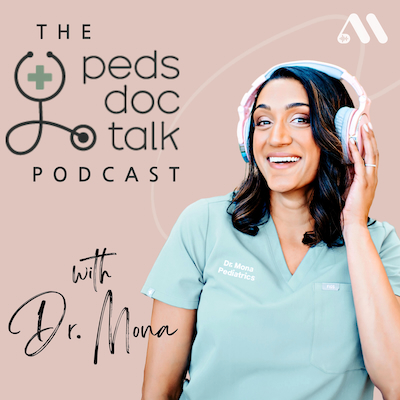

A podcast for parents regarding the health and wellness of their children.
The fourth trimester refers to the first three months when the baby is born. This is an adjustment period both for parents and the baby. Parents are often told that sleep deprivation is the norm in those early months; and although that is somewhat true there are some things that can be done to comfort baby and prolong sleep stretches. On this episode, I welcome Dr. Harvey Karp who is a world renowned pediatrician and child development expert. He is the co-founder and CEO of Happiest Baby and the creator of SNOO Smart Sleeper. He is also the author of the best-selling parenting guides The Happiest Baby on the Block and The Happiest Toddler on the Block.
We discuss:
Want to know more about Dr. Harvey Karp? Check out this New Yorker profile: Harvey Karp Knows How to Make Babies Happy
00;00;01;02 – 00;00;18;19
Dr. Harvey Karp
The key concept is the fourth trimester. In other words, that babies are born 4 or 5 months before they’re ready for the world. Well, if that’s the case, then how do you imitate the womb? And I’ve probably baked and they’re ready to be out. How do you imitate the womb? And it turns out that the womb is not a quiet, still place.
00;00;18;20 – 00;00;40;27
Dr. Harvey Karp
It is a symphony of sensations. The sound is louder than a vacuum cleaner. Firm this blood flow sound. Babies are a rock every second. Every time you breathe, you’re rocking your baby. And of course, when you’re walking around or going up and down the stairs, it’s extra jiggling. And people often notice, you know, that the baby wakes up when they go to bed.
00;00;40;28 – 00;00;56;27
Dr. Harvey Karp
The fetus starts kicking more, but when they’re walking around it busy, that fetus is actually quieter. And then in the womb, they’re also very snugly held. And so sound, motion and snug holding are things that parents for thousands of years have recognized. Calm. The babies.
00;00;57;00 – 00;01;17;07
Dr. Mona
Welcome to the PedsDocTalk podcast. This show’s success is largely due to you and the way you share the podcast with others and leave reviews, so thank you for tuning in each and every week. I’m so grateful to have the most amazing guest to guide you in your parenting journey. Topics about all things parenting, infant and child health and development, and parental, mental and physical health.
00;01;17;14 – 00;01;38;06
Dr. Mona
Today’s guest may not need an introduction, but I’m going to do it anyway. He is Doctor Harvey Karp. He’s a world renowned pediatrician and child development expert. He’s the co-founder and CEO of Happiest Baby and the creator of Snoo Smart Sleeper. He’s also the author of the bestselling parenting guides The Happiest Baby on the Block and The Happiest Toddler on the block.
00;01;38;12 – 00;01;45;23
Dr. Mona
And he’s joining me to talk about the five S’s of newborn sleep. Thank you so much for joining me today, Doctor Harvey.
00;01;45;25 – 00;01;47;24
Dr. Harvey Karp
Thank you doctor. Happy to be with you.
00;01;47;26 – 00;02;04;15
Dr. Mona
Well, it’s a pleasure. I myself, as a pediatrician and mom know so much about you. Obviously about the happiest baby on the block and now the happiest toddler on the block. And so when I introduced you, I said, if people don’t know who you are because one of your books are one of the most popular books in the parenting space, and your resources as well.
00;02;04;17 – 00;02;14;20
Dr. Mona
For anyone who’s not familiar with who you are, if you can introduce yourself and what brought you to create these books and resources for parents around and around the world?
00;02;14;22 – 00;02;35;18
Dr. Harvey Karp
Oh, yeah. Sure. Well, I’m a pediatrician like you. I trained in New York and then California, and then I did a few years of studying child development, which is kind of a weird idea for a lot of parents, because isn’t pediatrics child development? It almost sounds redundant, but it turns out, of course, as pediatricians, we’re trained to take care of very sick children and medium sick children and slightly sick children.
00;02;35;21 – 00;02;52;06
Dr. Harvey Karp
And child development sometimes gets pushed to the side. And I kind of thought, if I’m going to spend the rest of my life taking care of, you know, little kids and families, I want it to be interesting every day. And so I studied really the nuances of development of children. And that kind of led me to some observations.
00;02;52;08 – 00;03;17;05
Dr. Harvey Karp
The most important one when I was doing my training was colicky babies. 15% of babies would cry for three hours a day, and no one knew why. It was a big mystery and was it gas? Was it spasm? Was it something else over stimulation? And it didn’t make sense because, you know, if you could put a man on the moon and you could speak to Bangalore, India, in four seconds, we should be figure out you’re able to figure out why babies cry.
00;03;17;12 – 00;03;39;17
Dr. Harvey Karp
Yeah. And so that really got me started into the whole area of why do babies have colic? Why do babies cry? How can parents be more successful? And that led to trying to understand sleep as well, because crying and sleeping so tied together and in one sense, raising young children is kind of a three legged stool in those first six months.
00;03;39;19 – 00;04;12;29
Dr. Harvey Karp
There are three things you need to do to be really feeling smart and competent and like the best mom or dad who ever lived. And that is feed the baby successfully, calm, crying and get sleep. If you fail at one of those three, the stool falls over. But if you have all three, you’re very solid. And for 70, 80, or 90 years, we’ve been teaching a lot about feeding babies, breast feeding babies or books and magazines and lactation consultant, almost nothing about how to calm babies and how to improve their sleep.
00;04;13;00 – 00;04;41;27
Dr. Harvey Karp
In fact, parents really are usually prepared for failure. And we say, you know what? Babies don’t sleep well. They cry out loud, you got to suck it up and deal with it. Yeah. And yet and yet we pediatricians tell parents that there is something absolutely magical any parent can do to quickly stop crying and improve sleep. Drive them all night in a car, and lo and behold, that actually works for the most kids.
00;04;41;29 – 00;04;59;28
Dr. Harvey Karp
Yeah. So then the question comes well, if that works, then it can’t be that there’s so little that they can’t sleep better, they can’t cry less. We just didn’t figure out how to imitate a car, which ultimately is imitating the womb. And that’s really where the whole fourth trimester and five as a story begins.
00;05;00;02 – 00;05;18;26
Dr. Mona
Well, for anyone who’s not familiar and I again, I, I’m familiar with it. I know so many of my patients understand the five S’s. I don’t think many people sometimes remember that you are the one who coined the five S’s, and the five S’s is what Doctor Carter said is how we can sue the baby and remembering it as the five S’s.
00;05;18;26 – 00;05;40;29
Dr. Mona
So it’s easy to remember if you can kind of go into those the I love the story. I love good origin stories. I love hearing that. But what exactly are the five S’s? I know you already mentioned? It’s mimicking the womb, but let’s say even how you came up with those particularly was that after your understanding of child development, just your experience as a father or as a pediatrician and what exactly they are?
00;05;41;01 – 00;06;07;06
Dr. Harvey Karp
It really started as my interest in child development. We basically I would spend hours just sitting there watching babies. How do they respond? And obviously when you watch your baby for 15 minutes, you see they’re very immature. It’s not before four or 5 or 6 months that they’re smiling, cooing, interacting, which is the number one most important skill a human being ever accomplishes is social interaction.
00;06;07;08 – 00;06;25;26
Dr. Harvey Karp
And that happens at around 4 to 6 months. But in those first four months, they’re really mushy, mushy little fetuses. And that gets to the idea of the fourth trimester, which isn’t an idea that I founded, but it is something that I tried to popularize because people used to say, don’t pick up the baby, don’t hold them too much, you’re going to spoil them.
00;06;25;28 – 00;06;42;08
Dr. Harvey Karp
And while that’s kind of true, when they get to be 9 to 12 months of age, you can kind of teach them to be little terrorists if you give in too often in those first 4 or 5 months, that’s not at all true. What you’re doing is you’re building a sense of trust and confidence and feeling love and balance, if you will.
00;06;42;15 – 00;07;00;19
Dr. Harvey Karp
And so the key concept is the fourth trimester, in other words, that babies are born 4 or 5 months before they’re ready for the world. Well, if that’s the case, then how do you imitate the womb? They’re not fully beat, and they’re ready to be out. How do you imitate the womb? And it turns out that the womb is not a quiet, still place.
00;07;00;20 – 00;07;22;28
Dr. Harvey Karp
It is a symphony of sensations. The sound is louder than a vacuum cleaner term. This blood flow sound. Babies are a rock every second. Every time you breathe, you’re rocking your baby. And of course, when you’re walking around or going up and down the stairs, it’s extra jiggling. And people often notice, you know, that the baby wakes up when they go to bed.
00;07;22;28 – 00;07;49;12
Dr. Harvey Karp
The fetus starts kicking more, but when they’re walking around that busy, that fetus is actually quieter. And then in the womb, they’re also very snugly held. And so sound, motion and snug holding are things that parents for thousands of years have recognized. Calm the babies. And that’s really the basis of the five S’s. So it’s swaddling, which is not holding or wrapping the baby, the side or stomach position which is perfect for calming babies.
00;07;49;12 – 00;08;06;08
Dr. Harvey Karp
It is not the right position for sleep or sleep. They need to be on the back. But for calming a baby, the back is the worst position. The third is shushing or white noise, the fourth is a swinging or rhythmic motion, and the fifth is tracking, which is kind of the icing on the cake.
00;08;06;11 – 00;08;31;04
Dr. Mona
Well, I can tell you as we record this, I am pregnant. I know the episode may go out a little after I’m pregnant or we’ll see, but I can attest to that, that the baby absolutely is more quiet when I am moving around. And the moment I lay down. Action, action, action. And I’m sure my baby’s wondering like, what’s going on with me chasing around my toddler because there’s a lot of movement, so there’s a lot of swishing and a lot of noise going on in utero.
00;08;31;04 – 00;08;32;20
Dr. Mona
And so this is so important.
00;08;32;22 – 00;08;50;26
Dr. Harvey Karp
So imagine 24 over seven. That’s the thing. This is life, the baby’s life. Then they’re born. And what do we do. We say everybody tiptoe. The baby’s sleeping. Be quiet. Put them in a dark, still bed flat on the back. They’ve never been on their back. Yeah, no motion, no sound. And then we. Why is the baby waking up so much?
00;08;50;26 – 00;09;02;15
Dr. Harvey Karp
Well, you just took away everything. You know, it’s like me taking away your pillow, your bed. Yeah. Your blanket and saying, you know, why aren’t you sleeping? I don’t get it. Well, you just ripped away the Band-Aid.
00;09;02;18 – 00;09;21;11
Dr. Mona
Yeah. And I think one of the questions that I want to clarify is, do you feel like all of these things are needed, or do you feel like these are kind of tools in your tool belt to kind of recognize that, hey, these are five things that you should be considering because sometimes parents will say, well, you know, sound like shushing, sound like my baby doesn’t really need white noise or things like that.
00;09;21;11 – 00;09;27;17
Dr. Mona
Are these just sort of tools in your tool belt, or you feel like this is something that we really should be kind of looking at for all babies?
00;09;27;19 – 00;09;48;18
Dr. Harvey Karp
Well, you know, these are smart things that parents in every single culture use. Yeah. So for example, if a baby is asleep in your arms, you’re going to tend to go, yes, if the baby is crying, you’re going to tend to go. It’s using sound, but it’s slightly different sound. If they’re asleep in your arms, you’re going to tend to just almost mindlessly rock back and forth.
00;09;48;21 – 00;10;14;24
Dr. Harvey Karp
When they’re upset, you’re going to tend to bounce a lot more. These are things that babies teach us to do, because when you do it, it works. And so do you need to use white noise? No. Do you need to use a pillow? Do you need to use a bed? Many people sleep without a bed, but if you understand the concept of the force trimester, why wouldn’t you give baby the support that they naturally respond to?
00;10;14;26 – 00;10;35;13
Dr. Harvey Karp
And then once they’re older, like by six months, the brain has doubled in size, so they’re much better able to be weaned, like you can weaned swaddling it, you know, 4 or 5 months by, you know, five, six months you can weigh in motion and then white noise over a year. I recently recommended a year or two. Many adults use white noise to help them sleep, just like they use pillows.
00;10;35;16 – 00;10;46;17
Dr. Harvey Karp
Or they give teddy bears to their toddlers. So it’s not like a bad thing. Yeah, why wouldn’t you? I want to use the absolute minimum that my baby needs. Well, what’s the point of that?
00;10;46;19 – 00;11;01;06
Dr. Mona
Yeah, I think this is so great because it sounds so simple, and I love the way you came up with them. And I think it’s just amazing to talk to you because of how many people know about the five S’s and getting to talk to the person who just kind of, in a way coined it. I think that’s so great.
00;11;01;06 – 00;11;16;28
Dr. Mona
And all of the stuff like you mentioned comes from just understanding how babies work in utero and also when they come out in that fourth trimester. And also, thank you so much for talking about shortly, like the weaning, like the swaddling going off first when they start to roll or, the motion coming off, the white noise, things like that.
00;11;17;04 – 00;11;30;08
Dr. Mona
What benefit have you seen for your patients and the millions around the world that aren’t even your patients, but just know about the five S’s in terms of sleep quality, happiness with getting more sleep. What have you seen in terms of the benefits?
00;11;30;11 – 00;11;49;12
Dr. Harvey Karp
Well, it’s been tremendous is the thing is that parents today are very well educated, maybe the most educated in history, but a lot of people don’t have extended family around them to help. And maybe they didn’t take care of 5 or 6 younger brothers and sisters. And so even though they’re very educated, they don’t have experience in taking care of babies.
00;11;49;12 – 00;12;11;05
Dr. Harvey Karp
And loving your child is really instinctual and intuitive. But caring for a baby is not instinctual. In fact, some of the things you do are counter instinctual and seem really weird and odd and like, are you sure that’s what you do? Like shushing a baby, getting close to the ear in a loud when they’re crying, it always feels like you’re saying shut up, which doesn’t feel very polite.
00;12;11;05 – 00;12;34;12
Dr. Harvey Karp
And yeah, when you understand you’re imitating the womb sound, it makes a lot of sense to do that. So how do people respond to it around the world? Maybe a step back in terms of the science involved, because it isn’t just coming up with kind of a an interesting, you know, kind of list of things to do. It turns out that the happiest baby is based on a scientific observation, which is babies have over 70 reflexes, which is built in software.
00;12;34;12 – 00;12;57;15
Dr. Harvey Karp
It’s automatic behaviors that babies do. You don’t teach your baby to suck. You don’t teach your baby to swallow. You don’t teach your baby to cry. That’s built in because they need that for survival. What wasn’t known is they have a calming reflex like an off switch for crying and an on switch for sleep, which is activated when you do these warm sensations, these five S’s, and it’s even a part of adult behavior.
00;12;57;17 – 00;13;17;25
Dr. Harvey Karp
In other words, adults fall asleep in trains and planes and cars. We like to rock and hammocks. We like the sound of the wind and the ocean. That had never been really kind of observed or discussed. Why to adults respond to that? And it turns out it’s because it’s such a deep and important part of the baby’s neurology.
00;13;17;28 – 00;13;39;20
Dr. Harvey Karp
And so as a smart parent, you’re really by doing the five S’s, you’re just taking advantage of what their baby was born with their natural on off switches for sleep and for crying. And why is that important? Because crying babies and exhaustion aren’t just a joke line on a sitcom. Yeah, they lead to tens of billions of dollars of health problems.
00;13;39;22 – 00;14;18;14
Dr. Harvey Karp
Marital stress, postpartum depression, child abuse, breastfeeding failure, stress injuries, car accidents, etc. obesity and tens of billions of dollars of employer cost from poor productivity. People fall asleep on the job. They have to quit their jobs because they just can’t juggle all the balls. And so it turns out that we pediatricians were kind of not paying attention. And this filled in a big gap in terms of our understanding about babies and a very practical way to guide parents, which is kind of the funny thing about to have these baby work, because I kind of even don’t recommend the book to people because it’s hard to get through a two page book.
00;14;18;14 – 00;14;32;04
Dr. Harvey Karp
And I mean, it’s an interesting book, but to really learn the five assets, it’s better to watch it. And so I tend to recommend the Happy Baby video, which is a 30 minute kind of like learning how to tie your shoelaces. You learn it better by watching them, by reading it.
00;14;32;07 – 00;14;50;29
Dr. Mona
Yeah. Well, I completely agree with the importance of sleep and the impact it has on parental mental health. I mean, I know you’re very passionate about that too, and that’s kind of what prompted you to create all these resources and not only for the family, but also for the baby’s health. We know as pediatrician, shaken baby syndrome has a lot to do with stress and lack of sleep.
00;14;50;29 – 00;15;10;26
Dr. Mona
And exactly what you said in the beginning of this episode. For generations, we kind of tell parents that, yeah, you gotta suck it up and this is how it’s going to be, but I love that you share this. I have the same feeling that we can’t teach these things to parents and can give them these resources that say, hey, look, there are some things that you absolutely can do, and especially with colic.
00;15;10;26 – 00;15;24;18
Dr. Mona
I love chatting about colic. Also, we can do a whole other episode about that, but it’s so important because a lot of parents feel like, well, this is just my life and they suffer and it does impact their mental health. You know, I see it from family members. I see it from.
00;15;24;19 – 00;15;25;22
Dr. Harvey Karp
Those in person.
00;15;25;25 – 00;15;42;22
Dr. Mona
It has a huge effect on that bonding in that first few months. You know, I’m not saying that you have to feel this immense bond right away, but it does take away from that joy that I think parents can feel postpartum. And they say they don’t because they didn’t have the sleep to have the resources.
00;15;42;24 – 00;15;57;28
Dr. Harvey Karp
And you feel proud if you’re just, you know, when you’re pregnant, you know when you do. That’s the first question they ask when you have the baby boy or girl is the first question they ask when you’re home with the baby. How’s the baby sleeping is the first question they ask and when you can say, are you kidding me?
00;15;57;28 – 00;16;18;04
Dr. Harvey Karp
My baby is the best sleeper. I don’t know what people are complaining about. You actually feel proud of yourself. Not that you necessarily had anything to do with it, but there are a couple of things from the pediatric side and the understanding of children that we are really trying to. I’m really trying to help families and medical professionals understand that are really a sea change.
00;16;18;04 – 00;16;37;26
Dr. Harvey Karp
I mean, what part of this is that the first four months you imitate the womb experience, not just during the day with the five S’s, but all night long. It turns out there are studies that show if you don’t feed your baby, they don’t thrive. Well, that’s obvious, but it turns out if you don’t pick up your baby and hold them and rock them, they also don’t thrive.
00;16;37;28 – 00;17;00;24
Dr. Harvey Karp
Studies show if you feed babies but you don’t pick them up, hold them, rock them, shush them, give them that loving Kelsey. They don’t develop normally. So does it make sense? We know that babies, more than anything else want to be in our arms, want to be held, rocked and shushed. So why for 12 to 14 hours a day, we put them in sensory deprivation flat on their back and it’s still quite bad.
00;17;01;02 – 00;17;16;00
Dr. Harvey Karp
I think that we pediatricians over these next few years are going to go, is that really the best thing we can do for baby development? Or by giving them rhythmic rocking and shushing and snug holding, can we make them feel more trusting, more, more nurtured?
00;17;16;02 – 00;17;31;16
Dr. Mona
I think this is great. It just goes to show how things are always advancing and what we know and when parents know as well. And I think I love that you bridge what we innately know to do. You know, like you said, like you just naturally bring the baby close and want to push them. But bringing it out into this episode was just so important.
00;17;31;16 – 00;17;51;21
Dr. Mona
Laying it all out there and also tying it in to development, to everything that, you know, as a pediatrician and I love learning about as well, I am less in my career than you, so it’s always nice being able, you know, I’m seven years out of being an attending. I’m at a residency and I just love connecting with you, learning from you, learning obviously from all directions, doing amazing things out there.
00;17;51;21 – 00;18;01;06
Dr. Mona
So thank you for joining us. And where can people stay connected or find more about Snhu, about Happiest Baby, all of these things. Any resources that you want to share with our listeners today?
00;18;01;09 – 00;18;18;04
Dr. Harvey Karp
Well, of course we’re on Instagram and Facebook and everywhere else. But the biggest place I think it’s to go to Happiest baby.com, where we have a thousand articles and videos and of course people can read this new, but they don’t have to buy anything. They can just come for free information. So we welcome millions of families every month.
00;18;18;06 – 00;18;29;05
Dr. Mona
Well, thank you so much. It was such a pleasure finally meeting you and connecting with you and chatting about the origin story of the five S’s and obviously the Snhu as well. Thank you. I really appreciate this conversation today.
00;18;29;08 – 00;18;30;12
Dr. Harvey Karp
Thank you so much.
00;18;30;15 – 00;18;46;23
Dr. Mona
Thank you and for everyone listening. If you love this episode, which I’m sure you did, it’s such an honor having Doctor Karp on the show. Please leave a review. Lieber rating. Make sure you share this episode with anyone that you know would find it interesting and I can’t wait to chat with another guest next week. Thank you for tuning in for this week’s episode.
00;18;46;23 – 00;19;00;12
Dr. Mona
As always, please leave a review. Share this episode with a friend. Share it on your social media. Make sure to follow me at PedsDocTalk on Instagram and subscribe to my YouTube channel, PedsDocTalk TV. We’ll talk to you soon.
Please note that our transcript may not exactly match the final audio, as minor edits or adjustments could be made during production.
Need help? We’ve got you covered.
All information presented on this blog, my Instagram, and my podcast is for educational purposes and should not be taken as personal medical advice. These platforms are to educate and should not replace the medical judgment of a licensed healthcare provider who is evaluating a patient.
It is the responsibility of the guardian to seek appropriate medical attention when they are concerned about their child.
All opinions are my own and do not reflect the opinions of my employer or hospitals I may be affiliated with.