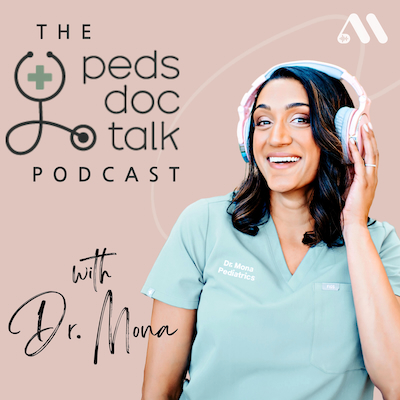

A podcast for parents regarding the health and wellness of their children.
If you’ve ever spent the whole day dreaming about going to bed, only to climb under the covers and lie wide awake, this episode will feel like a deep exhale. I’m joined by sleep psychologist Dr. Shelby Harris to talk about the tired-but-wired cycle so many mothers fall into and why it’s more common than you think.
We unpack the real reasons your brain won’t shut off at night, from revenge bedtime procrastination to the mental load that follows moms everywhere. Dr. Harris explains how habits, overstimulation, and our constant push to “catch up” all get in the way of rest, even when we’re desperate for it. And most importantly, she shares the science-backed strategies that actually work for an overwhelmed parent who needs sleep but can’t find the off switch.
Whether you’re dealing with the occasional rough night or months of broken sleep, this conversation brings clarity, relief, and doable steps that don’t add more pressure to your already full plate.
In This Episode, We Cover:
✔️ Why moms feel exhausted all day yet can’t fall asleep at night
✔️ The psychology behind “tired but wired”
✔️ Revenge bedtime procrastination and why it hits mothers so hard
✔️ How over-stimulation and unfinished to-dos keep your brain awake
✔️ Simple sleep hygiene habits that truly help
✔️ What to do when your phone is sabotaging your nights
✔️ Cognitive Behavioral Therapy for Insomnia (CBT-I): who it helps and why
✔️ When to consider medication and what that process looks like
✔️ How our own sleep habits shape our kids’ sleep long term
Want more? Listen to the full, original episode.
Our podcasts are also now on YouTube. If you prefer a video podcast with closed captioning, check us out there and subscribe to PedsDocTalk.
Get trusted pediatric advice, relatable parenting insights, and evidence-based tips delivered straight to your inbox—join thousands of parents who rely on the PDT newsletter to stay informed, supported, and confident. Join the newsletter!
And don’t forget to follow @pedsdoctalkpodcast on Instagram—our new space just for parents looking for real talk and real support.
We love the sponsors that make this show possible! You can always find all the special deals and codes for all our current sponsors on the PedsDocTalk Podcast Sponsorships page of the website.
00;00;00;05 – 00;00;20;26
Dr. Mona
Welcome to the follow up. Where we revisit a favorite episode of the start up podcast in less time than it takes you to fall asleep after insisting you’re exhausted all day. I’ve been there. It’s Doctor Mona, and if you’re listening around the holidays, you might be feeling this topic in your bones. Before we get into it, make sure you pause, subscribe, and download.
00;00;20;26 – 00;00;39;22
Dr. Mona
Because don’t you know that this is how the show continues to grow? I know I say it all the time, but those downloads matter now. This season is joyful, yes, but it also takes a lot out of you. I don’t know about you, but I am not sleeping well. More mental load, more late nights wrapping, planning, parties, whatever, and more pressure to make things feel magical.
00;00;39;24 – 00;01;02;09
Dr. Mona
And that combo is the perfect recipe for what so many parents deal with. Tired all day, wired at night, and then wide awake when your head finally hits the pillow. Today we’re bringing back my conversation with Doctor Shelby Harris, clinical psychologist and sleep medicine expert, to help unpack motherhood and insomnia. We talk about why this happens. The tired but wired cycle sounds like babies.
00;01;02;12 – 00;01;20;19
Dr. Mona
Simple ways to wind down without medications and the signs. It’s time to bring in a specialist. If this quick hit makes you feel less alone or gives you one thing to try tonight, make sure you download the full episode and share this follow up to your stories. Tag at the Doc Talk podcast, Pedes Doc talk and at sleep.
00;01;20;19 – 00;01;31;22
Dr. Mona
Doc. Doc. Shelby. Shelby. So we can see what speaks to you. Let’s get into it.
00;01;31;24 – 00;01;51;04
Dr. Mona
The things that I just find so fascinating, and it’s not really a joke, but it’s like I did a real about it. And I just think it’s funny is how we are so tired all day as moms, right? I think everyone can attest to the fact that you wake up and you’re just tired, tired, tired, tired. You want to take a nap, you want to go to bed, and then when it’s time to lay down, to go to sleep, you can’t sleep.
00;01;51;06 – 00;02;05;10
Dr. Mona
Why does this. I mean, I’m sure you’ve heard this. Why does this happen? I think I understand, but some psychology behind. Why are we just so, so tired all day? And then when it’s finally time to get that sleep that we so desperately need, we can’t shut our minds off and go to bed?
00;02;05;13 – 00;02;25;10
Dr. Shelby Harris
Well, I always say the phenomenon I say is tired but wired right. So when you get into bed at night, a lot of times as new parents and just parents in general are just people living in the society that we have nowadays is that we’re going, going, going as parents. And oftentimes we don’t really allow ourselves the time to decompress our brains and put an end to the day.
00;02;25;11 – 00;02;47;08
Dr. Shelby Harris
And for a lot of parents especially, there’s this whole concept of mom Sonia or revenge bedtime procrastination. And that is I’m trying like people are trying to capture some of the night for themselves, but it’s often doing things that are also sleep incompatible behaviors. So things like watching Netflix, binge watching shows, doing all the things that you normally don’t have time to do during the day, which are wonderful.
00;02;47;08 – 00;03;02;06
Dr. Shelby Harris
And I want people to make space for that stuff. But you’re also not making space to fully decompress without bright lights, to really put an end to the day mentally, to be able to help yourself go to sleep. And then the other thing that is a big problem is that we also have a million things to do, that we don’t prioritize.
00;03;02;06 – 00;03;15;15
Dr. Shelby Harris
What we have to do is go to bed at night. You still have all the things kind of floating on your head that you have to do tomorrow or the night, and we’re not kind of saying, well, what has to get done? What could get done, what can I push to the side? So at least you have a plan for the next day to kind of put your brain to bed.
00;03;15;18 – 00;03;31;29
Dr. Mona
Yes. I think every mother can attest that there is a constant list of things that probably need to be done, but do they really need to be done at that point? Can we push it off? Can we like prayer or like I really am big on prioritizing big picture and really going by that. That way I’m not like, oh my gosh, I didn’t do this.
00;03;31;29 – 00;03;39;19
Dr. Mona
Now I have my brain is telling me I have to get up and put that away. No, you don’t really need to get up right now. You need to be focusing on weighing down and resting your brain.
00;03;39;25 – 00;03;50;29
Dr. Shelby Harris
The other thing I can say is, like the example I give all the time I know I did in my book, is that when I had kids, I had to clean my kitchen up. I had to have everything by the time I went to bed, because for some reason it was like a nice, neat bow in my head.
00;03;51;05 – 00;04;03;19
Dr. Shelby Harris
But I really saw that. It made me more resentful because then I was losing out on time to do other things. And yeah, I mean, just like and something simple like that, you do all the dishes need to be done right now or cannot wait until the morning. Is it enhancing my life? I love that you said big picture.
00;04;03;22 – 00;04;13;13
Dr. Shelby Harris
The dishes are not big picture. They can wait until the next day. So it’s about right about all that stuff. What has to get done, what can so that you don’t feel resent when you’re going to bed at night as well?
00;04;13;16 – 00;04;15;27
Dr. Mona
But what are some ways that we can combat this?
00;04;16;00 – 00;04;40;02
Dr. Shelby Harris
So if you’re thinking about it as a tiered approach, right. So we always think when people are having occasional nights here and there of poor sleep or they’re just wanting to maybe make sleep a little bit more priority in their lives, that’s when the sleep hygiene stuff is really important. So making sure you wind down, making sure you’re not looking at your phone in the middle of night, you’re using dim light like a lot of people are going to take care of their kids in the middle of the night, and then they’re like, on their phone in the middle of nowhere in social media.
00;04;40;07 – 00;04;56;20
Dr. Shelby Harris
And then they try to go back to sleep and they can’t sleep. So really and then consistency is another big thing. So trying to be it’s hard to do as a parent. But yes, consistent with your bedtime and your wake time as possible. And if you have other things that are awakening you, such as kids coming in, maybe you have to work on their sleep.
00;04;56;20 – 00;05;28;18
Dr. Shelby Harris
So sometimes your own insomnia becomes having to treat your child sleep. Yeah, so that you can prioritize your own sleep better. I’m a big fan of journaling, getting things out of your brain. Meditation is another really big thing. But if those things are not enough, then and it’s that more like three or more nights a week of poor sleep, multiple days a week for multiple months, and then that’s when something called CBT or cognitive behavioral therapy for insomnia is extremely effective and considered the gold standard treatment for insomnia across the board, for all ages, for people with insomnia.
00;05;28;18 – 00;05;48;27
Dr. Shelby Harris
And what that is, is it’s sleep hygiene, like we were just talking about, but also sometimes I actually have patients spend a little less time in bed, so they’re tired when they get in the bed, but they’re also very sleepy. So there’s not just that like tired but active brain. We try to actually make them more sleepy for bedtime, and we change some of the things they’re doing in bed, like not laying there on their phone, not tossing and turning.
00;05;48;27 – 00;06;02;18
Dr. Shelby Harris
And we also work on people’s worries about sleep. A lot of times, like if I don’t sleep tonight, I won’t be able to do x, y, z tomorrow. Yes, with a lot of the cognitive work, because people put a lot of, focus and emphasis on when not sleeping is going to do and then make some great jokes.
00;06;02;18 – 00;06;05;01
Dr. Mona
And then you can’t sleep yet. Yeah.
00;06;05;04 – 00;06;27;25
Dr. Shelby Harris
Well, I heard that’s short term treatment. I mean, I’ve had some patients, 2 or 3 sessions who are getting better and it can take longer 12 sessions, usually on kind of max area, but it’s a very effective treatment. And you can find people like myself in the society, behavioral medicine, where you want to really try and find someone who is board certified or at least trained with some of these board certified, who’s doing it and knows what they’re dealing with.
00;06;28;01 – 00;06;39;26
Dr. Shelby Harris
And then if that’s not enough, then we start going into other approaches such as medications, other stuff like that. But really CBT for insomnia, if you’re struggling, should be the first line treatment that most people should try.
00;06;39;28 – 00;06;57;07
Dr. Mona
That’s amazing, and I love that you’re talking about CBT. I mean, CBT in general is useful in many different anxiety conditions. But you know, again, going back to all of this, it’s like we talk about that quote unquote sleep hygiene. You know, you said, you know, journaling before bed, consistent bed time, don’t use the phone in the middle of the night prioritizing.
00;06;57;07 – 00;07;13;21
Dr. Mona
It’s like clearing that mind. And it’s just it’s so interesting to me. And I love having you on talking about this as a mother, but how it relates to the child, too, like I’m not trying to put pressure on parents to get their sleep together, but it’s also going to be a good example we set for our children.
00;07;13;21 – 00;07;33;11
Dr. Mona
You know, sleep is something that I think is vital to everything that we do. I mean, everyone keeps asking me like why I’m so big on sleep training so you don’t have to sleep clean. But I want to create healthy sleep habits for our children. And in order to do that, especially our older children who are very aware of what we’re doing, is us creating similar habits as well.
00;07;33;11 – 00;07;40;26
Dr. Mona
You know, and I love your idea of the consistent bedtime for us. It’s what we do for our children too, right? It actually makes sense so that you’re.
00;07;41;02 – 00;08;00;11
Dr. Shelby Harris
I say, yeah, time. Why is it that we sometimes are so hyper focused on our kids bedtime life? And what age do we all of a sudden outgrow it? Why is it that that’s all those adults our bodies don’t have a clock that responds to light and dark and have a circadian rhythm? Like, it’s really silly to me that we just kind of ignore all that stuff as we become adults.
00;08;00;14 – 00;08;17;00
Dr. Mona
Yeah, and I mean, I look at my son’s bedtime routine and I think about how nice it is, right? Like he gets to take a bath and then he, he read a book and it’s in dim lighting and I’m like, no wonder he sleeps like an angel. Like, it’s so relaxing. And I mean, and so I mean, like you said, like when I realized, like, wait, my sleep is getting out of whack.
00;08;17;00 – 00;08;44;18
Dr. Mona
And I’ve gone through phases, like of seasons, like you said, like, you know, where it’s like, good. But all of a sudden it’s like something’s not right. And I go back to these tips that we talk about, and it’s taking a warm shower, putting on Native American flute music, writing in my journal and putting my phone on, airplane mode at 11 p.m. so that from 11 p.m. till 730 in the morning, I can’t check my phone because everything’s blocked out except the ring camera in case there’s an emergency override.
00;08;44;19 – 00;09;01;08
Dr. Shelby Harris
Yeah, obviously. Get your phone out of the room or put it up. Yes, yes. One clock like so. You’re not tempted to be on your phone in the middle of night? You know, there are simple little tricks that you can try that are really important to really try and keep that darkness, not the you don’t want stimulation to night, just like with a kid, right?
00;09;01;11 – 00;09;01;27
Dr. Mona
Yeah.
00;09;02;00 – 00;09;15;17
Dr. Shelby Harris
And like we said, sleep hygiene is perfect for a lot of people. But if that’s not enough, I don’t want people also just throwing in the towel and saying, my sleep is hopeless. There’s nothing I can do. That’s when you can talk to a specialist. You can tailor it even more and do more of the kind of behavior therapy stuff.
00;09;15;22 – 00;09;24;06
Dr. Shelby Harris
And then you can. There are so many different options out there that sleep hygiene is wonderful and a great place to start, but it’s not the only thing that we can do without medication.
00;09;24;09 – 00;09;33;28
Dr. Mona
And so kind of using that as the next segue. What types of medicines are usually used? If, you know, we’ve done the CBT or done other things and maybe a mother needs more help.
00;09;34;01 – 00;09;48;28
Dr. Shelby Harris
It really does vary and it’s varies on this prescriber too. So I don’t prescribe myself, but I work with prescribers all the time. But you know, there are so many different meds out there. So there’s the more typical ones that we hear about all the time, like Ambien, Lunesta, Sonata. These are those are ones that work right before you go to bed.
00;09;48;28 – 00;10;06;22
Dr. Shelby Harris
You take it and you go to sleep. There’s also not a like I keep saying, one size fits all approach. Some patients that I work with, they don’t do anything. For others it works really well. Sometimes we use antidepressants off label and sometimes we use like low, low dose antidepressants that are actually sedating a little bit. So we use that in different ways.
00;10;06;22 – 00;10;12;08
Dr. Shelby Harris
So there’s a lot of different options out there. It doesn’t have to just be Ambien or nothing.
00;10;12;11 – 00;10;21;22
Dr. Mona
And I think one of the questions people always ask is if they’re pregnant, that obviously the clinician that they talk to will discuss the safety of these medicines in pregnancy and breastfeeding.
00;10;21;24 – 00;10;38;04
Dr. Shelby Harris
Yes. For sure. Definitely. I’ve had a number of patients who have been on safely been on certain medications. But like I said, you know, that’s why CBT for insomnia exists. So if you have a clinician and you’re struggling with your sleep, but no one’s even had a discussion about trying do without meds, then you should really look into CBT for insomnia.
00;10;38;04 – 00;10;50;05
Dr. Shelby Harris
But if that’s not enough or it’s not working, then discussion of medications with your clinician is definitely valid and it does help some people sleep a lot better.
00;10;50;07 – 00;11;11;19
Dr. Mona
And that’s your follow up. Just a small dose of the real relatable and eye opening conversations we love to have here. If you smiled, nodded, or had an moment, go ahead and download, follow and share this episode with a friend. Let’s grow this village together for more everyday parenting wins and real talk. Hang out with us on Instagram at the PedsDocTalk podcast.
00;11;11;26 – 00;11;27;08
Dr. Mona
Want more? Dive into the full episode and more at PedsDocTalk. Com because parenting is better with support. And remember consistency is key. Humor is medicine and follow ups are everything. I’m Doctor Mona. See you next time for your next dose.
Please note that our transcript may not exactly match the final audio, as minor edits or adjustments could be made during production.
Need help? We’ve got you covered.
All information presented on this blog, my Instagram, and my podcast is for educational purposes and should not be taken as personal medical advice. These platforms are to educate and should not replace the medical judgment of a licensed healthcare provider who is evaluating a patient.
It is the responsibility of the guardian to seek appropriate medical attention when they are concerned about their child.
All opinions are my own and do not reflect the opinions of my employer or hospitals I may be affiliated with.