If you’ve ever Googled “why isn’t my baby crawling yet?” at 2 a.m., you’re not alone.
As a pediatrician and mom, I hear this all the time. But here’s the thing: Babies aren’t taught to move, they’re wired to move. Our job as parents? Make sure nothing gets in the way of that natural development.
Supporting motor skills doesn’t mean obsessing over milestones or racing to the next big thing. It means creating space and opportunities for your baby to explore, try, and grow.
Here are six simple, real-life ways to support your baby’s gross motor skills, without pressure, charts, or overwhelm.
1. Understand how motor skills build
Before we dive into what to do, it helps to understand what’s developing. Motor development follows two key principles:
- Head to toe: babies gain control from the top down
- Center out: they build strength from the core before the limbs
That’s why your baby can hold their head up before they can sit, and why they swipe at toys with their whole arm before mastering a precise Cheerio grab, or pincer grasp between thumb and finger.
Think of it like growing a tree: first the trunk and roots (core), then branches (arms and legs), and finally the fine little twigs (fingers and toes). You don’t build a tree by starting with the leaves.
Here’s how that progression usually unfolds in the first year:
- 0–3 months: Head control, lifting that heavy bobblehead during tummy time
- 4–6 months: Rolling, either direction counts
- 5–8 months: Sitting, first with hands propped, then unassisted
- 6–10 months: Crawling, any style (army, bear, classic crawl)
- 8–10 months: Pulling to stand, using furniture, your leg, or the family dog
- 9–11 months: Cruising, side-stepping along furniture
- 11–15 months: Walking, wobbly, wonderful, and worth the wait
These skills stack. Sitting builds on rolling. Crawling builds on sitting. It’s like baby CrossFit with a developmental blueprint.
If you’re not sure what to look out for at each stage, or when to reach out to your pediatrician, download the free PedsDocTalk First Year Milestones to Monitor Guide for a clear, no-pressure overview.
2. Start tummy time early (and keep it playful)
Tummy time is one of the best things you can do for your baby’s motor development, but not every baby loves it. And if yours protests? You’re not doing anything wrong.
Tummy time is meant to be positive discomfort, a little challenging, but not distressing. It’s how babies build head, neck, and upper body strength, which lays the foundation for rolling, sitting, crawling, and eventually walking.
What actually counts as tummy time? Way more than you might think.
You can:
- Lay baby belly-down on your chest while you recline
- Use a rolled towel or nursing pillow under their chest for support
- Prop them on a mirror mat to watch their own reflection
- Lay beside them and be their personal hype squad
It doesn’t have to be 30 minutes straight. Short, playful bursts throughout the day, even just a minute at a time, add up. Try it when they’re awake and calm (and preferably not right after a feed if they’re prone to spit-up).
And if you finally get through a tummy time session without tears? That’s a parenting win. Celebrate it.
Watch this PedsDocTalk YouTube video for red flags during tummy time and when to check in with your pediatrician or pediatric PT.
3. Prioritize floor play over gear
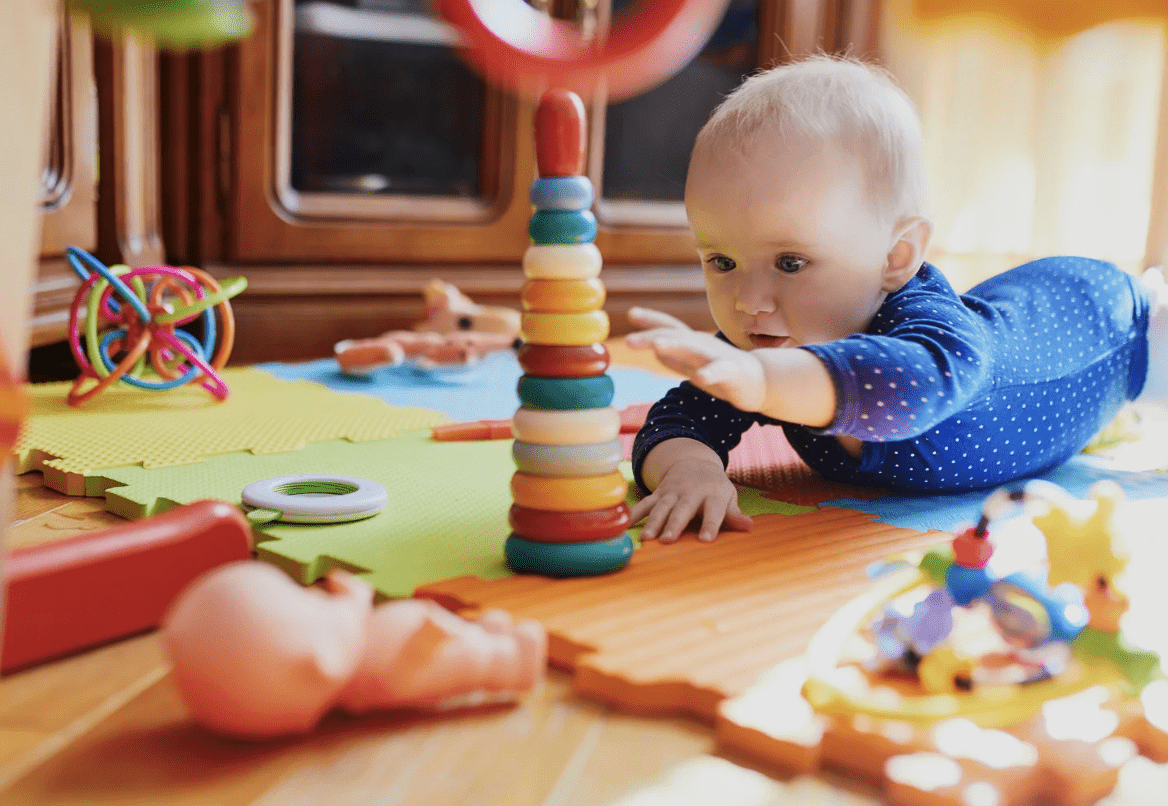
The floor is your baby’s best gym.
Containers like swings and bouncers are helpful in short bursts, but too much time in them can limit movement and learning. Floor play is where babies build strength, coordination, and even early problem-solving skills.
That one reach for a toy? It’s a full-body motor and brain workout.
Set up a soft mat, offer a few toys, and let your baby explore at their own pace. You don’t need to entertain the whole time, just be nearby. This kind of movement builds not just motor skills, but early independence and focus, too.
4. Let them struggle (just a little)
It’s tempting to jump in when your baby gets frustrated trying to roll or reach a toy, but small, safe moments of struggle are actually how babies learn.
Because when you pause before repositioning or rescuing, you’re giving your baby’s brain and body a chance to work together.
That’s motor learning.
That’s resilience-building.
That’s confidence in action.
What to try:
- Narrate their effort: “You’re working hard to get that toy!”
- Wait a few beats before helping
- Step in if they’re stuck, upset, or losing steam
That pause? That’s where growth happens. You’re not ignoring them, you’re giving them the gift of trying.
5. Skip the sit-in walker, use a push toy (when they’re ready)
Sit-in baby walkers may look helpful, but they don’t teach babies to walk. In fact, they can delay walking and pose serious safety risks. That’s why they’re banned in countries like Canada.
A better option? Push toys. When used at the right time, they support balance and confidence, without putting your baby on wheels before they’re ready.
Look for these signs first:
- Cruising along furniture
- Letting go briefly
- Showing interest in standing or taking steps
Push toys don’t need to be fancy. A laundry basket filled with books works great. And barefoot is best, grip, balance, and sensory feedback all improve without shoes.
Bottom line: Skip the wheely walkers. Support movement that’s earned, safe, and confidence-building.
6. Use play and social connection to spark movement
This is one of my favorite tips, because it ties everything together. Motor development isn’t just about building strength. It’s about why your baby moves in the first place.
And that “why”?
It’s curiosity. It’s motivation. It’s connection.
Cognitive and social development are the engine behind movement. Motor development is deeply connected to cognitive and social development. When your baby moves, their whole brain lights up.
Here’s how to support that in everyday play:
- 2–6 months: Use toys and mirrors during tummy time to encourage reaching and rolling.
- 6–9 months: Play peekaboo or create soft obstacles to motivate crawling.
- 9–12 months: Hand off toys while standing or cruising, which builds balance and early social skills.
One of the biggest motivators? You. Your voice. Your smile. Your reactions. That’s what helps babies feel safe enough to try, and try again.
The bottom line
Motor development doesn’t need to be overly structured. It needs space, time, and the freedom to try.
You don’t have to obsess over every milestone or track every skill like it’s a checklist. Focus on creating the right environment, including tummy time, floor play, gentle challenges, and your steady presence nearby.
You’re not just supporting movement, you’re building confidence, resilience, and curiosity, one reach, roll, and wobbly step at a time.
Looking for more on how to support movement in the first year? Watch the full PedsDocTalk YouTube video for more on each of these six tips.
Watch the PedsDocTalk YouTube Video HERE!