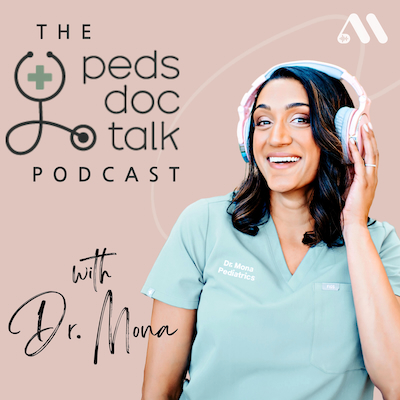

A podcast for parents regarding the health and wellness of their children.
In this powerful and honest conversation, I sat down with Sharon McMahon to talk about something so many parents are quietly carrying right now – political exhaustion, moral tension, and the question of how to raise good humans in divided times.
We unpack the difference between disagreement and dehumanization, politics and morality, optimism and hope. Sharon shares why feeling defeated is not a personal failure, how overwhelm is often by design, and why focusing on one or two issues can be more impactful than trying to care about everything at once. We also talk about boundaries in relationships, modeling values for our kids, coalition building, and what it really means to believe that the future is not finalized.
In this episode, we discuss:
The difference between politics as policy and politics as moral harm
When “agree to disagree” no longer works
How dehumanization differs from simple disagreement
Why burnout and fear can make us easier to manipulate
The difference between optimism and hope
Why you do not have to care about everything equally
How to focus your advocacy without burning out
Coalition building and how real change actually happens
Setting boundaries with family and friends during political tension
Teaching children family values without demonizing others
Why small joys and rest are part of long term resilience
To connect with Sharon McMahon follow her on Instagram @sharonsaysso, check out all her resources at https://sharonmcmahon.com/ and buy her new book “We Are Mighty”: https://go.shopmy.us/p-65451675 (paid link)
00:00 Why Optimism Is Not the Goal
00:33 Meet Sharon McMahon, America’s Government Teacher
01:43 Politics, Morality, and the Questions Parents Are Asking
03:11 Why Sharon Started Teaching Government Online
05:30 How to Stay Informed Without Losing Your Peace
08:20 Why You Do Not Have to Care About Every Issue Equally
12:37 When Politics Stops Being Policy and Becomes Right vs Wrong
18:01 When Agree to Disagree Stops Working
24:06 Boundaries, Family Conflict, and Not Demonizing People
29:17 Teaching Kids the Difference Between Disagreement and Dehumanization
33:09 How Fear, Burnout, and Hopelessness Make People Easier to Manipulate
35:34 What Real Advocacy Looks Like Beyond Voting
40:29 Coalition Building and How Change Actually Happens
44:31 Sharon’s Children’s Book and Why Agency Matters for Kids
50:58 What Gives Sharon Hope Right Now
52:34 Small Joys, Rest, and Building Resilience
Our podcasts are also now on YouTube. If you prefer a video podcast with closed captioning, check us out there and subscribe to PedsDocTalk.
Get trusted pediatric advice, relatable parenting insights, and evidence-based tips delivered straight to your inbox—join thousands of parents who rely on the PDT newsletter to stay informed, supported, and confident. Join the newsletter!
And don’t forget to follow @pedsdoctalkpodcast on Instagram—our new space just for parents looking for real talk and real support.
We love the sponsors that make this show possible! You can always find all the special deals and codes for all our current sponsors on the PedsDocTalk Podcast Sponsorships page of the website.
00;00;00;00 – 00;00;22;01
Sharon McMahon
They’re trying to make you feel that way. Refused to be manipulated by that. No, that resting is not an optional part of the equation. Know what problem you’re trying to solve? Stop waiting to experience optimism as a feeling like I. Things are really looking up. It’s a blue sky and the birds are singing. And like we won all of the elections that we were to win.
00;00;22;08 – 00;00;32;24
Sharon McMahon
Stop waiting for a sense of optimism. Optimism is not what we’re going for.
00;00;32;27 – 00;00;59;02
Dr. Mona
Welcome back to the show, doctor Mona here. Your online pediatrician and mom friend. And I am so excited about 20, 26. All the amazing guests we have. If you enjoy the show, make sure you subscribe. Download this episode, just set up the automatic downloads and share it on social media. Tag PedsDocTalk the PedsDocTalk podcast and our guest today because you are going to know this person and if you don’t, you will learn to love her.
00;00;59;04 – 00;01;21;13
Dr. Mona
Today’s guest is someone many of you already know and love. Sharon McMahon, also known as America’s Government teacher. She’s the number one New York Times bestselling author of The Small and the mighty, creator of the newsletter, The Preamble, and her new children’s book. We are Mighty is out now. Sharon McMahon. And if I’m being honest, Sharon is also something else for me.
00;01;21;18 – 00;01;43;13
Dr. Mona
She’s kind of like my political therapist, because when I’m sitting here thinking, what on earth is happening right now in the U.S. government? I go to Sharon’s page. And what I appreciate so much about her work is that she helps people understand what’s happening without making you feel like everything is hopeless. What an art! In this conversation, we get into some really big questions.
00;01;43;15 – 00;02;04;07
Dr. Mona
When is politics just policy and when does it cross into questions of morality and harm? Something I know a lot of us are asking when does agree to disagree? Stop working. How do we recognize the difference between disagreement and dehumanization? Why do fear and burnout make people easier to manipulate? Do we actually have to care about every issue equally?
00;02;04;07 – 00;02;23;19
Dr. Mona
Or is it okay to focus our energy where it can make a difference? And what does real change look like, and how does coalition build actual work? We also talk about something I think many of us need to hear right now. The difference between optimism and hope, and why small joys and rest are actually part of long term resilience.
00;02;23;21 – 00;02;42;22
Dr. Mona
When it comes to politics and political activism, it’s such an amazing conversation. I am so glad she came on the show. I cannot wait for you to listen to it. Let’s get into this amazing conversation today.
00;02;42;25 – 00;02;45;25
Dr. Mona
Sharon, thank you so much for joining me today.
00;02;45;27 – 00;02;48;25
Sharon McMahon
It’s truly an honor. Thank you for inviting me.
00;02;48;27 – 00;03;11;06
Dr. Mona
Well, I joke that you’re not only America’s government teacher, you are my government therapist. And a lot of my followers feel the same way. So when there’s, like, a current event that comes up, or I’m feeling stressed with something that’s happening and I don’t understand. Is that allowed? Is that okay? What’s going on? Somehow you’re always there to give me sort of that clarity just by explaining things.
00;03;11;06 – 00;03;30;19
Dr. Mona
And I want to thank you for that because you make everything so digestible. And although you can’t fix every government issue, which I know we all want to, you just make it more, more tolerable. And so what inspired you to get online and do this information? Create all of the platforms you created the preamble. What was the impetus to do that?
00;03;30;20 – 00;03;57;01
Sharon McMahon
I mean, during the pandemic, when we were all, you weren’t home during the pandemic, you were on the front lines do. Oh, yeah. The rest of us were at home. I had you know, we had I had way more time on my hands than I’d ever had before in terms of being at home. And my husband actually had, was in stage five renal failure during the height of the pandemic and needed a kidney transplant.
00;03;57;05 – 00;04;28;17
Sharon McMahon
And so that made, our particular situation even more complicated than the general public. Public was. So what was it? What was happening was I was home. I was, chronically online like everybody else was. I had reached the end of Netflix. I’d already. I’d watched every episode of Love Island and Tiger King. And I started noticing some really serious issues with misinformation on the internet in relationship to the upcoming 2020 election.
00;04;28;19 – 00;04;53;07
Sharon McMahon
And I decided sort of in that moment, I can either argue, go back and forth with random strangers in the comments on Facebook, or I could actually make some videos that might outlive my little Facebook comment. And I’m sure it’s you have the exact same decision calculus. You could go on Facebook and be like actual vaccines are safe and effective in a million different comment sections.
00;04;53;07 – 00;05;12;15
Sharon McMahon
Or you could make some videos that people can share and refer back to and that outlive just a simple comment section. So that was I would imagine my impetus is very much, you know, similar to yours and that I want to share correct information with as many people as possible. Yeah.
00;05;12;15 – 00;05;30;18
Dr. Mona
And I feel that same sentiment with you. And it’s always great because I get to learn from you. Right. So I love that we all have our expertise in the things that we do. And it’s great to be able to say this woman knows her stuff, knows government is America’s government teacher. Of course, that’s a phrase that we’ve created for you because we adore you.
00;05;30;24 – 00;05;52;29
Dr. Mona
But it’s just so nice to be able to learn from you. And, you know, I saw something recently that said I want to be politically informed and educated, but I also want to have a good day and be in a good mood. I don’t know if you see my problem. That was the quote. So my question here is how are you doing and how do you not let this impact your mood or does it?
00;05;53;06 – 00;05;55;03
Dr. Mona
All of this information that’s coming out there.
00;05;55;06 – 00;06;27;04
Sharon McMahon
It’s a great question. And it’s something that all adults, I feel like, are dealing with, like it just feels like we are being blasted with a firehose of information and that every piece of information were confronted with is asking us to do something about it. I think that’s a really common way to feel. And there’s a few ways that I look at this and, and again, I bet you can relate to this when you are sharing information about, say, measles outbreaks in the United States and what the risks are to, parents and children.
00;06;27;10 – 00;07;01;10
Sharon McMahon
How we can mitigate those risks, what parents should know. I would imagine that you are relatively able to share that factual information without, collapsing into a heap and crying in the corner at the end. You might be concerned. Yeah. And have very real concerns about measles outbreaks, which would be totally warranted. But your amount of knowledge and expertise and training has allowed you to be able to share that information without, without again, becoming personally incapacitated by it.
00;07;01;12 – 00;07;25;17
Sharon McMahon
So that’s that’s very much how I view my job. Now, the difference between what you and I do and what we expect the layperson or the general public to do, is a different story. You don’t expect the general public to understand case rates. And, yeah, you know, all of the, the statistics that go along with it, you know, like all of the complicated medical aspects of it.
00;07;25;20 – 00;07;49;21
Sharon McMahon
And the United States government is also intentionally complex. So when people are saying to me, like, I just feel so overwhelmed, but I also then feel guilty if I disassociate from it because I feel like now I’m a bad citizen. Now I’m, you know, I’m not standing up for marginalized groups now. I’m just letting my friends and neighbors twist in the wind.
00;07;49;22 – 00;08;20;14
Sharon McMahon
It’s it’s a real conundrum for everybody because government impacts everybody. So one thing that I, I a piece of advice I would give to people is that not everybody should or can care about everything equally. That is not how the human mind works. Yeah. That is that is we each have our own individual capacity and our own individual interests and areas of expertise.
00;08;20;17 – 00;08;54;03
Sharon McMahon
It it’s actually good that you are focusing on public health and, pediatric wellness and, you know, taking care of America’s children. It’s actually good that you use your gifting, your training, your expertise in that way, because that’s not my gifting, training and expertise. And what would be bad is if I tried to adopt that mantle and be like, I am America’s epidemiologist when I have when I have no training in that.
00;08;54;09 – 00;09;19;21
Sharon McMahon
Yeah. So it actually is good that you do your thing. It’s good that I do mine. And I would encourage your listeners to think about, like, what topics do I feel really just strongly about? I feel really drawn to for some of us, it might be environmental protection. For some of us, it might be childhood hunger. For some of us, it might be criminal justice reform.
00;09;19;24 – 00;09;36;02
Sharon McMahon
It actually is okay to care the most about 1 or 2 topics, and to actually put your effort into those 1 or 2 topics, than it is to try to do 50 things ineffectively. It’s okay to care about some things more.
00;09;36;05 – 00;09;51;22
Dr. Mona
I love this because for any of our creators listening, you know, maybe there are people who create content, whether it’s in whatever niche that you’re an expert in. It can become a slippery slope of used talk about one thing. And then I get this a lot where people are like, well, why aren’t you speaking about X, Y, or Z?
00;09;51;22 – 00;10;07;19
Dr. Mona
And I’m like, well, because I don’t know what’s going on enough to speak about that. And then that’s, that’s my value set in my brain. I don’t have to explain it to everyone. Right. So, you know, to your point, if you’re a creator listening to this, you know your values. You know that you’re for me. I know that I’m a kind, loving person.
00;10;07;19 – 00;10;24;25
Dr. Mona
But I also know, like you said, that I cannot be the expert on. I ran relationships right now. Like, I don’t know what’s going on there. It would take me a lot more to read about that and to even become closely remote to understanding. So I have to stick to what I know. Right? Like I have to, because otherwise that’s responsible.
00;10;24;25 – 00;11;07;23
Sharon McMahon
Yeah. That’s responsible. Yes. And it doesn’t mean ignore the suffering of others. It does not mean I don’t care about the people of Iran. It doesn’t mean I won’t, try to advocate for my neighbor whose family is impacted by X. It means knowing your own limitations means and actually valuing the contributions that you do bring to the table instead of, trying to spread yourself so thin that you, end up you end up ineffective and irresponsibly trying to disseminate information, even if you have the best of intention.
00;11;07;25 – 00;11;33;25
Sharon McMahon
Even if I have nothing but good intentions, I might accidentally give wrong medical information about children and be like, well, when my child was four, he had varicella, blah blah blah. Like, I might incorrectly steer somebody in the wrong direction because they know, like and trust me, they might just take my advice and I would have no way of knowing what I didn’t know.
00;11;33;28 – 00;11;53;21
Sharon McMahon
This is one of the challenges is that we don’t always know what we don’t know. It sounds right to us. I read some abstracts from some studies. Sounds right to me. Right? You know what I mean? But I don’t have the training on how to evaluate the veracity of medical studies. That’s not my wheelhouse. I actually shouldn’t be giving you health information about your children.
00;11;53;24 – 00;12;13;20
Sharon McMahon
So the bottom line. Well, all that to say, caring about 1 or 2 things more than other things does not mean turning a blind eye. It does not mean burying your head in the sand. It means knowing what actually moves the needle in when it comes to making positive change in the world. And it’s not. Everybody does everything.
00;12;13;26 – 00;12;37;08
Dr. Mona
I love that, and I think we’ll get into that sort of, you know, what are some things that you would say to parents listening on how to actionable change things that are not working for them? And I will get into that for sure. And you know what I love about your platform and you’ve done a lot of this, is you’ve built trust by staying factual and steady and by avoiding language that inflames or tries to take too much of a side.
00;12;37;08 – 00;13;01;24
Dr. Mona
Right. And that that’s something that I’ve loved. But recently I have noticed you naming concerns more directly, especially around things like AIS use of force. What is concerning you? So what is concerning you right now? Is it the bending or breaking of law that things are on constituted, or how power is being used? What makes you finally say to yourself, this is now not taking sides, whether it’s liberal or conservative.
00;13;01;24 – 00;13;08;01
Dr. Mona
This is actually something that we need to say is not okay, whether it’s coming from whatever side it’s coming from.
00;13;08;04 – 00;13;36;00
Sharon McMahon
Yeah. There are certain things in the country that are not left and right. There are right and wrong. They’re right and wrong. And I would say the exact same thing no matter who was in power. It is wrong to violate the Constitution. Yeah. That’s just how it works. And if you are violating the Fourth Amendment, it’s wrong if a Republican does it, and it’s wrong if a Democrat does it.
00;13;36;03 – 00;13;57;09
Sharon McMahon
It just so happens that there is one party in power right now. And so to some people, it can seem Partizan, because you’re speaking to the party in power. But what I’m actually speaking to is not, oh, I like this politician. This guy’s real good. I don’t like her. It’s not about that. It’s about standing up for her.
00;13;57;11 – 00;14;25;22
Sharon McMahon
The fundamental democratic principles that we have in the United States that have always imperfectly transcended the left right political spectrum. We’ve never gotten everything correct. That’s how organizations run by humans are. But we’ve always strived, to leave each generation with more rights than the one before it. With each generation should, we should try to make it better off than the one that’s come before.
00;14;25;24 – 00;14;53;27
Sharon McMahon
And when we see a backsliding of democratic norms, that is something that everyone should be concerned about. No matter who you voted for, no matter which name you have behind letter you have behind your name on a ballot. We should all care about these fundamental democratic principles, because power that is, used in a way that perhaps you agree with because you don’t like this group over here or you don’t you don’t like that policy.
00;14;54;00 – 00;15;41;00
Sharon McMahon
That is power that can and will be used against you in the future. We need to think long term. What is the slippery slope here? What if another. What if we’re turning a blind eye to say Fourth Amendment violations? Because we dislike the group against which the Fourth Amendment violations are being, enacted. Well, if we normalize the idea that it’s fine to violate the Fourth Amendment if we don’t like that group, if we don’t like that immigrant group, as soon as another person comes to power and we have normalized violating the Fourth Amendment, what if the group that you’re a part of, whether that’s white Christians, whether that’s, black or brown
00;15;41;00 – 00;16;04;18
Sharon McMahon
community, whether that’s a different immigrant group, whether that’s an LGBTQ group, as soon as another group comes to power, they will take that normalized violation of the Constitution and they will use it against you. So this is why, to me, it it has nothing to do with left or right. It has everything to do with right or wrong.
00;16;04;20 – 00;16;13;03
Dr. Mona
Now let’s take a quick break to hear from our sponsors who support helps us keep bringing you this show.
00;16;13;05 – 00;16;39;11
Dr. Mona
I love the wafer. Is that because that’s really what it should be? And it feels like a lot of the times that we’re creating this sort of divisiveness on both ends. And I have been very clear, and I told my followers this because I felt like it was important, because a lot of my fellow communicators in the health and science space don’t always do it, is that if I saw an administration right now, and I want to be very clear that right now, as it stands, I don’t support a lot of the actions of the current administration in power.
00;16;39;18 – 00;16;59;11
Dr. Mona
It doesn’t mean that they’re not doing 1 or 2 things that may be beneficial, but in general, a lot of the policies are not aligning, aligning with my value system, which we’ll get into these values and morality. But I do call out when there’s something that’s being good. Maybe they’re adding funding to something, maybe they’re encouraging IVF. But then I also watch the full progression of it.
00;16;59;11 – 00;17;18;17
Dr. Mona
Is it smoke and mirrors? Is it something that’s actually going to be useful for our communities? And that was important to me, and I have had a lot of my followers, whether they vote however way thank me for that. And I’m going to be quite transparent. That used to be very hard for me because I am very staunchly leaning into one direction, you know?
00;17;18;17 – 00;17;40;12
Dr. Mona
So like as someone who’s like, okay, I may be strongly voting liberal, and that’s how I’ve always tended to vote, because I like more of the social justice issues that the liberals look at. I’m still going to understand when another party is doing something that aligns and maybe is in the right direction, and it’s hard, though, Sharon, because it’s not always happening right now.
00;17;40;15 – 00;17;41;18
Sharon McMahon
I hear that. I hear that.
00;17;41;22 – 00;18;01;00
Dr. Mona
It’s not always happening, but, I try and it’s but it’s, you know, like you said, it’s like, let’s look at what’s right or wrong. And that will lead me to my, my next question. Because, you know, as I parent, as a parent myself, I have two little ones, six and almost three. And I also have a large parenting community.
00;18;01;00 – 00;18;23;00
Dr. Mona
I keep hearing people. Okay, well, it’s just politics. We can agree to disagree, but for many families, what we’re seeing right now and, you know, we’re recording this in 2026, it just feels personal and heavy. So a lot of that personalization and heaviness is coming from is this actually politics or is it just my value system being attacked and morality being attacked?
00;18;23;00 – 00;18;44;03
Dr. Mona
So is that line feeling more blur to you lately, or do you feel like from your experience, being an educator and understanding politics, has that always been there in terms of that, you know, politics versus morality line? And how do you know when something has moved from let’s just agree to disagree into an actual moral question.
00;18;44;06 – 00;19;08;10
Sharon McMahon
Yeah, it’s a great question and a great and a big conundrum that people have. I totally hear where you’re coming from and you know, politics is about, the, the use and study of power. And so some things really are just about negotiating variables. Yeah, some things really are, you know, right now the school district my children attend, it has a $4 million budget shortfall.
00;19;08;12 – 00;19;36;21
Sharon McMahon
And so they’re going to have to negotiate amongst themselves amongst the elected school board. What is going to have to get cut? Where are we going. What are we trimming. Where can we not afford to trim. And that’s a great example of, you know, just the how politics plays out that we’re talking about negotiating, different monetary amounts, negotiating different policies that may impact the community.
00;19;36;24 – 00;20;11;12
Sharon McMahon
That is different than if a school superintendent. And this is not true, my superintendent. But if a school superintendent went on the news and said, these Somali children are ruining the school district, their parents are pirates and they are defrauding the American public, and they need to get out. That is a very clear difference, between politics as usual, which is we have a set amount of money we have to serve this many children.
00;20;11;19 – 00;21;01;15
Sharon McMahon
How are we going to spend the money? And there are potentially multiple right answers that we actually need to have hard, hard conversations about. The second example that I gave with the bad superintendent, is actually dehumanizing an entire people group that is actually, a very different, endeavor than a simple negotiation of public policies. So, you know, I my personal values say, and I would imagine that most of your listeners, my personal values say that human beings are, of infinite worth and that dehumanization has never led a nation somewhere worth going, that we have never demonized an immigrant group and that has benefited us.
00;21;01;16 – 00;21;32;01
Sharon McMahon
We have never looked back with the clear eyes of hindsight and said, boy, I sure am glad that we incarcerated 100,000 Japanese-Americans in camps. That was the right move. We have never looked back and been happy with that choice. So to me, there is a line between normal everyday political policy negotiations. What is the right amount to spend on, white House ballroom?
00;21;32;04 – 00;21;58;18
Sharon McMahon
How should that amount? How should that get funded? Yeah. Who should approve those plans? Does the white House need a ballroom? Like, should we rip off the east wing of the white House to build a ballroom, though? That’s a different question than, everybody who is from a certain country is a bad person. Everyone who is from the certain part of the world is a criminal.
00;21;58;20 – 00;22;12;27
Sharon McMahon
Those are those are, in my mind, very different things. And it’s it’s easy for me to see the difference. But I understand because not everybody is immersed in this world, that these lines can seem very blurry in some people’s minds.
00;22;12;27 – 00;22;41;18
Dr. Mona
You’re right on that. It is that I do agree that there’s that differentiation. And what I’ve seen since the first Trump presidency. And that’s when I started seeing this. It’s also when I was online more. It’s also when I became a mom I have seen compared to when I was growing up in the 90s, and I think about the John McCain era or the Bush era that, you know, I didn’t I may not my family may not have agreed with the policies of John McCain or the policies of George Bush, but there seemed to be respect in the politics.
00;22;41;18 – 00;22;59;27
Dr. Mona
Like I watched an interview, and I’m sure you know about that, where someone was calling, some names to Obama and John McCain defended him. Right. Because, okay. Yes, he’s a good man. He’s a good man. We may disagree, but he’s a good man. And I was like, you know what, John McCain? You’re a good man. Because even if I don’t agree with you, you’re a good person.
00;22;59;27 – 00;23;27;15
Dr. Mona
So stand up for someone, for their values system that you hold that people have worth. So what’s happening right now and I and if you’re comfortable if this has happened in your life, as I’ve just seen in my personal life, and also a lot of my listeners, if it has felt like it’s come to a point where the boundaries are being set now, or maybe relationships are being separated, torn apart, whatever term you want to describe because of this, I would say more moral divide versus a political divide.
00;23;27;15 – 00;23;37;08
Dr. Mona
Do you hear that happening more? And do you think that that makes sense? Or is there a line that can be drawn that says, how can we agree to disagree in this friendship or relationship?
00;23;37;10 – 00;24;06;08
Sharon McMahon
Yeah, I that’s I absolutely hear that. Like, how can I, continue to remain in a relationship with somebody who doesn’t even, validate my existence as a human like you are? If you’re in the LGBTQ community, how do I stay in a relationship with my aunt who, thinks terrible things about me? It feels as though they’re very, existence, their right to exist is under attack.
00;24;06;10 – 00;24;31;21
Sharon McMahon
So I, I absolutely hear that from people that like, how do I have Thanksgiving dinner? Yeah. How do I have Thanksgiving dinner with my family? Who thinks X and my moral values are so different that it doesn’t even seem like there is a way to bridge the divide and I would say a couple of things. First of all, nobody should remain in an abusive relationship.
00;24;31;23 – 00;24;56;03
Sharon McMahon
That’s the first thing your physical safety. It needs to absolutely be top priority. If somebody is abusive to you, don’t stay in that relationship. Or as you know, a person who I admire. Nedra to WOB, who is a therapist who talks a lot about boundaries, sometimes it doesn’t mean necessarily cutting them off, although that’s sometimes an option. It can also mean just like modifying how much time you’re around them and what kind of information you give them access to.
00;24;56;10 – 00;25;20;19
Sharon McMahon
Maybe it’s like, hey, Aunt Doreen, good to see you. Oh, yeah. I love your pies. Delicious. Maybe it’s just like a super surface, interaction two times a year. And that is. That feels comfortable for you. So there are ways to have boundaries around your own personal mental health that you’re not subjecting yourself and your children to things that might ultimately be harmful to them.
00;25;20;21 – 00;26;00;16
Sharon McMahon
But I will also say that we have to keep in mind that. Whatever amount we feel our moral values align with this viewpoint that all humans have inherent worth, that nobody from some specific country is, you know, a bad human because that’s where their ancestors are from. As much as as passionately as we feel that we have to understand that other groups do not view the equation in the same way, they are not looking at the same information and coming down on the other side of the equation.
00;26;00;19 – 00;26;28;08
Sharon McMahon
And that is a really difficult thing for some people to wrap their minds around. They are operating with a completely different set of information. And so the conclusion that they have arrived at makes complete sense in their mind. And I’m not saying that that excuses them. It’s not an excuse. It’s an explanation they still do have access to.
00;26;28;08 – 00;26;54;08
Sharon McMahon
Like they could make themselves, you know, read more. They could seek out information that’s not in their little silo. But we do have to understand that some people sincerely held beliefs based on the best information that they know of, leads them to a conclusion that they feel very sincerely about, and that they truly do not believe is harmful to others.
00;26;54;11 – 00;27;19;13
Sharon McMahon
Now again, I’m not I’m not excusing it, but I think it’s easy. We have to be careful if you care about the inherent value of all humans, we have to be careful not to demonize people with whom we disagree, because then we are no better than they are. Right? If you care about your neighbor, you know who else is your neighbor.
00;27;19;14 – 00;27;49;21
Sharon McMahon
Your enemy is your neighbor. And that is like a really, it’s a bitter pill to swallow. It feels better to be like, it’s you, I hate you. Yeah, go straight to hell, you know, throw in some other, sprinkle in some other choice words. It it feels better to say something like that in the moment. But ultimately, we have to ask ourselves if it’s really my value that all humans have inherent worth.
00;27;49;23 – 00;28;07;08
Sharon McMahon
Then that has to extend to people with whom I disagree. That doesn’t mean allowing you to violate your boundaries. It doesn’t mean inviting them for sleepovers. Yeah, but we have to be mindful that we don’t become what we are opposed to.
00;28;07;11 – 00;28;32;05
Dr. Mona
Now, let’s take a quick break to hear from our sponsors who support helps us keep bringing you this show. Oh, I read that quote on your page. I obviously am a very avid follower. What you talked about when you demonize your neighbor, you know, obviously that is something that I, I have learned so much through you. You know, I especially when I was an educator in the pandemic and I was going into that sort of anti-vaxx camps.
00;28;32;05 – 00;28;52;23
Dr. Mona
Right. Like, if you don’t vaccinate, you create this sort of reality that this person is a horrible person, but they’re not. They’re actually they care about their people. They care about their families. They care about their kid, but they’re value system towards vaccines is a little bit different. And like you said, based on their own conclusions on information, that is what they believe.
00;28;52;25 – 00;29;10;27
Dr. Mona
And, you know, you’re a mother yourself. I know you’re writing, obviously, or you have a children’s book coming out, which we’ll, we’ll, we’ll discuss later. How would you explain that to a child? Right. You know, in terms of like, we can have our differences that we’re going to we’re going to set some boundaries, but that this person isn’t a bad person.
00;29;10;27 – 00;29;17;13
Dr. Mona
You know, if we want to see above that sort of level of like going down to morality, even if there’s disagreements.
00;29;17;18 – 00;29;45;00
Sharon McMahon
I mean, I talk about what we do in our family all the time to my kids, we call them McMahon moral imperatives. That’s how we phrase it. And obviously everybody can do what works for them. But our McMahon moral imperatives include, not dehumanizing other people, and that includes people we disagree with. So we actually talk with our own children and have for years about the difference between disagreement and dehumanization.
00;29;45;03 – 00;30;06;29
Sharon McMahon
Children need to actually be addressed in an age appropriate fashion. Taught the explicit difference between those two things, because there are too many adults who don’t understand the parts truly. They just think, well, I just disagree. That’s not what we’re talking about here. Kids are very capable of learning the difference between I like the Red Cup more than the blue one.
00;30;07;02 – 00;30;41;19
Sharon McMahon
And, Johnny is a horrible human who I should never talk to again. Those they’re capable of understanding the difference between preferences, or opinions and, not seeing another person as, as invaluable. Or not or not seeing another person is not a valuable human being. So to me, it’s it’s about having frequent age appropriate conversations when they bring up something that happened at school that day, you can, you know, work into the conversation.
00;30;41;21 – 00;31;06;23
Sharon McMahon
Well, and then so-and-so said, blah, blah, blah about XYZ politician. Now this is where it gets really tricky as a parent. Sometimes what they hear at school is actually really funny. And they’re like, that actually is super funny. But you also know that it’s it’s inappropriate. You know what I mean? Like, we all we all know the jokes that we’re like, that’s funny though, but we don’t want our kids repeating them.
00;31;06;26 – 00;31;26;17
Sharon McMahon
So they that. Yeah, I think there’s a, there’s a way to be able to say that is really interesting. How what did you think when you heard that? You know, like there’s a way to have that conversation with kids, in a way that lets them, bring to you their own conflicted emotions. Well, I didn’t think it was funny.
00;31;26;19 – 00;31;46;21
Sharon McMahon
Yeah. But I also know that we shouldn’t be making people front of people, for the color of their skin, even if the color of their skin is because of self-tanner. You know, like, that is, if you are teaching your children your family’s moral imperatives that, there are ways to do it in an age appropriate way.
00;31;46;21 – 00;32;10;12
Sharon McMahon
But we also have to remember this is not a one and done. We communicate our family’s values to our children, either explicitly or implicitly, throughout their entire lives. They need to see you model it. They need more than just a dinnertime lecture. They need to see you refusing to engage in that behavior. They need to see you.
00;32;10;15 – 00;32;20;05
Sharon McMahon
Modeling an appropriate way to respond to that kind of behavior. And I know that that is tricky. And it’s like, why do I have to do everything that’s hard?
00;32;20;08 – 00;32;20;27
Dr. Mona
Yeah.
00;32;20;27 – 00;32;29;04
Sharon McMahon
When nobody else is. Everybody is a jerk. I get that. But if we want to live in good times, we have to do good things.
00;32;29;04 – 00;32;52;07
Dr. Mona
I love that, and what you said really rings true. I’m actually writing a book right now, and you’ve written books, and you know that process is its own little beast. But one of the things I talk about is how in order to set healthy limits, limits are the reflection of your family values, right? So if you don’t want to tolerate rude language, that’s a value system that you hold as a family, and then you’re more likely to set that limit, right.
00;32;52;07 – 00;33;09;12
Dr. Mona
But if you don’t know what your values are as a family, then you’re not going to be as strong with those limits. So that absolutely relates to me in my parenting world, because that is how children learn about the world through modeling and through the limits you hold consistently or semi consistently. And so the patterns is what sticks.
00;33;09;14 – 00;33;31;00
Dr. Mona
And you know, Sharon, like right now I feel this I think today is a little bit better than it was probably about few months ago. But of course political things are happening all the time in the, in the media. A lot of parents aren’t energized or angry in my community. They’re tired. They feel let down by systems that they were taught to believe in.
00;33;31;04 – 00;33;50;03
Dr. Mona
They were taught to trust, and they don’t always know what to do with that feeling. So what do you say to people who’ve been feeling defeated or dejected by the political process itself? Like, this is not what I signed up for. I want to leave America like all of those sentiments, how do you talk about that without feeling hopelessness?
00;33;50;07 – 00;34;23;16
Sharon McMahon
Totally normal way to feel. And in fact, the feeling that way is in fact, by design. If, forces that want to, degrade democracy can make you feel beat down, worn out, exhausted, and hopeless, your ability to push back against them is greatly diminished. So the first step is acknowledging why it’s happening, understanding that it’s happening like, oh, people actually want me to feel fearful.
00;34;23;21 – 00;34;24;03
Dr. Mona
Yeah.
00;34;24;03 – 00;34;48;11
Sharon McMahon
And because when I’m feeling fearful, I’m easier to manipulate. Yes. Knowing that that is true. It’s it’s almost like you begin to see through the glass much more clearly, knowing that if people can make you tired, they can make you afraid. If they can make you afraid, they can manipulate your behavior. And just saying, I’m like, I’m not going to be manipulated by this.
00;34;48;11 – 00;35;16;06
Sharon McMahon
I refuse to be manipulated by this. So naming it, acknowledging its existence is part of it. I would also say that, understanding that Rest is not an optional part of the equation, that, every person you admire from history, any person who you look at and they did great things, any person where you’re like, dang, I hope I have half their courage.
00;35;16;07 – 00;35;34;19
Sharon McMahon
Yeah, they absolutely rested. So we have to understand that this is a marathon, not a sprint. The next thing I would say is that, you know, going back to one of the things that I said earlier, which is it’s actually okay to pick a topic and to try to move the needle on that topic instead of trying to move the needle on absolutely everything.
00;35;34;22 – 00;35;57;19
Sharon McMahon
It is much easier to solve a problem when you know what problem you’re trying to solve. It’s hard to solve a problem if you’re not actually, engaged in a concerted effort to solve the problem. If you’re if you’re effort, if your goal is to reduce the number of new measles cases in the in the country, there’s a very finite number of behaviors that go along with that.
00;35;57;26 – 00;35;59;11
Dr. Mona
Get vaccinated. Yeah.
00;35;59;13 – 00;36;21;03
Sharon McMahon
You’re right. And then like, you know, with the educational messaging needs to be you don’t spend all of your time trying to then tell people to only eat two servings of pasta per week. I hope that that is going to mitigate new measles cases. That’s and that’s essentially what we’re doing. Well, I made a bunch of phone calls.
00;36;21;06 – 00;36;44;15
Sharon McMahon
I went to the thing I did. You know, I reposted bla bla bla. And we think that that is, going to magically solve the problem. Whereas if we focus on one problem, the number of behaviors that we can actually engage in to affect that problem greatly decreases. And it it helps minimize our own analysis paralysis. When everything is an option, nothing is an option.
00;36;44;16 – 00;37;07;20
Sharon McMahon
The human mind is like if when it becomes overwhelmed by too many choices, it makes no choice. A confused mind says no. These are like as a marketing adage, in order to help somebody make a decision, they need to have a small, finite number of decisions. It’s the you know what I’m saying? Like when you I don’t need 600 shades of lipstick, I’m probably choosing none.
00;37;07;22 – 00;37;29;15
Sharon McMahon
Yeah, I have to choose between 600. So that is one way to help avoid sort of the burnout and the sort of beat down feeling, understanding that it’s happening intentionally. They’re trying to make you feel that way. Refused to be manipulated by that. No, that resting is not an optional part of the equation. Know what problem you’re trying to solve.
00;37;29;17 – 00;37;52;02
Sharon McMahon
And then the very last thing I would say is that stop waiting to experience optimism as a feeling like I things are really looking up. It’s a blue sky and the birds are singing and like, we won all of the elections that we had to win. Stop waiting for a sense of optimism. Optimism is not what we’re going for.
00;37;52;05 – 00;38;14;27
Sharon McMahon
Hope is different than optimism. Hope is the belief that the future is not yet finalized, and that we get to have a say in how the story ends, and that we are not going to give up the seed, that power to somebody else. I get to have a say in how this story ends as much as you do.
00;38;15;00 – 00;38;38;24
Sharon McMahon
And, understanding that, when we begin to view hope through that lens, we understand that hope is, a choice that we can make. It is not a feeling that we experience, in the same way that we talk about, you know, loving your neighbor does not mean feeling like you are in love with your neighbor does not mean romantic love.
00;38;38;27 – 00;38;57;03
Sharon McMahon
It doesn’t even have to mean that I like you. I don’t even have to like you to act, as though I love my neighbor. Because what I’m doing is wanting for my neighbor all of the good things that I would want for my own family. And that’s that’s a set of behaviors and actions that, we can take.
00;38;57;03 – 00;39;23;08
Sharon McMahon
And the same thing is true of hope. This these are a set of behaviors and actions that we can that we can move through the world with, not a feeling that we are waiting to experience. So stop thinking about hope as an optimistic feeling. And, and think about it more in the set of I am going to continue to act as though what I do matters because it does, and because what I do matters.
00;39;23;08 – 00;39;26;11
Sharon McMahon
I have to decide how I want to make a difference.
00;39;26;14 – 00;39;54;01
Dr. Mona
So powerful, especially as someone who does a lot of parenting education. And, you know, obviously, we know the woes and ups and downs of being a parent. A lot of my listeners are moms and sometimes are waiting for that win or waiting for that one thing. And although that’s beautiful, the process there, right. The I love that you said that the future is not finalized and that is, I think, so important for all of our listeners to hear, because when you were in this or so, just one of my listeners or many of my listeners are in this phase of I want this administration to end.
00;39;54;01 – 00;40;12;17
Dr. Mona
And I’m going to be honest, because I’ve had conversations with many of my followers about it in DMs, and I’m like, I get it, but it’s not going anywhere any time right now. And so what can we do in these micro moments? And so besides voting or calling senators? Because what I know a lot of us struggle with, including myself, is I feel deeply about this.
00;40;12;17 – 00;40;29;21
Dr. Mona
Maybe it’s an issue about Ice, maybe it’s an issue, an issue about, you know, vaccines and not having certain people in power. Anything else we can do to lift ourselves up and also cause true advocacy in your eyes, besides voting or calling senators, or congresswoman?
00;40;29;24 – 00;40;52;29
Sharon McMahon
Yeah. I mean, those things are those things are important. So I don’t want to diminish the importance of voting and calling your representatives. But I hear what you’re saying that like, there has to be more to it than just those two things. One thing that I think is so important is that, you know, serving other people in community, like serving other people together, matters so much.
00;40;53;04 – 00;41;22;06
Sharon McMahon
Any group that has survived a really difficult moment in history, that is one of the primary ways they have survived is they have helped each other in community. Now, it does not mean as much as we would like to say, we did this thing. And then immediately a duty of law was passed and everything was fixed. As much as we would like to say, we couldn’t see on the horizon the light at the end of the tunnel.
00;41;22;09 – 00;41;46;23
Sharon McMahon
That is not historically how important change happens. Important change is often slow. It is often the result of coalition building. It is often the result of having to cooperate with people, in ways that maybe you wouldn’t prefer. You know, when we’re thinking about, say, women, getting gaining the right to vote in the United States, the coalition building, that had to happen.
00;41;46;23 – 00;42;21;07
Sharon McMahon
Women’s groups from all different walks of life, Christian groups, Jewish groups, immigrant groups, group, all different women’s advocacy organizations had to come together to pull for the same goal. It was not that, they seeded their own beliefs. You know, Christian groups at the time were very pro temperance. They really did not believe in the consuming alcohol. Maybe these other groups, if you were, Jewish, you consume alcohol as part of your religious practice.
00;42;21;07 – 00;42;42;18
Sharon McMahon
Like this is not it’s not demonized in the same way. Maybe we don’t agree on that issue, but we actually can work together on this other issue here that women should have suffrage. And we have come to think, we’ve come to move away from that sort of coalition building that we actually can work with people with whom we might disagree on a set number of issues.
00;42;42;20 – 00;43;08;14
Sharon McMahon
We might disagree about the consumption of alcohol. But we can agree on this issue over here. And that is how important change has historically happened in democracies. And I think right now, what we want, is too many of us want is for our preferred group to have all the power and to foist that power on to our not preferred group, because our preferred group is correct.
00;43;08;16 – 00;43;29;19
Sharon McMahon
Yeah. And this, this is true on actually on both sides of the aisle that we want to foist our power on our, on our non-preferred group. And that’s not how we get the Voting Rights Act. That’s not how we get the 19th amendment. That’s not how we get, the Civil Rights Act. That’s not how we, get idea that’s not how we get important public health legislation.
00;43;29;21 – 00;44;02;08
Sharon McMahon
Most of the things that that we would look back on and be like, that was good, that was good, that was good, that was good, came from the concerted effort of many different groups building coalitions around it. So we have to be willing to give up our sometimes toxic levels of pride that say, I can’t associate with a group that does not believe everything that I believe, that we actually can work together on a specific issue, and they’re still allowed to believe these other things over here that maybe I don’t agree with.
00;44;02;11 – 00;44;10;15
Dr. Mona
Now, let’s take a quick break to hear from our sponsors who support helps us keep bringing you this show.
00;44;10;18 – 00;44;31;24
Dr. Mona
See, I told you that you were my government therapist. Unity therapist. Let’s get together and make some change. Therapist that not all hope is lost. Like I feel it. And I told you at the beginning because that’s what I, you know, I wanted. I know when I connected with you, I would hear that. But I also wanted my listeners who may not be familiar with who you are, which I’d be surprised if they’re not, because so many people were like, get Sharon on your show.
00;44;31;24 – 00;44;53;15
Dr. Mona
And I’m trying, I’m trying. It’s work. But, you know, one of the things is that you have your children’s book coming out, which is We Are Mighty. And in that book, you actually provide some historical information about figures in history that people may not know of. You know, many adults feel like they don’t really have a good understanding of civics history, historical figures.
00;44;53;15 – 00;44;59;05
Dr. Mona
What inspired you to create a children’s book? Of this sort of, you know, idea?
00;44;59;07 – 00;45;04;14
Sharon McMahon
You know, to me, this this is a book that adults need. As much as I know.
00;45;04;17 – 00;45;05;12
Dr. Mona
I can’t wait to read it.
00;45;05;12 – 00;45;23;01
Sharon McMahon
With my kids. Yeah. My hope is that the adults will close the book at the end. Just be like, I needed that, I needed that, I needed to see that small people can do mighty things, that you do not have to have access to the levers of power that you do not to have. You do not have to have fame.
00;45;23;04 – 00;45;53;25
Sharon McMahon
Vast personal fortune. You do not have to be, you know, a famous athlete or a pop star to be able to have influence and to do really important good things in the world. And I think it’s important that kids know that. I think it’s important that they grow up with a sense of agency over who I am, matters, and what I do matters because we, most of us, have experienced what it feels like to not have that sense of agency, even if it’s a temporary feeling.
00;45;54;00 – 00;46;12;08
Sharon McMahon
Yeah. Nothing I do matters. We’ve probably have all experienced that, and it’s actually a really bad way to feel, it feels bad to be disempowered in that way. We want our children to grow up feeling like what I do matters. And so I need to decide what kind of difference I want to make, because what I do matters.
00;46;12;10 – 00;46;43;11
Sharon McMahon
So to me, it’s important that kids grow up knowing that it’s important that kids of all different backgrounds and skin colors and, ethnic groups know that what they do matters, that it’s not only the names in the bronze plaques and the marble busts in the hall. It’s not only George Washington, you know, like it’s not just this list of five names that, people who grew up with nothing go on to do something that really makes a difference.
00;46;43;14 – 00;46;50;00
Sharon McMahon
And I mean, again, I wrote this as much for the adults reading it as the kids who will hopefully enjoy it.
00;46;50;03 – 00;47;07;24
Dr. Mona
I am very excited to get it, because when I read with my children a lot, I love, I love reusing books. Yeah, I love introducing books that provide value, introduce, amazing people. Those are the books that we’re reading, you know? And so this is going to be an important book that every family should have in their book collection for their child.
00;47;07;27 – 00;47;25;04
Dr. Mona
And then share it with all your other friends, who have children as well. And even if you don’t have a kid, if you like that sort of, you know, language and want that book. Like I said, I know your book already out is a New York Times bestseller. The small and the mighty, which does have a lot more of those concepts as well, but obviously even more so.
00;47;25;06 – 00;47;47;19
Dr. Mona
But I love to me, I’m going to be quite honest, I love the ability to simplify it for a child, because when we’re starting out, if you’re feeling uncertain, if you’re not sure where to begin, sometimes that can be a nice gateway to be like, you know what? I can do these things like so many parents, inner child has not been healed and they need that same lesson from you that yes, you can do mighty things.
00;47;47;19 – 00;47;55;27
Dr. Mona
You don’t need to be a senator, you don’t need to be the president. But you’re not going to lose hope because you have power. I think that’s such a beautiful sentiment.
00;47;56;00 – 00;48;16;19
Sharon McMahon
Yeah. I mean, if somebody doesn’t have kids, it’s still an important message. And I’m not. And I’m not saying bye by all the books, even if you don’t have anybody to read them to, but maybe it would be something that you would donate to an elementary school library, for example. Because this is a message that America needs more of it really is.
00;48;16;19 – 00;48;26;16
Sharon McMahon
It’s a message America, broadly speaking, needs more of that. Who we are matters, and what we do matters. And we can do important things no matter who we are.
00;48;26;20 – 00;48;46;18
Dr. Mona
So when I ask my followers, and I told them that you were coming on, I had asked them about what questions do you have for Sharon. Right. And a lot of those had actually been already my questions that were already asked. But one of the most common questions that made me chuckle was, When is Sharon running for presidency and when is she going to, and when is she going to appoint you as the Health and Human Services secretary?
00;48;46;20 – 00;48;48;21
Dr. Mona
So what’s the plan here, Sharon?
00;48;48;23 – 00;49;11;07
Sharon McMahon
What’s the plan to fix it? Because we know you need to fix it. So when’s it going to be fixed? Yeah. I mean, I would love to see you as the Secretary of Health and Human Services. I mean, I, we frankly need people with, medical background, scientific background. How about just a scientific background? Yeah. Oh, just like wonderful.
00;49;11;09 – 00;49;34;15
Sharon McMahon
Even just like a little master’s degree in some kind of scientific something, just like, can we can you we get anything? Like. Yeah, anything in that direction would be great. I’m not going to run for public office, in part because, that sounds terrible. And in part, yeah. And in part because I do feel like what I’m doing matters.
00;49;34;17 – 00;49;55;09
Sharon McMahon
Yeah. And I feel like if I were to be, you know, a senator or the president or whatever, that, yes, I would be doing important things, but it would be, it would just be a very different endeavor. I feel like what I’m doing today, matters. And that’s a it’s an important way to all of us want to feel like what we do matters.
00;49;55;09 – 00;50;01;01
Sharon McMahon
It’s it’s human nature. We all want to feel like who we are and what we do matters. And right now, I feel that way.
00;50;01;01 – 00;50;19;06
Dr. Mona
Sorry, everyone, because I also feel the same way. Even if I were appointed. There’s just like you said, there’s a beauty in what I get to do now that I won’t be able to do if I was in that position. And I know I can reach more people and have more impact, like yourself doing what we’re doing, whether it’s book writing, podcasts, social media, all of that.
00;50;19;06 – 00;50;39;15
Dr. Mona
And that brings me so much joy. And I feel like you have joy doing this. One of the things that I’ve realized is that whenever a news story breaks, you’re always on vacation. Like, not always, but it’s like, God damn. Like, why am I on vacation when this big thing hits the fan? So I know that’s hard work that you do, but it’s such important work that you do for us.
00;50;39;15 – 00;50;48;16
Dr. Mona
You know, the consumer. And I think it can have a bigger impact than running for office in in your expertise as well. So thank you for answering that so honestly.
00;50;48;19 – 00;50;49;06
Sharon McMahon
Yeah.
00;50;49;09 – 00;50;58;27
Dr. Mona
Yeah. And then my final question for you is what are you looking forward to in your life, and what are you most hopeful for when it comes to government in America?
00;50;58;29 – 00;51;12;04
Sharon McMahon
Well, I mean, I’m I’m looking forward to the fact that so many people, especially women, especially women over 30.
00;51;12;07 – 00;51;14;08
Dr. Mona
Are.
00;51;14;10 – 00;51;31;27
Sharon McMahon
Stepping into their own power, and realizing, like, hold up, I did not learn. I nobody ever told me this in school and in half of states, you do not have to take a government class to graduate from high school. It’s optional. And in a bunch more states, you might have to take one semester of it.
00;51;31;29 – 00;52;02;02
Sharon McMahon
Would anybody say, wow, you are proficient in chemistry because you took one semester? No, that’s not a proficiency in any subject. You’re not proficient in Spanish. You’re not proficient in any subject having taken one semester of it. So there are so many people right now, especially women of a certain age who are realizing, I did not learn this, and I’m going to learn it now, and I’m going to make sure that my kids know it to love it.
00;52;02;04 – 00;52;28;24
Sharon McMahon
And that to me, is just like a tremendously hopeful endeavor. It’s tremendously helpful to see how many, how many women are like, we’re not we’re not doing that anymore. If I have to take matters into my own hands, so be it. We’re not. I’m not going to raise a generation of kids who has no idea what’s going on, who falls for every piece of misinformation on the internet, who thinks that the the moon is hollow and it’s that the Earth is flat?
00;52;28;27 – 00;52;33;26
Sharon McMahon
We’re not doing that. Yeah, yeah. So to me, that’s a tremendously hopeful thing to see.
00;52;34;01 – 00;52;41;19
Dr. Mona
And what is bringing your heart happy, whether it’s related to this or just in general? I always like to end it. Would just seeing something that’s bringing you joy in your life?
00;52;41;19 – 00;52;50;24
Sharon McMahon
Well, I mean, I just, I one of the things that I love every day, and this might seem really silly is what I love. But having three dogs.
00;52;51;01 – 00;52;55;14
Dr. Mona
I love and I know you talk about your dog so much and it’s so beautiful. Yeah.
00;52;55;14 – 00;53;02;07
Sharon McMahon
So cute. And they’re so small. And yeah, one of them is sitting right outside my office right now. Like staring at me. She’s trying.
00;53;02;07 – 00;53;03;09
Dr. Mona
Oh.
00;53;03;12 – 00;53;04;21
Sharon McMahon
Great. Great pure.
00;53;04;22 – 00;53;07;01
Dr. Mona
Women. Yeah.
00;53;07;03 – 00;53;28;18
Sharon McMahon
Well, I mean, I think it’s important that we actually cultivate small joys in our lives. Yeah, I think that’s actually a really important human practice. That’s part of being resilient. Is having small joys in our lives. I love to knit and do, like, needlepoint and like all the little grandma crafts. That brings me a tremendous amount of joy.
00;53;28;18 – 00;53;43;09
Sharon McMahon
And I think I would encourage everybody to find whatever it is for them. I’m not saying it has to be dogs and knitting, but if that’s what it is, great. But find something that brings you joy because the joy is about building resilience. For the future.
00;53;43;09 – 00;53;47;00
Dr. Mona
Mine are my Legos. My little Lego set right here. Yes, yes.
00;53;47;00 – 00;53;48;26
Sharon McMahon
I yes, I love the Lego garden.
00;53;49;01 – 00;54;08;20
Dr. Mona
Yes, I recently discovered that. And it really has changed again, my voice, my my outlook. And you know, you had described earlier about that hope and optimism differentiation, which I really loved. And there’s something just so amazing about finding little hobbies or little things that bring you joy, that bring in that hope again. Right? That lesson things kind of suck.
00;54;08;26 – 00;54;26;29
Dr. Mona
But not all hope is lost. I’m going to do this, and I’m it’s going to inspire me to do more like, you know, I just feel we tend to lose that when we get into this cycle of negativity and social and all that. And, you know, as a mom who’s online advocating for parents, you said this already. But for me, like always protecting your peace.
00;54;26;29 – 00;54;46;12
Dr. Mona
If something’s feeling like it’s ruminating and just causing you more anxiety, take a break from it like you said, like you got to protect your peace in this world in order to be able to show up with more hope. And I love that message. Sharon. Thank you. This is such an amazing conversation. Well, I know most of my followers probably know who you are, but where can people go to stay connected?
00;54;46;17 – 00;54;50;16
Dr. Mona
Your resources, your books? Just say that out for us and so I can attach that to my show notes.
00;54;50;19 – 00;55;03;08
Sharon McMahon
You can follow me on Instagram at Sharon Says so, or you can go to my website. Sharon mcmahon.com. And there’s more information there about my newsletter, the preamble and my books.
00;55;03;10 – 00;55;20;17
Dr. Mona
Thank you so much for listening to this conversation. I am fangirling, which is so interesting because so many of you listening may be like, oh, doctor Mona Weed fangirl when we see you. But no, like, you don’t understand that I get to meet the most amazing people. And I equally have that feeling of inspiration from so many of the people that I follow.
00;55;20;19 – 00;55;42;16
Dr. Mona
So thank you for listening. It was truly such an honor to chat with Sharon. Thank you for your time. I love that we connected over the work we both do. She focuses on helping people understand government and civic life, something that I don’t know well, and I focus on helping families understand health, parenting and child development. And both forms of education feel incredibly important right now.
00;55;42;18 – 00;56;01;08
Dr. Mona
And just to be clear, after this conversation, Sharon confirmed that she is not running for president. I will not be her next Secretary of Health and Human Services. So we’re really sorry about that because we have more important work that we feel we need to do. But one of the biggest takeaways from this conversation was learning how to stay informed without losing yourself in the process.
00;56;01;08 – 00;56;22;02
Dr. Mona
And I really needed to hear that because I often feel I want to be everything for everyone, including in the political activism lane, because being an engaged citizen matters, but so does protecting your mental and emotional well-being. So if this episode resonated with you, which I’m sure it did, make sure you subscribe to the show, download this episode and share it on social media.
00;56;22;02 – 00;56;41;09
Dr. Mona
Tag PedsDocTalk, the PedsDocTalk podcast, and Sharon says so. So we can see that you’re listening. And I’d also love to hear from you. Head over to my latest post about this episode on social media, and leave a comment with your biggest takeaway or something that resonated with you. I’ll be jumping into the comments this week to chat with you all.
00;56;41;12 – 00;56;50;03
Dr. Mona
Thank you for being here, for caring about the world your kids are growing up in, and for being part of this community. I cannot wait to chat with another guest next time on the show.
Please note that our transcript may not exactly match the final audio, as minor edits or adjustments could be made during production.
Need help? We’ve got you covered.
All information presented on this blog, my Instagram, and my podcast is for educational purposes and should not be taken as personal medical advice. These platforms are to educate and should not replace the medical judgment of a licensed healthcare provider who is evaluating a patient.
It is the responsibility of the guardian to seek appropriate medical attention when they are concerned about their child.
All opinions are my own and do not reflect the opinions of my employer or hospitals I may be affiliated with.