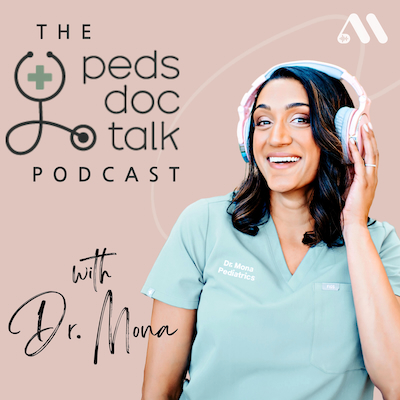

A podcast for parents regarding the health and wellness of their children.
On this episode of Monday Mornings with Dr. Mona, a mother of a 2 year old calls in about how to make brushing a toddler’s teeth happen without a fight
I normalize this common phase in kids and explain ways to approach this with Five Tips to Making Brushing Teeth Fun and not a Fight
00;00;01;04 – 00;00;07;09
Dr. Mona
Welcome to Monday Mornings with Doctor Mona, where each week I answer your questions.
00;00;07;12 – 00;00;31;07
Mom
Hey, doctor. Mona. My name is Steve. Yes. And, I have a son who is two years old. He’s almost 20 months. And something that we struggle with everyday is brushing teeth in the morning and evening. I took multiple strategies, like, you know, trying to make it fun, for instance. But sometimes I just end up holding.
00;00;31;07 – 00;00;50;04
Mom
We have to hold him down and get him to brush his teeth. But I’m afraid that that’s going to kind of scarred him. And in the future, he won’t he won’t want to brush his teeth and, you know, leave the cabinets and things like that. I guess I’m really concerned more because I have cavities, and I’m afraid that he’ll end up getting them because I’ve heard they’re,
00;00;50;06 – 00;01;03;04
Mom
They could be hereditary. I’m not sure if that’s true, but I’m wondering if you could share, strategies on how to, get kids to brush their teeth. Thank you so much today.
00;01;03;07 – 00;01;22;09
Dr. Mona
Good morning. And thank you so much for this question, Divya. I’m sure people who are listening have either been in your shoes, will be in your shoes, and can really attest to that drama that can happen with brushing our child’s teeth. I hear that you’ve already tried a few different things. One of them is making it fun, you know, singing songs and the tips.
00;01;22;10 – 00;01;42;14
Dr. Mona
And I’m going to go over our multiple tips to kind of put together to find what works best for you and your child. But I want to rewind and kind of talk about the concern parents have with traumatizing their child with teeth brushing, or making them hate it for the rest of their life. Your child is not going to hate brushing their teeth for the rest of their life, I assure you.
00;01;42;16 – 00;02;04;05
Dr. Mona
And I think we have to really reword the way we use trauma. I think, you know, trauma is kind of thrown around there a lot like traumatizing, traumatizing. Your child is doing something that is needed for their hygiene and that’s brushing their teeth. That’s not traumatizing. When we do something for our child’s health or safety, it’s not traumatizing.
00;02;04;10 – 00;02;22;12
Dr. Mona
What is traumatizing or trauma would be dropping your child into a middle of a street and saying, okay, fend for yourself. Try to cross the street without me, right? Or dropping them into a jungle and saying, okay, you deal with it. That is not modern day health and safety. Know you are doing something with your child that is important for their health and safety, which is in the situation.
00;02;22;12 – 00;02;47;02
Dr. Mona
Brushing their teeth. For example, when a child gets a vaccine, we don’t want to create a big production around it and say, okay, okay, stop yelling, stop screaming, okay, you know, bribery, all of this, we just want to make it matter of fact that this is happening. We want to control our tone. You are adding music in there, which is important because that can really control the nonverbal cues that we give off to our child when we’re nervous, when they get nervous.
00;02;47;09 – 00;03;07;03
Dr. Mona
So if our child is upset with brushing, we can sometimes get upset with brushing too, right? We can get a little stressed and sometimes that comes off for the child as well. So singing songs can really help where they are not feeling like this is an overwhelming experience. But of course it’s not always going to be the one thing that works.
00;03;07;03 – 00;03;28;21
Dr. Mona
So I actually talk about something called the Independence and Intervention Parenting Principle in episode 113 of this podcast, and I mentioned brushing teeth as one of the examples. From the moment you start brushing, I want you to allow the child to do it first, and then you follow it up so your child’s already too. You can still allow him to do that.
00;03;28;21 – 00;03;50;13
Dr. Mona
So you are going to say, okay, it’s brushing time, we are going to brush our teeth. You can have them choose which brush. So if this means having them come with you to the store to select the brush, they can play with the brush, they can brush your teeth, you can brush theirs. But I want them to feel like they have some control over the situation, especially when you have a toddler who is refusing brushing.
00;03;50;13 – 00;04;05;05
Dr. Mona
They are likely doing it because they want to do what they want to do. You know this if a toddler wants you to sit somewhere, you’re going to sit there. They want to do what they want, and if they don’t want to brush, they are going to make it known that they do not want to brush. But your job as a parent is to make this matter of fact.
00;04;05;08 – 00;04;20;00
Dr. Mona
I see that you don’t want to brush your teeth. Your options are we are going to use this toothbrush or this toothbrush. Which brush do you want to use? There’s no option not to brush the teeth. Correct. So you have to make it that this is what we’re doing. I see that you don’t love it. Here are your options.
00;04;20;04 – 00;04;43;00
Dr. Mona
Do you want to brush in my room or in your bathroom? Do you want to use this brush or this brush? Do you want to use this training toothpaste or this toothpaste? Right. You can give them options, but in the end, the brushing needs to happen. If they get upset and whine and complain and you don’t let the brushing happen, then we have confirmed with them that yes, they are in control over this boundary.
00;04;43;05 – 00;05;00;18
Dr. Mona
Remember, this is a healthy, safe boundary we have created. It’s not like you’re doing anything out of the ordinary that needs to happen for their teeth. Safety. So remember that because that mentality I think is important when we feel like, oh my gosh, they don’t want to do this and I’m going to have to give them a big hug and hold them and finish up the job.
00;05;00;23 – 00;05;15;29
Dr. Mona
Sometimes that’s going to need to happen. My son Ryan, he’s two little over two at the time of this recording. Even now, he’ll do his own brushing, but I have to finish it up and I’ll sing to him while I finish it up. And sometimes he’ll go, no more, no more. I’m like, we’re almost done. You’re doing a great job.
00;05;16;04 – 00;05;46;15
Dr. Mona
And even though I’m holding him in a hug hold in a hug hold, it’s actually kind of firm. I’m talking him through it. I’m verbalizing with him that this is what I’m doing. You’re doing a wonderful job. I’m really proud of what you’re doing here so that it’s not this scary, traumatizing experience. A traumatizing experience is really not with toothbrushing, but something that is more forceful, in my opinion, would be yelling at them, pinning them down with yelling, right, yelling and saying, okay, well, you’re not brushing your teeth, so I’m going to pin you down and it’s going to get done.
00;05;46;18 – 00;06;01;20
Dr. Mona
You don’t have to do it like that. You can tell them, okay, so I brush your teeth. Now I’m alone, so I have to finish brushing your teeth. So I’m going to lay you down and I’m going to finish up right. See the difference there? One way you’re yelling and you’re angry and you’re like threatening them the other way.
00;06;01;20 – 00;06;19;13
Dr. Mona
You’re making it matter of fact that I see that you’re upset. This needs to happen. I’m going to finish up. And you’re doing a wonderful job here. Remember, this is part of our hygiene. So you can’t just stop doing it because they don’t want to do it. But give him some space first for a couple days. You can see how he does, right?
00;06;19;13 – 00;06;36;06
Dr. Mona
Give him some autonomy. See how he brushes his teeth. If he obviously doesn’t do a great job, because we know that a two year old is not going to do a great job, even if they like to brush their teeth because they don’t have the manual dexterity to do so, then you’re going to say, hey, I really noticed that you were brushing your teeth really well and you’re doing such a great job.
00;06;36;09 – 00;06;51;06
Dr. Mona
I’m going to finish up so that we can get nice, clean teeth so that we don’t get any cavities, and that is what you can tell them so that they know and recognize that, wow, I did something on my own. I brush my teeth and then mommy is going to help me. So you can try that as well.
00;06;51;08 – 00;07;12;18
Dr. Mona
Now, after you allow some autonomy. Yes, you have to help them by finishing up now in this situation, if your child’s very upset, you have to make sure that you’re verbalizing with them that you recognize that they’re upset. I see that you do not like me brushing your teeth. I recognize it, but brushing teeth is very important and I’m going to help finish it up.
00;07;12;18 – 00;07;34;11
Dr. Mona
And then we’re going to get a big kiss, or we’re going to go play with our toys. And you can also even distract them and say, okay, what toy do you want to play with after? Do you want to play with this or that? What book do you want to read after? Right? So you’re allowing them some choice after this experience, remember that if you’re solo, you can lay them down in your lap with your legs over their arms and their head is going to be in their lap.
00;07;34;13 – 00;07;52;02
Dr. Mona
Basically, you guys are parallel to each other and you’re going to lift up the lip and then you’re going to, brush, brush, brush, and you’re going to talk to them the whole time when Ryan was, tabby, toddler baby, this is how we had to finish up the brushing, right? Because he wasn’t old enough to stand still on a stool for quite some time.
00;07;52;02 – 00;08;06;06
Dr. Mona
So I had to lay him down, and I was alone, brushing so I would lay him down on the bed. I would put my legs gently over his arm so that he can’t grab, and I would then be able to have his head in my lap. So we’re both facing parallel, like going down a log, right, if you will.
00;08;06;14 – 00;08;29;19
Dr. Mona
And then I would brush his teeth. He would sometimes cry. Of course he would write because he doesn’t want to do this activity. But I would continue to talk to him and I would say, I know you don’t like brushing your teeth. I’m almost done. We’re almost done. And I just kept that pattern going one day with that pattern of allowing him to brush first and then me brushing after he finally clicked that this is not such a scary thing, and it’s something we have to do.
00;08;29;21 – 00;08;52;04
Dr. Mona
And as he got older, we made it that there was some choice. Okay, do you want to brush in my bathroom or do you want to brush in your bathroom? And he got to choose which brush. And I’ll get into some more tips to kind of help facilitate that desire to want to brush the teeth. Okay. Because we talked about what you can do with your child in this situation, but I want to give more general tips.
00;08;52;06 – 00;09;10;03
Dr. Mona
So again, don’t fear the tears. Remember, our kids crying doesn’t mean it’s bad. It means that we’re going to talk them through it. And this is something that needs to happen. As a parent, you have to decide what your boundary, what your goal, what your decision is, and then you have to stick with it. You can’t let their tears dictate what you do.
00;09;10;03 – 00;09;25;20
Dr. Mona
So if they start crying like I mentioned, and then you start brushing their teeth, right? Because you’re like, fine, fine, fine, they’re too upset. You have now reaffirmed to them that, okay, brushing doesn’t need to happen. I hear people can say, the flip side, well, my child is showing me that this is something uncomfortable for them. This is different.
00;09;25;20 – 00;09;49;29
Dr. Mona
This is toothbrushing. We have to brush our teeth. This is part of our life, right? This isn’t again, something that’s traumatizing. It’s different. Again, if they’re in the middle of a street or you’re forcing them into this awful situation that has no purpose for their health, correct? Same thing with vaccine. If every time a child cried when we gave vaccines, if we were upset and said, okay, you don’t have to get the vaccine, then they wouldn’t be protected against life threatening illnesses, right?
00;09;50;06 – 00;10;09;09
Dr. Mona
So the goal here is you want to create autonomy. The goal here is you have to normalize it. This is happening. Don’t sneak attack them. Right. Don’t say, okay, well, here we go. That’s why I want you to have that autonomy piece. Allow them to either chew on a toothbrush or allow them to have, you know, just the smear of toothpaste that they start to go first and then you’re finishing off.
00;10;09;11 – 00;10;30;24
Dr. Mona
You have to be calm and walk them through it. Even if they’re upset, they will come around, but allow the autonomy or the independence and intervention first, and then you’re going to walk them through it. The other example I use is if we’re giving our child stitches, like I remember when I had the stitches when I was five years old, I remember laying on the bed and crying, even though it was numb.
00;10;30;25 – 00;10;54;09
Dr. Mona
I just was crying because I didn’t want to be on the table. And I actually remember how calm my mom was. And the whole time she was calm and I have this is actually my first vivid memory, and I actually really appreciate that she was calm because even though I was scared in that moment, having a mother who was probably internally like screaming, who was extremely calm, when I look back, I actually say, oh yeah, that was something that just needed to happen.
00;10;54;16 – 00;11;12;29
Dr. Mona
I didn’t have a mom who was flustered, yelling at the doctor, screaming, screaming. No. She was like, okay, Moana, I know you don’t like this. You’re doing a wonderful job. And that is kind of the example I’m giving here is that this needs to happen, right? Stitches needed to happen. Brushing needs to happen. But you’re going to walk them through it calmly as possible.
00;11;13;02 – 00;11;29;09
Dr. Mona
So if you can get in that mentality, you’re going to see that. You’re going to find that it’s going to become so much more matter of fact in the routine of your household. And brushing teeth is something that it just has to happen. So that is the second tip is that make it matter of fact. So number one was don’t fear the tears.
00;11;29;09 – 00;11;53;19
Dr. Mona
Number two is make it matter of fact. Another tip is make it a routine. Don’t avoid it because you’re afraid of them or you’re afraid of their cries. Right? You should make it a part of the routine. Just like we eat meals and snacks and whatever so they understand and normalize it. This is part of our life. So after the breakfast or whenever you do it in the morning before we go to bed, it is part of the routine every night and it does not have to be that.
00;11;53;19 – 00;12;13;03
Dr. Mona
It’s a perfect two minute session every single time. So normalize that we are going to do it and expose them to the activity. And that is the win versus them completing a two minute of independent brushing. Because that’s not the goal here. The goal is that they are exposed to it. The goal is that we can follow up with them and that we’re going to help them.
00;12;13;09 – 00;12;31;07
Dr. Mona
And that is what the goal should be. Number four is make it fun and you are already doing that. But here are some other tips okay, so take turns. They can brush your teeth. Maybe just put like some toothpaste on a brush, or just fake brush your teeth and then you’re going to brush theirs face a mirror together.
00;12;31;07 – 00;12;48;09
Dr. Mona
So rather than being in the room, obviously you have to be in front of a sink. If they’re a toddler especially, that’s able to stand on a step stool so that they can see themselves, you’re going to brush your teeth while facing the mirror, and they’re going to see the reflection and then dance around. I’ve shared this on my social media.
00;12;48;11 – 00;13;06;12
Dr. Mona
This is ways that they can normalize it. This is something that needs to happen. And you can use in that intervention piece that you’re allowing them to do this first. Other tips is use a stuffed animal. So get a stuffed animal and brush the teeth. And also say we’re brushing your teeth because it keeps their teeth nice and healthy so that they can eat whatever they want.
00;13;06;17 – 00;13;26;27
Dr. Mona
And this is why we’re doing this. And if that’s something that is good for your child, you can do that. Singing songs like I mentioned earlier helps lighten the mood so that it feels less dreadful. This should not have to be dreadful. And that’s also something I really recommend because it can control our tone and our nonverbal cues of stress when our child is yelling during an experience.
00;13;27;02 – 00;13;43;16
Dr. Mona
So of course, when our child is upset during brushing, it makes us feel like, oh my gosh, well, I’m going to stop this. But singing while you follow up, which is what I do too, and it lighten the mood and helps them understand that this is nothing dreadful, you are going to finish it up again, matter of fact, and we’re going to be done with this.
00;13;43;18 – 00;13;58;21
Dr. Mona
Another thing is talk about your day. So don’t brush in silence and talk about a funny story that happened during their day. You know, they obviously can’t talk because they’re brushing, but just make it more like almost like during meal times, how we make things kind of matter of fact and less stressful. We are just making this happen.
00;13;58;21 – 00;14;15;01
Dr. Mona
This is part of our routine, and this can really help in the long run for them to get that picture, that, oh, this is something that just needs to happen, and it’s not something that mommy or daddy or my other caregiver is being so upset about. This is just something that needs to happen again. If it’s a toddler, give them two choices.
00;14;15;01 – 00;14;37;20
Dr. Mona
So we are brushing here versus we are brushing here. Where would you like to brush? Which song do you want to sing? This power of choice is the fifth and final tip power of choice is very important for toddlers because of that desire to have their autonomy. They want to do what they want to do. So by allowing them to have choice, we are giving them some control.
00;14;37;20 – 00;14;57;20
Dr. Mona
When we are obviously in control of the final thing, which is brushing. So I really want you to trial these tips now. Of course, please make sure you go to your regular dental visits, which should be every six months, because they can look at the cavity formation. I would recommend in your situation that you should be using a fluoride toothpaste because you have a history of cavities.
00;14;57;23 – 00;15;10;26
Dr. Mona
That’s very important, but talk to your dentist for further guidance. You are just going to use a smear because your child’s probably too. And not spitting it. Once they spit, then you can go to a pea size amount. Once you’ve once you’ve taught them how to spit on the toothpaste. But I want you to try these tips.
00;15;10;26 – 00;15;31;05
Dr. Mona
And remember, don’t fear the tears. Number two, make it matter of fact. Number three, make it part of the routine. Number four, make it fun. And number five, give them power of choice in some control of the brushing experience. Thank you for tuning in today. If you find this series helpful or any of my content helpful, please make sure to share it on your social media channel.
00;15;31;06 – 00;15;38;24
Dr. Mona
Cuz that is how other people can find this resource. So thank you so much for joining us and I will talk to you next week.
Please note that our transcript may not exactly match the final audio, as minor edits or adjustments could be made during production.
Need help? We’ve got you covered.
All information presented on this blog, my Instagram, and my podcast is for educational purposes and should not be taken as personal medical advice. These platforms are to educate and should not replace the medical judgment of a licensed healthcare provider who is evaluating a patient.
It is the responsibility of the guardian to seek appropriate medical attention when they are concerned about their child.
All opinions are my own and do not reflect the opinions of my employer or hospitals I may be affiliated with.