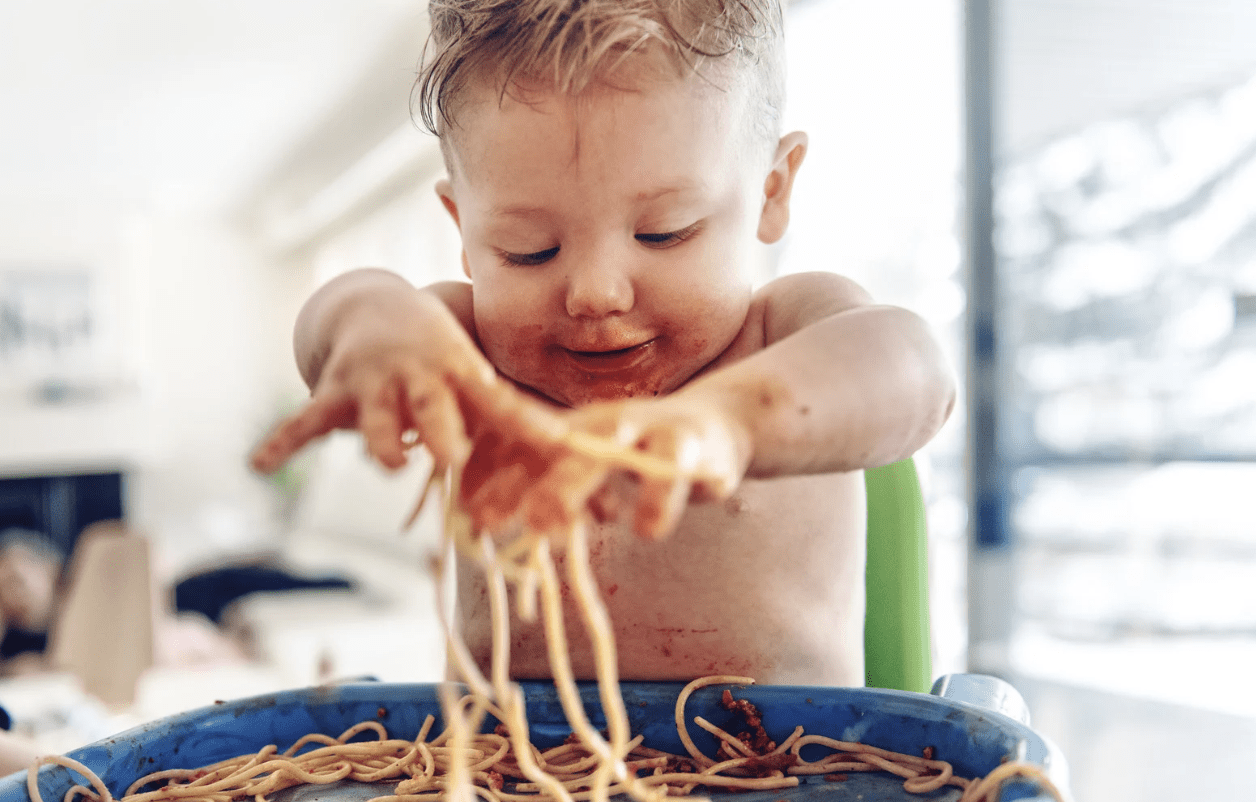
Starting solids is a big (and often messy) milestone, but with it comes a wave of questions and concerns. One day your baby loves sweet potatoes, the next they’re swiping their tray clean…right onto the floor. You offer a new food and suddenly they’re gagging, and your heart skips a beat.
If any of this sounds familiar, you’re not alone. These are some of the most common feeding concerns I hear from parents: gagging, picky eating, and food refusal, and wondering when something more might be going on.
Gagging vs. Choking
Gagging during meals is something many parents notice. It’s a moment that can catch you off guard. You’re not sure if you should step in or stay calm.
Here’s what to know:
- Gagging is noisy and protective. It might come with coughing, watery eyes, and tongue thrusts. It looks dramatic, but it’s a sign your baby’s body is learning how to move food around and keep their airway safe.
- Choking is silent and dangerous. If your baby’s eyes go wide, they’re not making sounds, and you see no air movement or crying, that’s a medical emergency. Here is a free PedsDocTalk Choking Guide to help you be prepared.
To reduce choking risk:
- Keep your baby upright during meals
- Always supervise while they eat
- Know infant CPR and make sure any caregiver does too
- Prepare food safely for their developmental stage
Wondering how to work through gagging?
- Stay calm and encourage them: “You’re doing a great job working that out.”
- Try teething tools (like a teething tube) for safe oral play and mapping
- Let them self-feed with a spoon to build control and confidence
What about food refusal?
It’s so common for babies to suddenly go from curious eaters to rejecting everything on the plate. That doesn’t mean you’re doing anything wrong.
Check these three things first:
- Is your baby truly ready? Sitting upright with support, showing interest in food, and opening their mouth for a spoon are all signs of readiness.
- Is the food tasty and safe? Bland purees can be off-putting. Try safe textures with real flavor.
- Is the timing right? Avoid offering solids immediately after a milk feed. For babies over 6 months, try food before milk once a day to spark interest.
Some days your baby will be ravenous. Other days? Totally uninterested. That’s developmentally normal. If you want to mix things up, try offering solids at a different time of day, sitting and eating with them (babies love to imitate!), changing the shape or texture of the food, or handing them small portions one bite at a time to reduce overwhelm.
Remember, just because they refused it today doesn’t mean they’ll never like it. Try again in a different form tomorrow.
Food throwing? It’s not personal
Swiping a tray clean, flinging applesauce, or throwing a broccoli spear to the ground? Yep, it’s all part of learning. Babies throw food for many reasons: they’re overwhelmed, they’re done eating, they’re curious (“What happens if I do this?”), or they just don’t know what else to do yet.
What helps?
- Keep portions small. Only add more as needed.
- Model behavior. Show them how to eat and say, “Food stays on the tray.”
- Use suction plates or serve directly on the tray to reduce mess.
- End the meal calmly if throwing starts near the end.
Repetition is key. It may take a while, but with consistency and modeling, your baby will start to understand what mealtime is all about.
How much should they be eating?
For babies under one, remember that breast milk or formula is still their primary source of nutrition. Solids are about practice, exposure, and building skills. Not necessarily about filling up their belly.
Instead of focusing on how much, shift your focus to the experience. Are they showing interest in food? Trying new textures? Gaining weight along their curve? Having plenty of wet diapers and regular poop? If yes, then they’re likely getting what they need.
When to ask for help?
It’s always okay to bring up feeding concerns with your pediatrician. Some red flags to watch for in babies under 1 year:
- Not eating any purees by 7 months
- Not progressing beyond purees or tolerating textured foods by 10 months
- Gagging, choking, or vomiting during most meals
- Gagging that leads to refusal, crying, or little to no intake
- Swallowing difficulties, frequent coughing, choking, or food pooling in the mouth
- Mealtime distress (for baby or you!)
- Not gaining weight or following their growth curve
- Refuses food consistently alongside a history of reflux or feeding trauma
- Has meltdowns, panic, or extreme aversion when offered new foods
If any of these sound familiar, talk to your pediatrician. An early referral to a feeding therapist or specialist might help. Early support can make a big difference.
Final thoughts from a pediatrician-mom
Feeding your baby isn’t just about what goes into their mouth. It’s about building trust, encouraging exploration, and creating a foundation for lifelong eating habits.
Here are a few strategies to help make feeding easier and more enjoyable:
- Start small. One bite at a time, one new food at a time.
- Stay calm. Gagging, throwing, and refusal are normal steps in the process.
- Let them explore. Touching, playing, and even smearing food is part of learning.
- Keep offering. Exposure is key, even if they don’t eat it yet.
- Pair new foods with safe favorites. A familiar taste can ease nerves and increase the chance they’ll try something new.
- Show them what to do. Exaggerate bites. Say “Mmm!” with enthusiasm. Even if your baby isn’t hungry, letting them sit at the table with you helps build comfort and exposure.
Most importantly? Keep the pressure low. Your steady, supportive presence at the table helps make the experience feel safe, positive, and something your baby can enjoy.
Still feeling unsure about starting solids? You’re not alone, and you don’t have to figure it out on your own. Watch the PedsDocTalk YouTube Video about feeding concerns, and check out the PedsDocTalk Intro to Solid Foods Workshop for more guidance and support as you begin this stage.
Watch the PedsDocTalk YouTube Video HERE!